Jennifer Tarr

Writing picture books for kids and their grown ups.

Category: Toddler Favorite

  • Toddler Teaches…TWO DOGS

    Toddler Teaches…TWO DOGS

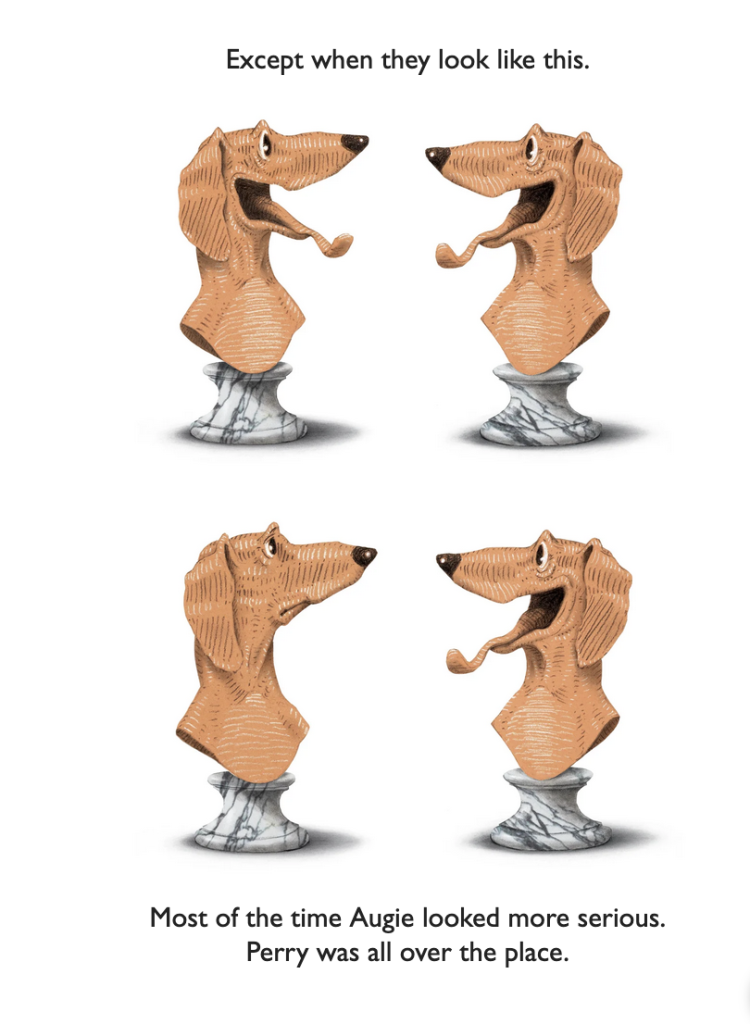
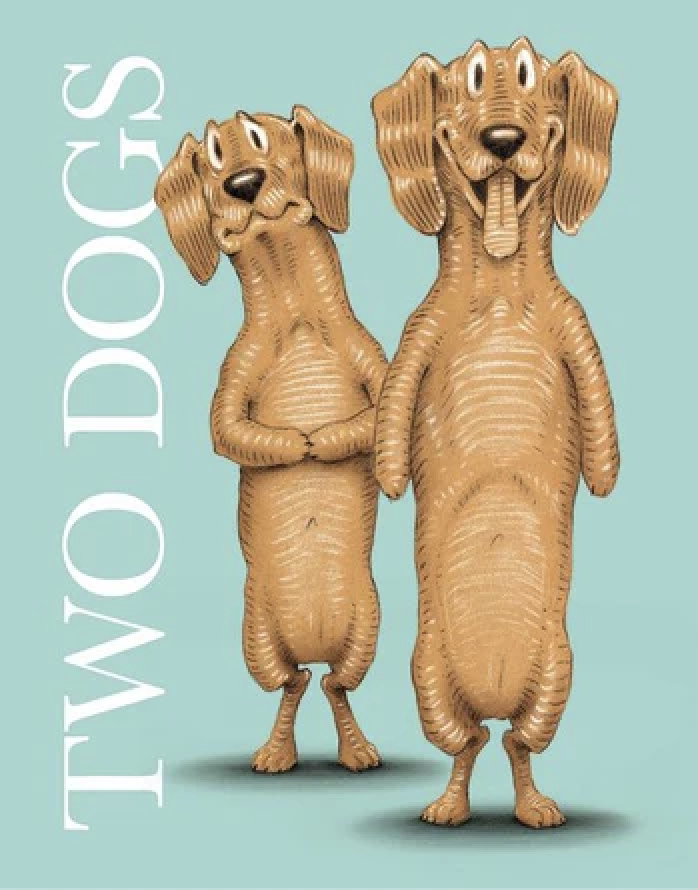
    Ian Falconer’s Two Dogs is a bit of a mystery to me. S loves it. But with the exception of having two dogs as protagonists, it defies almost everything I thought I knew about what makes books appealing to a 2-year old.

    Start with the intro. It’s unique, clever, and makes no sense to S:
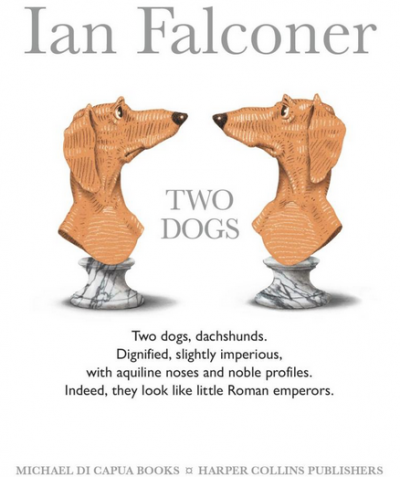
    First page of Two Dogs by Ian Falconer

    Over the next several pages, the story introduces Perry and Augie, their differing personalities, and their problem: their family played with them all the time as puppies, but now leave them alone all day. (Darn work and school!)

    These concepts go completely over S’s head. Most days, we flip past all of the intro pages without even paraphrasing them. For S, the book begins on page 7. That’s when Perry steals Augie’s ball.

    Over the next several pages, Augie asks Perry for his ball back with increasing levels of desperation.
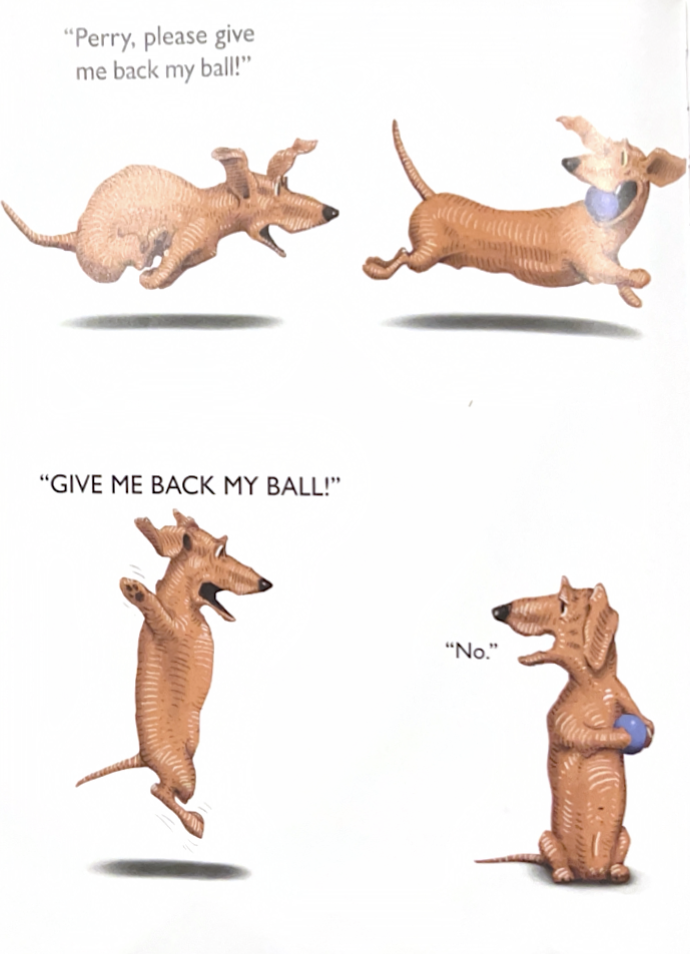
    S loves this section of the story, and will point at these pages and say “Give the ball back.” “Give it back!” S will also open the book directly to these pages and say “Read Perry book!” I think S enjoys the repetition in Augie’s requests, as well as looking at the pictures of Augie and Perry jumping around – they are very active. I also think S identifies with the song-and-dance of trying to get your toy back. It seems to be a common thing in early preschool.

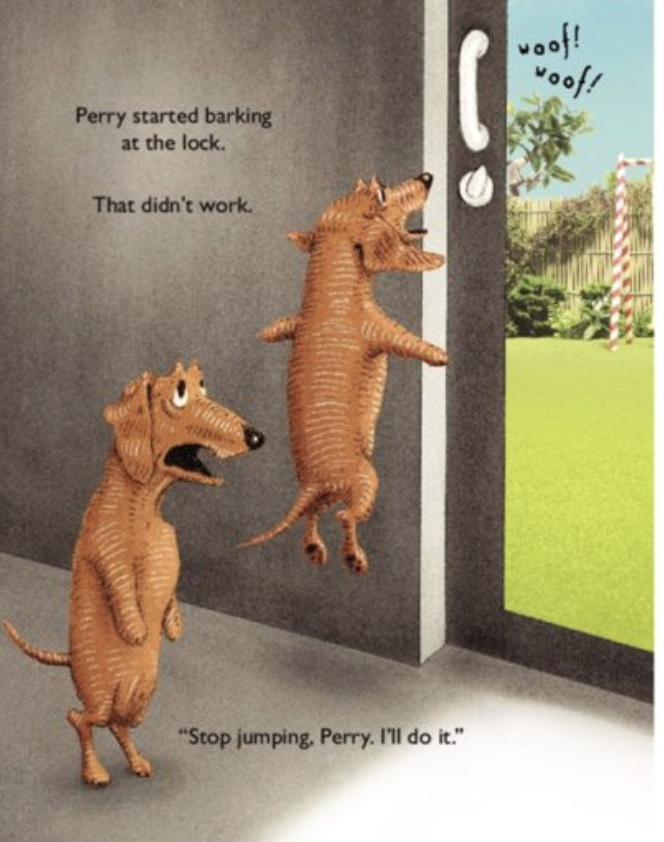
    S also loves the next section of the story, where Augie and Perry try to open the door to leave the house. Each time we read it, S informs me that the dogs are trying to “open the door.” This is a relatively new skill for S, which may be why it is of interest. The pictures are also quite colorful, which certainly doesn’t hurt.
    After that, we mostly skip pages or paraphrase. Of the dogs’ antics outside, we focus on their playing on the playground and swimming in the pool — things that S is familiar with and likes. Their other activities are funny but go over S’s head (ex: “watering” the flowers) or are written in a manner that is too advanced for a 2 year old and never caught S’s attention.

    But even though we read less than half of the book each time, S keeps asking for it.

    So what can Two Dogs teach us about appealing to toddlers despite being geared toward older readers?

    1. There is value in including topics that may be of interest to multiple age ranges. You never know what will pique a toddler’s interest or make a book suitable for siblings of different ages.
    2. Though the book starts “slowly”, I continue to think that starting your story quickly and with short, punchy sentences is the best way to appeal to a younger reader. If I had followed S’s cues rather than my own curiosity, I would have stopped reading long before we got to the part S enjoys so much.
    3. Shorter sentences and more illustrations per sentence help with complex topics. The pages we read have half the number of words per illustration of the ones we don’t. It’s been a pretty common phenomenon — S is more likely to want to read stories with shorter sentences and fewer words per picture.
    4. Dogs are always a good protagonist choice, particularly when they’re engaged in fun antics like Augie and Perry.

    Two Dogs By the Numbers:

    Page count: 40

    Word count: 423

    Average word count per illustration on pages we read aloud: 6.72

    Average word count per illustration on pages we don’t read aloud: 13.13

    Average sentence length on pages we read aloud: 4.48

    Average sentence length on pages we don’t read aloud: 6.71
  • Toddler Teaches…Toddler-Approved Book Subjects

    Toddler Teaches…Toddler-Approved Book Subjects

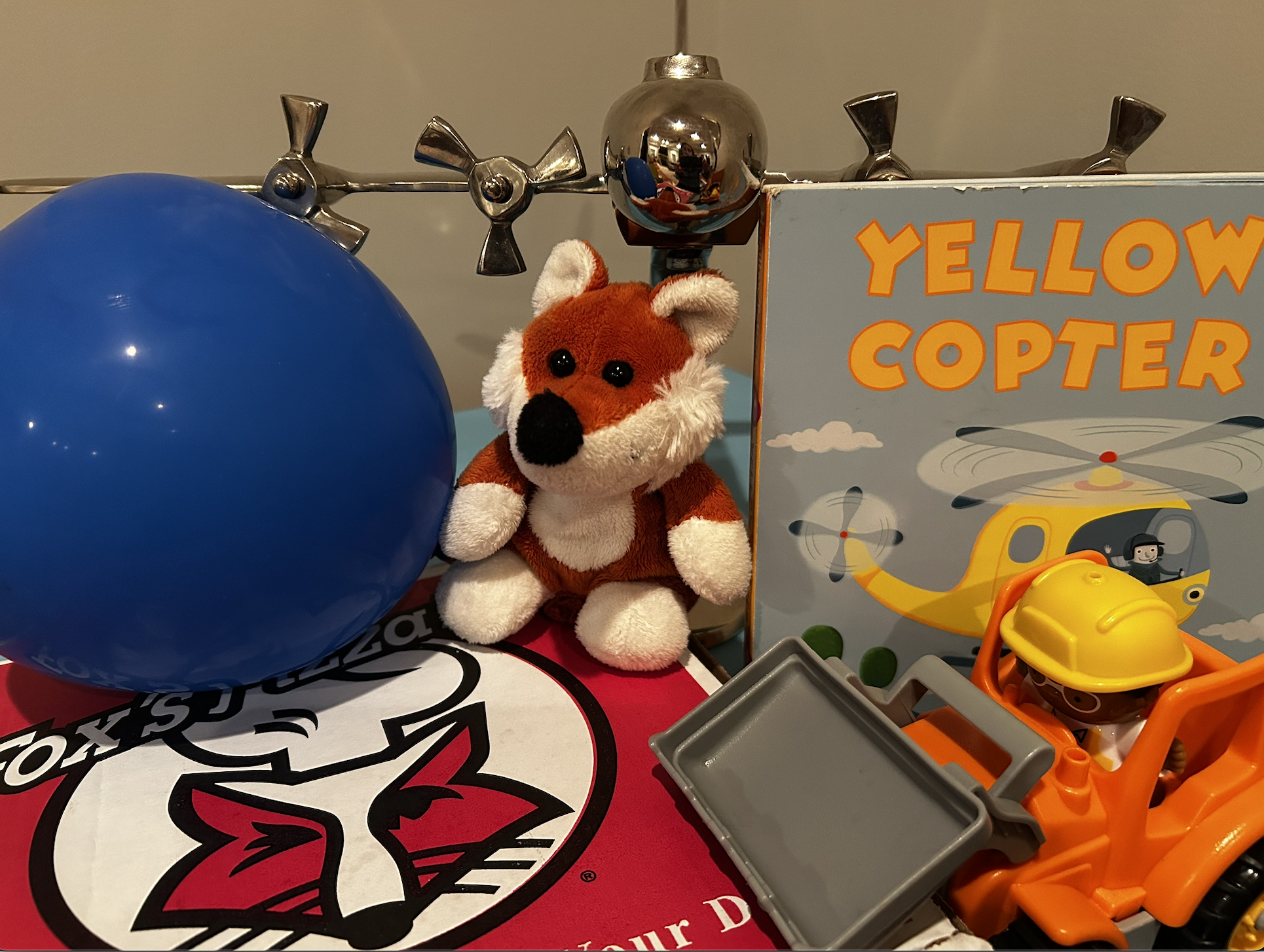
    I’ve written a bunch about the ways that subject matter influences S’s willingness to read books over and over again, and about the fact that even having a favorite subject in the background of an illustration can be enough to get a repeat reading request. To that end, I thought it might be interesting to create a list of the (sometimes idiosyncratic) subjects that seem to be toddler gold:

    • Animals – bonus points for foxes, penguins, dogs, bunnies, and cats
    • Transportation – bonus points for airplanes, helicopters, and buses
    • Construction vehicles – bonus points for excavators and bulldozers
    • Birthdays – parties, candles, balloons, cake, characters saying “Happy Birthday!”
    • The moon
    • Letters of the alphabet
    • Counting
    • Babies
    • Challah bread
    • Pizza
    • Characters wearing bows (bowties, hairbows — you name it)
    • Being upside down
    • Camping – bonus points for marshmallows and campfires
    • Bubbles
    • Popsicles
    • Legos
    • Hanukkah
    • Playgrounds
    • Clocks – S loves to point out wall clocks in the background of things

    If you really want an A+ on S’s picture book report card, combine one or more toddler-approved book subjects into your story. This can be in the main plot or in the illustrations.

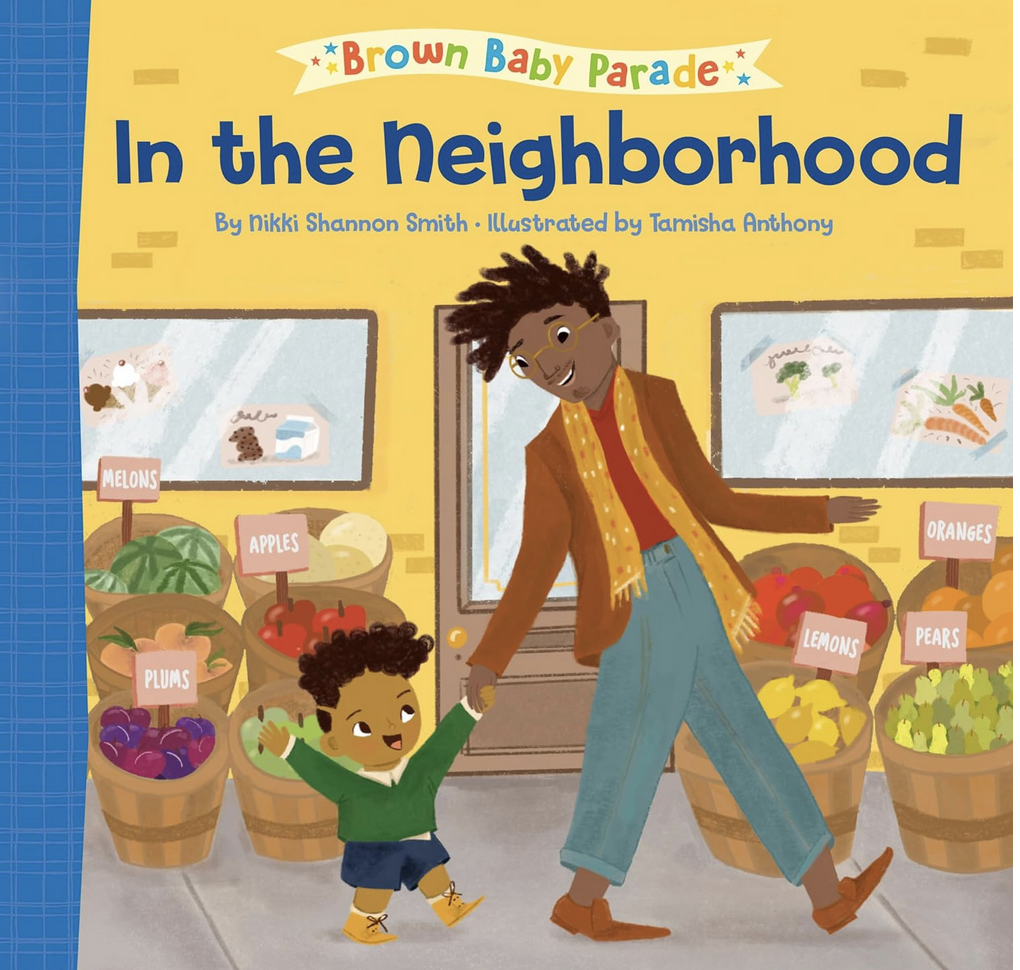
    Nikki Shannon Smith and Tamisha Anthony‘s In the Neighborhood was an immediate favorite in the board book category because of its sweet refrain and because it seems to deliberately (and brilliantly) hit on just about every topic a toddler might like. Baby goes on a walk (with “laces in a bow”), blows bubbles, gets flowers, meets a horse and a puppy, gets berries, sees cars, gets car stickers, watches friends learning how to throw a ball, sees a friend reading, and has a picnic.

    As noted above, even putting toddler-approved book subjects into the background of illustrations is often enough to get a re-read request. We’ve been getting a ton of mileage recently from books like Goodnight Bubbala where a favorite object (there, a toy schoolbus) can be spotted in the background in different places on different pages.

    I you happen to know of (or write) a book that fits these categories, let me know in a comment. We’ll be first in line to grab it!

  • Toddler Teaches…HANUKKAH PAJAMMAKAHS

    Toddler Teaches…HANUKKAH PAJAMMAKAHS

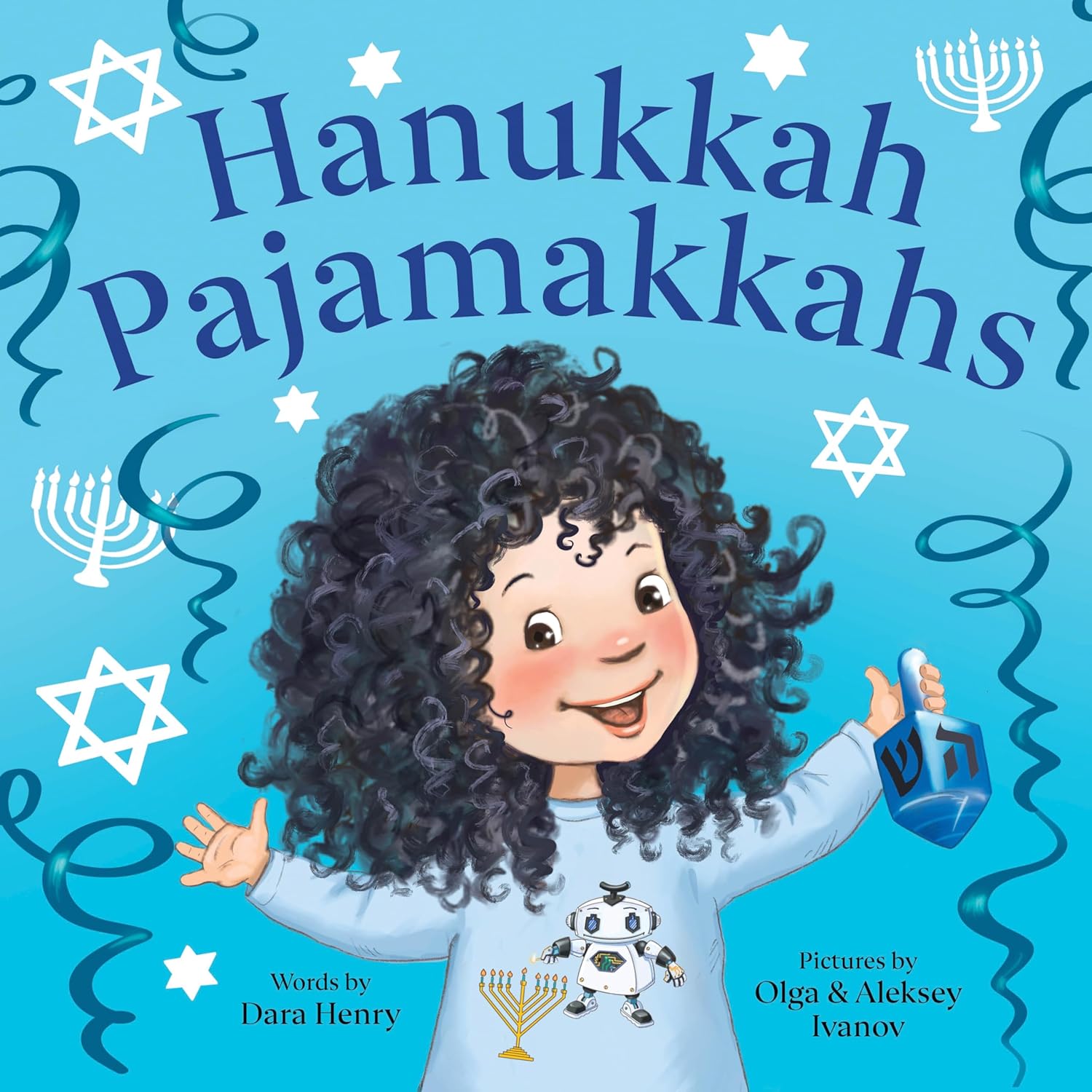
    Continuing our theme of “representation matters,” let’s take a look at Dara Henry and Olga and Aleksey Ivanov’s adorable Hanukkah Pajamakkahs.

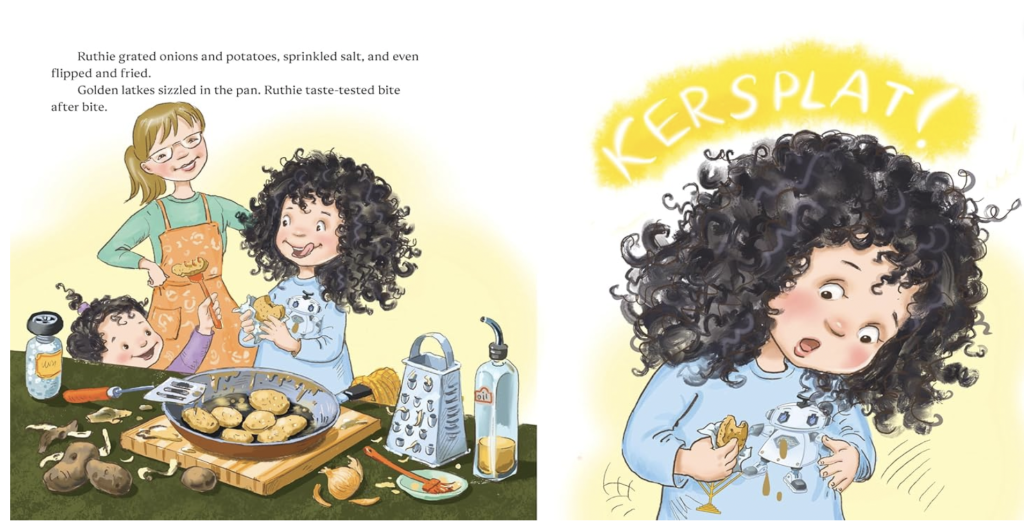
    The story is geared for readers ages 4 and up, and its main joke/premise goes over S’s two-year old head. Ruthie wants to wear her fun new Hanukkah pajamas for all eight nights of Hanukkah and promises her parents she will keep them spotless. She naturally proceeds to get them extremely messy, but claims she’s in the clear because streaks, drips, and splotches aren’t technically spots.

    The book’s sentences are also generally too long for S’s attention span and comprehension abilities. Excluding one-word onomatopoeia sentences, the book averages 8.5 words per sentence, with nearly half of them clocking in at 9+ words per sentence. I wind up doing a fair amount of summarizing on each page, which I think makes S less likely to request an immediate re-read of the book when we finish it (there’s less repetition/consistency when I summarize, and toddlers seem to adore repetition/consistency).

    Nonetheless, S is always excited to read Hanukkah Pajamakkahs when she spots it (terrible pun intended) on the shelf. Here’s why:

    Hanukkah Pajamakkahs introduces its prime toddler hook quickly.

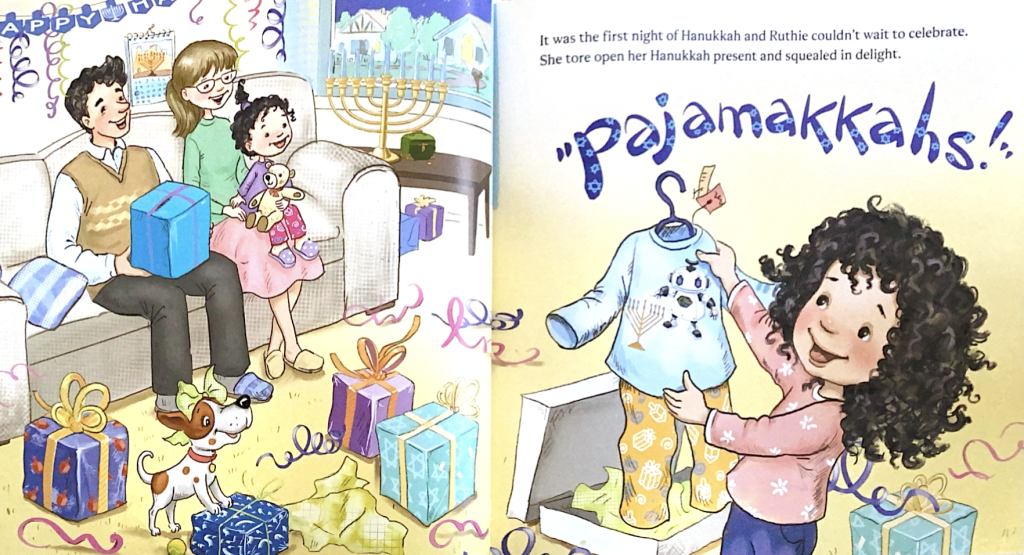
    The book begins with Ruthie opening her Hanukkah pajamas, which she calls “pajamakkahs.” S finds this delightful. “Pajamakkahs” is fun to say, and the book instructs the reader to say it with excitement — both the text (Ruthie “squealed in delight”) and the layout (putting “pajamakkahs” in big, colorful font) demand that “pajamakkahs” be uttered with verve. S loves to join in and shout “pajamakkahs!”

    You too would want to wear your pajamas 8 days in a row if they featured a robot lighting a menorah.

    In addition to starting the story off with excitement, the pajamakkahs are relatable — like Ruthie, S has Hanukkah pajamas and loves to wear them, regardless of the time of year. Hanukkah is exciting, and Hanukkah pajamas carry that excitement forward into something mundane (bedtime).

    Like the joyful challah-baking in Challah Day!, Ruthie’s excitement over pajamakkahs (and the existence of a book centering that excitement) is a prime example of meaning coming from something small — a slice-of-life kind of representation.

    The book features lots of relatable Hanukkah items and activities.

    S also identifies with and enjoys pointing out the other Hanukkah items in the story. Ruthie lights a menorah, makes latkes, and plays dreidel, and many of these items can be found in the background of multiple spreads. These items are exciting, and keep S turning the pages to find more of them.

    Ruthie’s first stain is definitely a drip, not a spot, so I give her credit for her rules lawyering.

    There is a ton going on in the illustrations, Hanukkah-related and otherwise.

    As noted above, S loves to point out Hanukkah-related items in the book, and Hanukkah Pajammakahs‘ illustrations have no shortage of them to look at. They also have a ton of other things going on, which keep S engaged and interacting with the book.

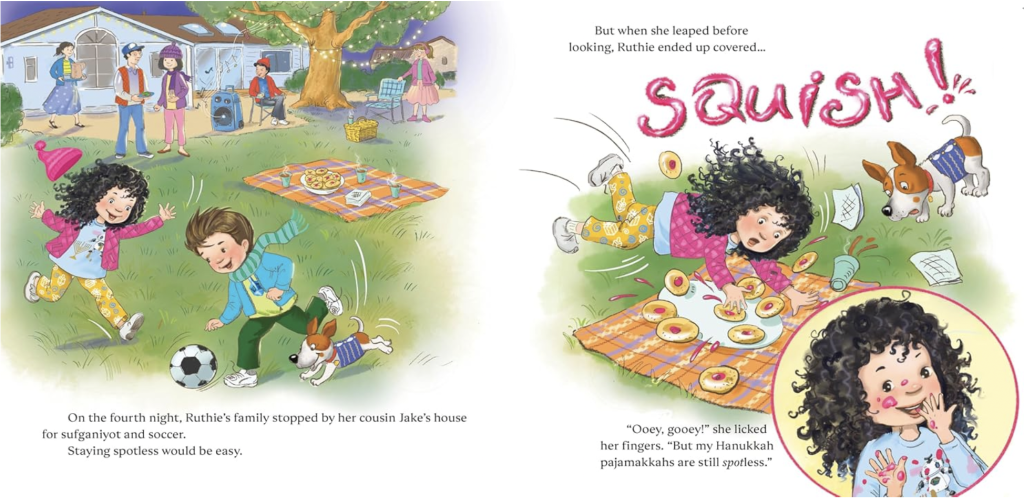
    The below spread is probably S’s favorite spread in the whole story. It takes place outdoors (always a favorite) and features kids playing soccer, a dog running around, flying food, and lots of ancillary items to take note of — hats, scarves, a picnic, etc. There is a lot of action and joy in this spread, which S picks up on.

    By Day 4, I’m pretty convinced that Ruthie’s already got true spots on her PJs. I’m also kind of shocked the puppy isn’t trying to eat her shirt…

    The book makes fun use of onomatopoeia.

    Each time Ruthie gets her pajamas messy, the book uses fun onomatopoeia to describe what is happening. Latke drippings go “kersplat!,” jelly donuts go “squish!,” glitter goes “floof!,” and so on.

    Like the initial use of “pajamakkahs!,” the onomatopoeia acts as a cheerleader in the middle of the story, raising our enthusiasm level as we read.

    Potentially of note for anyone trying to use onomatopoeia as an element to bring in younger readers: S tends to get more excited by certain kinds of onomatopoeia than others. At age 2, words that make sense in context like “squish,” “crash,” or “whoops” tend to get a better reaction than words that convey a sound that S may not understand.

    TL;DR: If you or your kids like Hanukkah, fun sounds, giant messes, or rules lawyering, check Hanukkah Pajamakkahs out. It’s a fun read!

    Hanukkah Pajamakkahs By the Numbers

    Pages: 31 pages of what I would consider the “main” book
    Word Count: 468

    Words Per Illustration: 15.6

    Words Per Sentence: 7.1 (8.5 if one-word onomatopoeia sentences are removed)

  • Toddler Teaches…CHALLAH DAY!

    Toddler Teaches…CHALLAH DAY!

    Last fall, S and I began baking challah together on Friday afternoons. S loves it, and has been asking for books about challah every time we go to the library for months. S was agnostic about whether these books were actually about challah or just had a picture of challah in them — as mentioned in earlier posts, including images of favorite topics in the background of a story is often enough to capture S’s interest. (Interestingly, however, S was very particular about what the illustrations should look like. Some books were rejected at the outset for having insufficiently “challah-y” challah.)

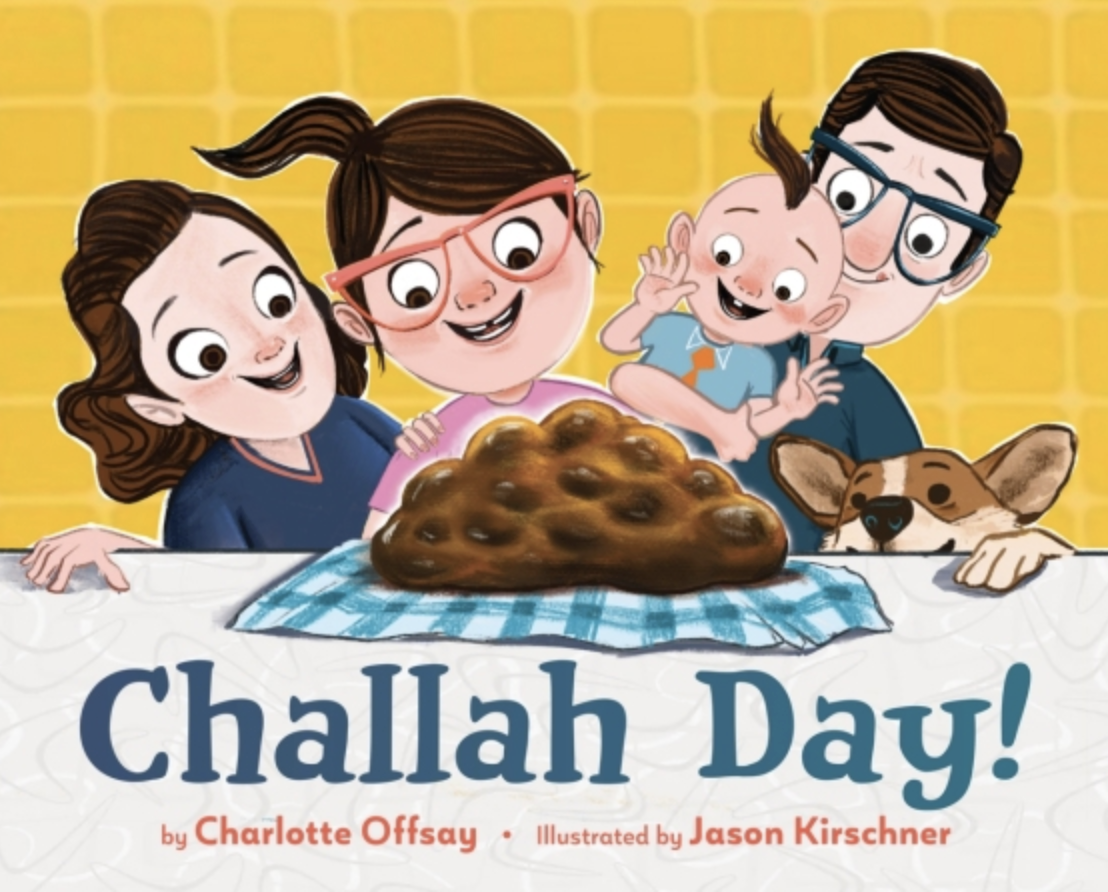
    We recently took out Charlotte Offsay and Jason Kirschner‘s adorable Challah Day! from the library because it is not just a book with pictures of very challah-y challah, but a book about making challah as a family.

    S LOVED it. We read it 9 times on the day we took it home. That love has not abated. On an average day, S requests it between 1 and 5 times, often back-to-back-to-back. (“Read it again!”) It’s the kind of book that is such a runaway hit (and so well-written/illustrated) that we will wind up buying it as soon as we have to return our library copy.

    Let’s look at what makes Challah Day! an early contender for favorite book of the year:

    1. Challah Day! celebrates Shabbat from a toddler POV

    Challah Day! shows the importance of not just representation generally, but of representing the cultural traditions that mean the most to kids. The book is a simple, joyful ode to a specific Shabbat tradition — making challah together as a family.

    The whole family is working together to make the dough, with a special focus on the little girl and her baby brother, who have starring roles in the bread-making production.

    While the story references other Shabbat traditions obliquely, they are not the focus of the story. They are also the exact other traditions that would be meaningful to a young child — lighting candles, drinking grape juice, and spending time with grandparents.

    The book is cozy and warm and absolutely spot on for the way S experiences Shabbat — it is the day we make and eat challah (and light candles, drink grape juice, and spend time with grandparents).

    I believe that this sort of representation — meeting young kids where they are — is exactly why the book has resonated so much with S.

    2. It has short, punchy sentences and colorful, active illustrations

    Challah Day! is a joy to read out loud. The sentences are short; the rhyme is bouncy and joyful; and the way the rhyme, punctuation, and page layout breaks things up leads to natural pauses that make it easy for S to focus on what is going on.

    At an average of 4.78 words per sentence, it fits squarely into the sweet spot sentence length for S’s attention span.

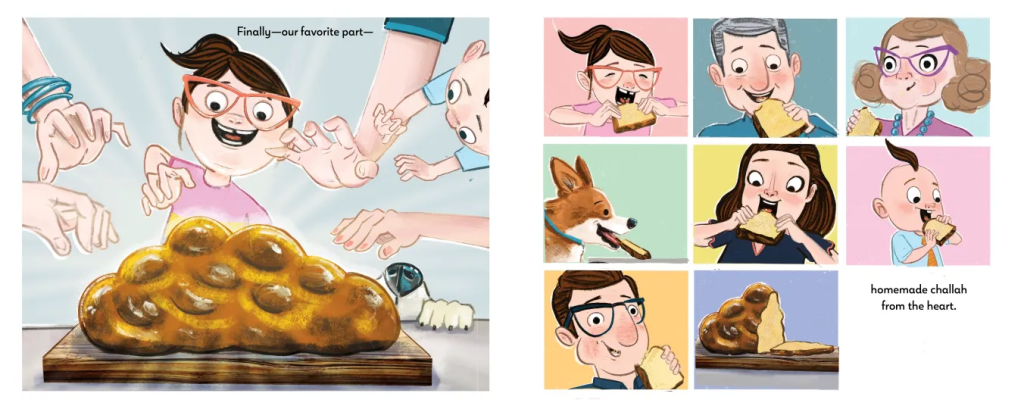
    Charlotte Offsay’s text is complemented perfectly by Jason Kirschner’s illustrations, which have just enough going on to hold S’s interest at all times. This spread is a particular favorite, with the whole family actively eating challah (including the dog!) and bright background colors that S loves to point out.

    3. It has multiple toddler hooks

    Combining S’s interests is a surefire way to make a book a repeat player. In addition to the carbohydrates discussed at length above, we have at least five more toddler hooks:

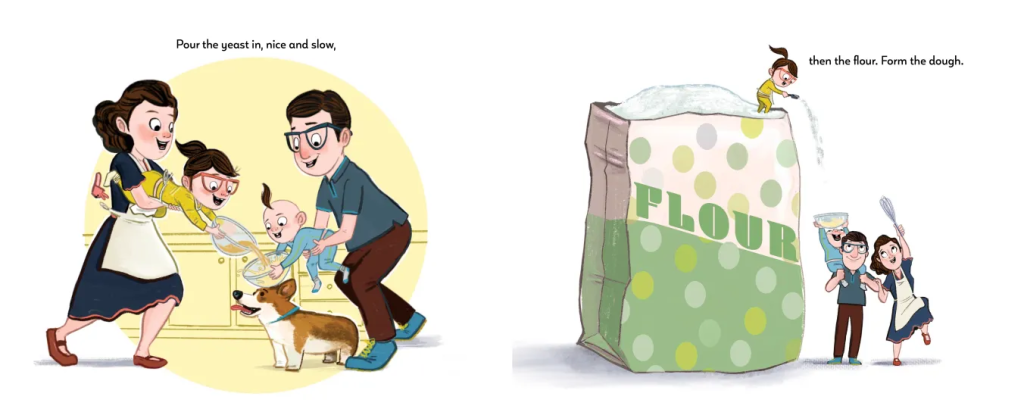
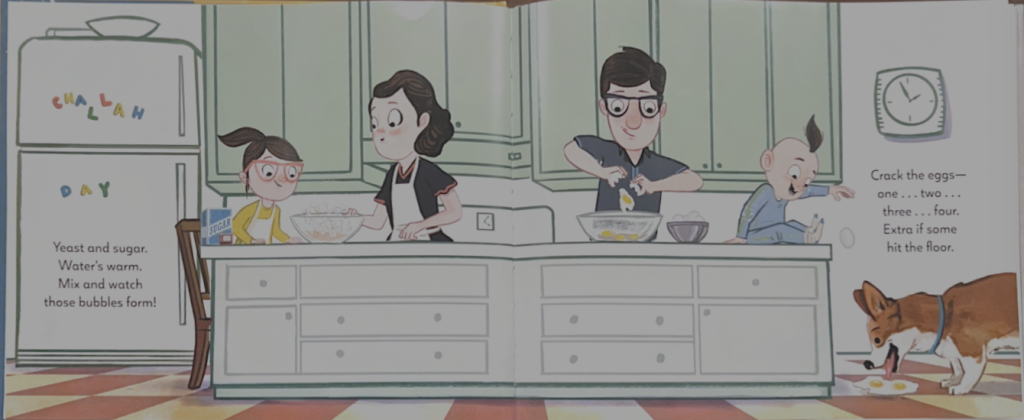
    Family baking together, with dad cracking eggs, baby dropping them on the floor, and mom and sister working on the starter.
    1. A baby — S loves pointing out the baby on every page
    2. A dog — any addition of animals to a story is a plus, particularly when they are actively involved (here, helping braid challah, etc.)
    3. Simple counting — S likes to count along and point out each of the eggs when I get to “Crack the eggs – one, two, three, four”
    4. Bubbles — always a favorite; doesn’t matter that these are yeast bubbles and not soap bubbles
    5. Family time / a “knock” at the door bringing grandparents over — the knock is a fun change of pace, and the grandparents are additional people for S to point out

    I hope you love Challah Day! as much as we do — I have a feeling we will be reading it for a long time!

    Challah Day! By the Numbers

    Pages: 28 pages plus back matter

    Word Count: 244

    Words Per Illustration: 6.26

    Words Per Sentence: 4.78

  • Toddler Teaches…LITTLE RED HEN

    Toddler Teaches…LITTLE RED HEN

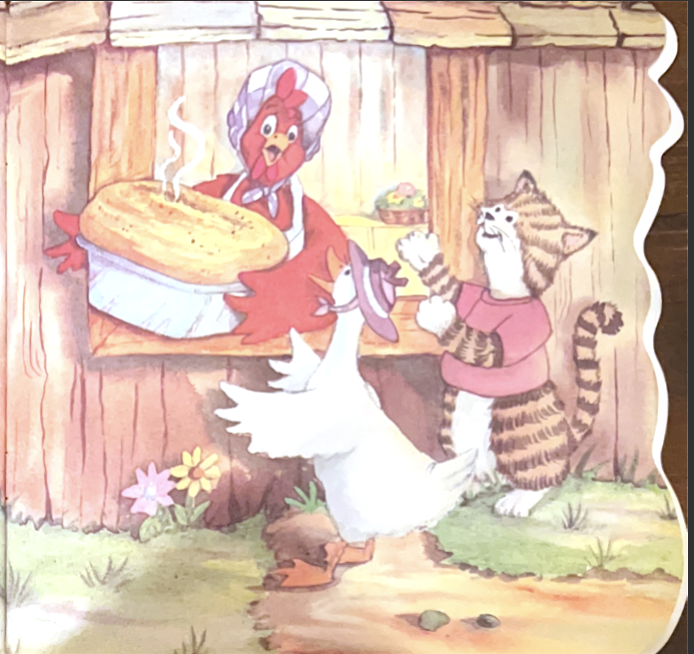
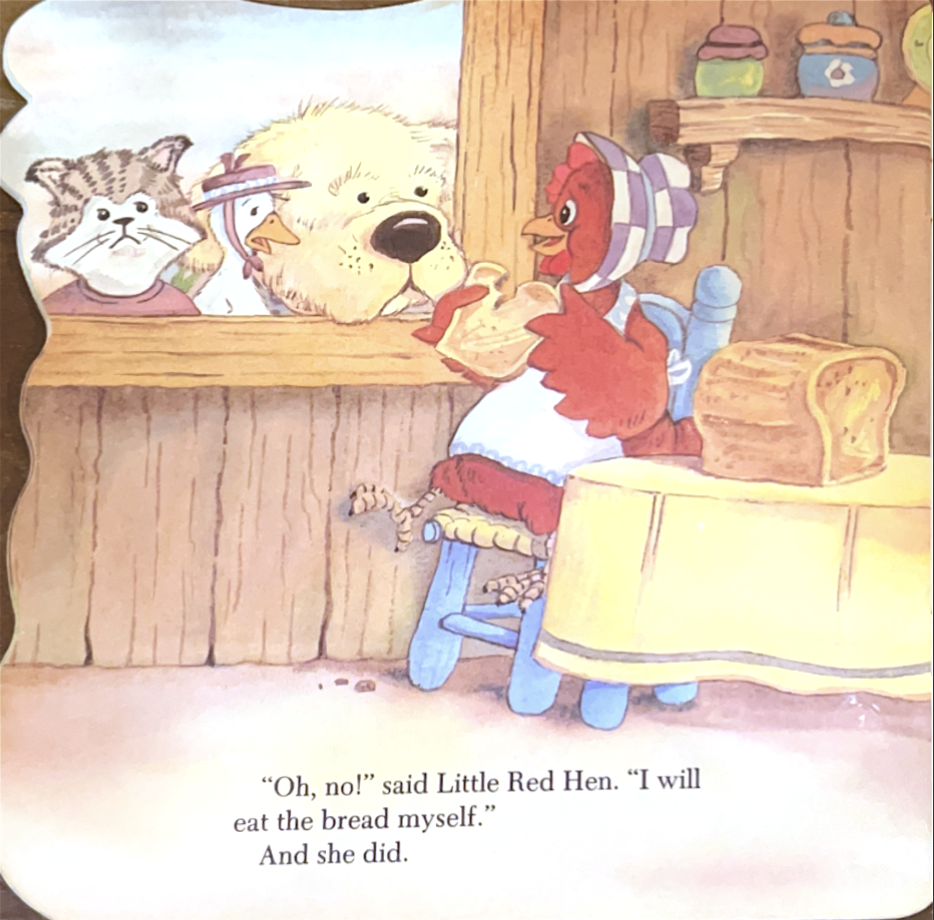
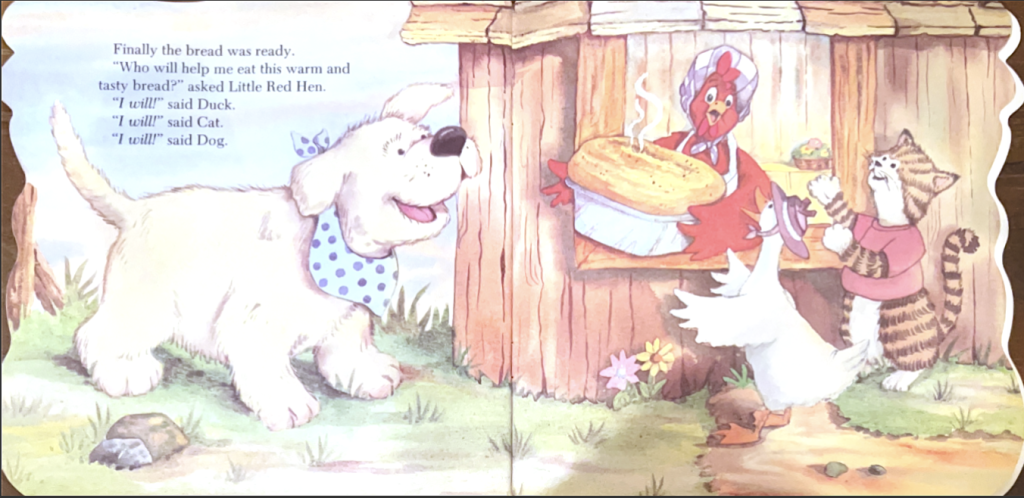
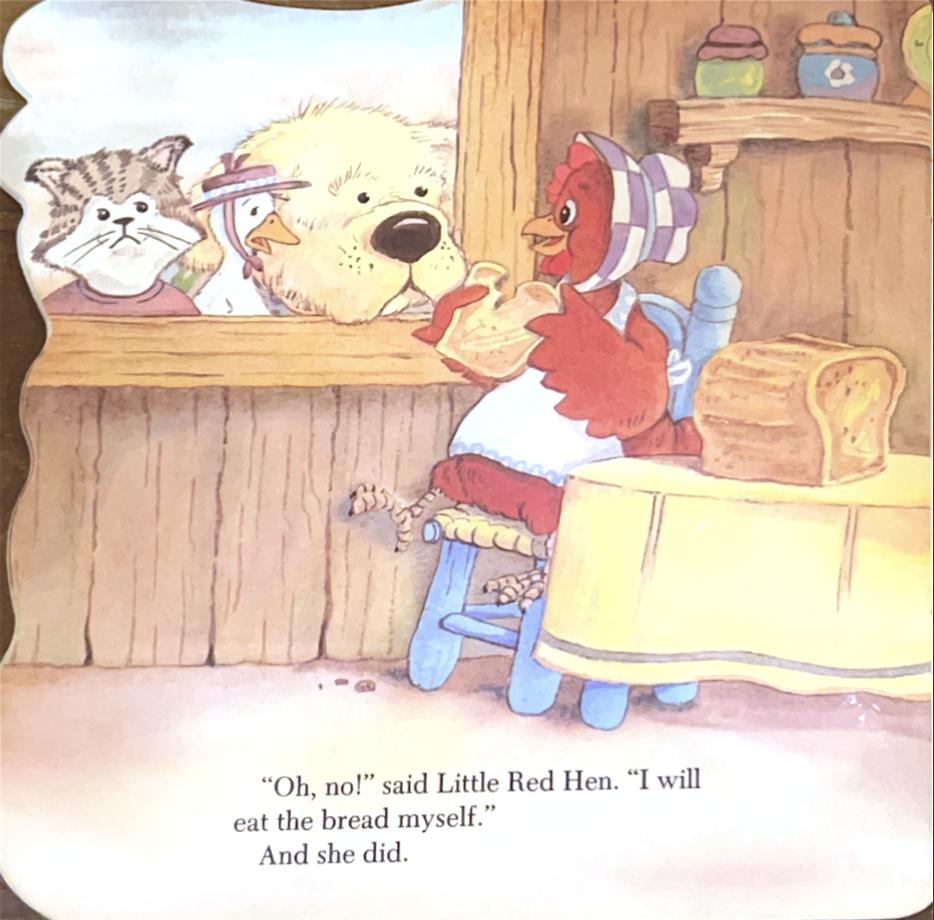
    Because they are awesome, my parents held onto my favorite childhood books. Lyn Calder and Jeffrey Severn’s Little Red Hen was high on that list. I loved the Hen’s absolutely giant loaf of bread, as well as her (suddenly smaller) slice of toast.

    Seriously, how much bread did the Little Red Hen eat between the prior page and this one? And why is it no longer the size of her torso?

    Over the summer, my parents pulled out a number of my childhood favorites to read to S. Little Red Hen was an immediate winner. It’s got all the elements needed for toddler success: animals; bright, colorful illustrations; and short, punchy refrains. Not to mention carbohydrates.

    Breaking Down Little Red Hen

    Little Red Hen follows a predictable pattern, which got S actively interacting with the story as early as 19-20 months:

    • First, the Hen asks “Who will help me [do whatever thing she needs help with to keep making the bread]?”
    • Each time, the other animals respond in the same Rule of 3 refrain: “‘Not I,’ said Duck. ‘Not I,’ said Cat. ‘Not I,’ said Dog.”
    • Hen responds in a predictable pattern that mirrors her initial ask, reinforcing the language that was already used: “Then I will [do whatever Hen’s initial request was] myself.”
    • The sequence for each of Hen’s requests concludes with: “And she did.”

    S loved the repetitions, and loved chiming in “did” at the conclusion of each section.

    The refrains and parallel language are predictable, vocabulary building, and fun. They also use simple, declarative sentences that make it easier for young readers to understand what is happening and participate in the action.

    The last few pages invert the animals’ refusals to help, continuing in a Rule of 3 pattern that ties the ending of the book to everything that came before in a satisfying “of course!” conclusion.

    Who will help Hen eat the (absolutely ginormous) bread? “I will!” said Duck, Cat, and Dog. But in a continuation of the previously established pattern, Hen responds that she will eat the bread herself. And in a continuation of the refrain S loves so much, the story ends with a simple, “And she did.”

    Analyzing the construction of the book, I can see why I loved Little Red Hen as a kid and why S loves it now. (Though if we’re being honest, I still really like the bread pictures, so maybe it’s more about the carbs than the exceptional construction of the story…)

    Trying a Reimagining of the Story

    Given S’s love of Little Red Hen, I thought it would be interesting to see S’s reaction to a version of the story geared for slightly older readers.

    Thanks to Jasmine Sears for the eARC!

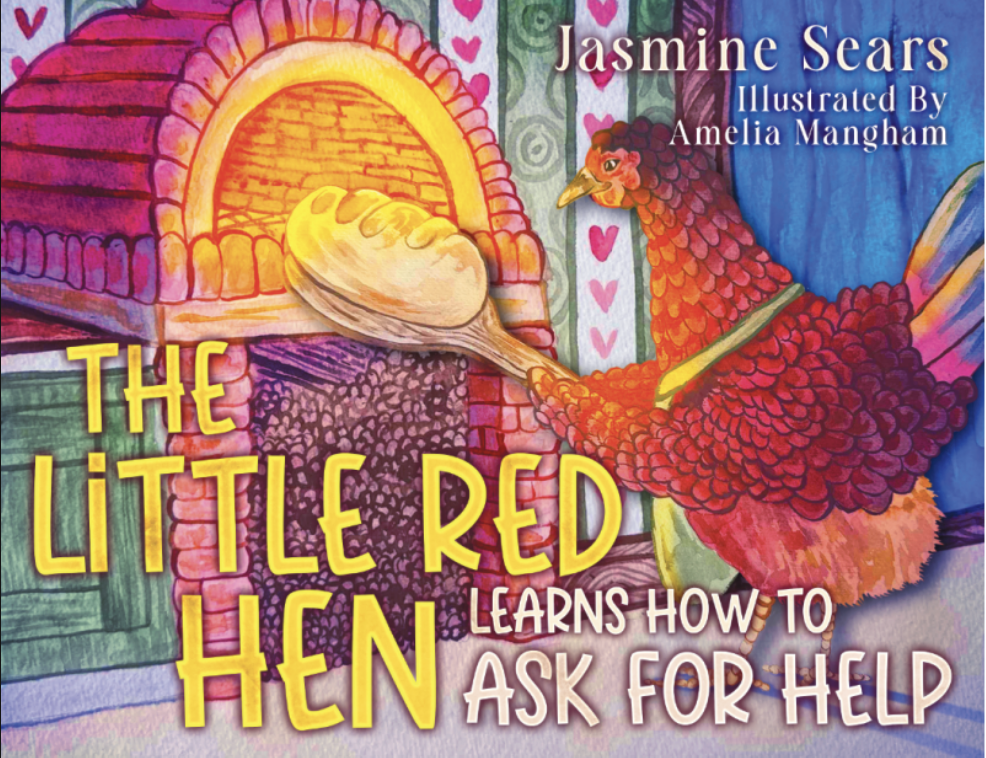
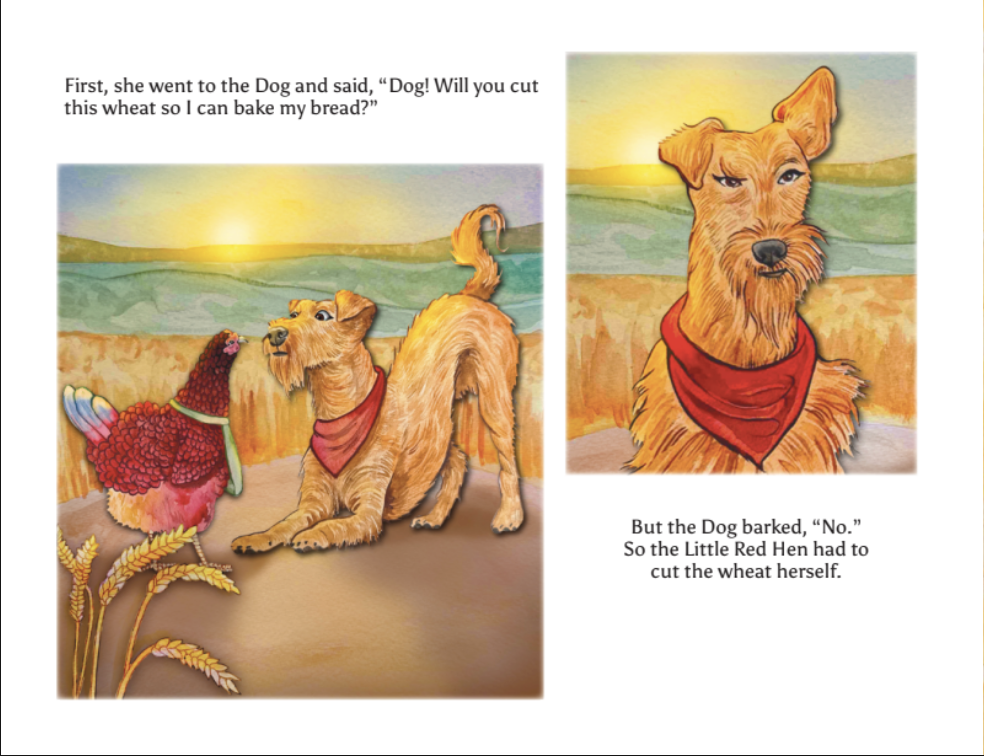
    Jasmine Sears‘s and Amelia Mangham‘s upcoming picture book The Little Red Hen Learns How to Ask for Help cleverly reimagines the story in a light more favorable to the Hen’s unhelpful friends. In their retelling, Hen has asked — nay, demanded — each of her friends help her with a task they are unsuited to do. Dog is told to cut the wheat, Cat is told to fetch the water, and so on. It is only after Hen realizes she should be asking nicely and asking her friends for help with things they know how to do (and are not afraid of doing) that they all pitch in and bake the bread together.

    S was absolutely transfixed by the illustrations in this version — they’re beautiful, bright, and almost glow from within. We made it to the end of the first half of the story (where Hen eats all the bread herself), which is the part S already knew. That was 367 words, which is on the long side for S’s attention span but doable with this many illustrations (particularly when they are brightly colored and of animals) and predictable, parallel language. The fact that S already knew the basics of the story to that point probably also helped.

    S’s interest in the retelling highlights the value of reimagining stories that are familiar to young readers — the more familiar the story, the easier it is for a young reader to understand parts of the retelling, even if generally aimed at an older age group. It’s also another mark in the plus column for animals, parallel language, and brightly colored illustrations (a.k.a. toddler gold).

    Little Red Hen By the Numbers:

    Pages: 23

    Word Count: 297

    Words Per Illustration: 24.75

    Words Per Sentence: 7.24

    The Little Red Hen Learns to Ask for Help By the Numbers:

    Pages: 36 pages of what I would consider the “main” book.

    Word Count: 785

    Words Per Illustration: 13.77

    Words Per Sentence: 10.61

  • Toddler Teaches…URSULA UPSIDE DOWN

    Toddler Teaches…URSULA UPSIDE DOWN

    I adore Ursula Upside Down. It’s one of my favorite books of the last several years. It’s sweet, funny, gorgeously illustrated, based on a true natural phenomenon, and has a surprise ending that is so obvious and perfect that you wonder why you didn’t figure it out before it happened. In what is becoming a theme, I took it out of the library for my own research and S decided to adopt it. Let’s take a look at why.

    The book introduces and humanizes its main character early.

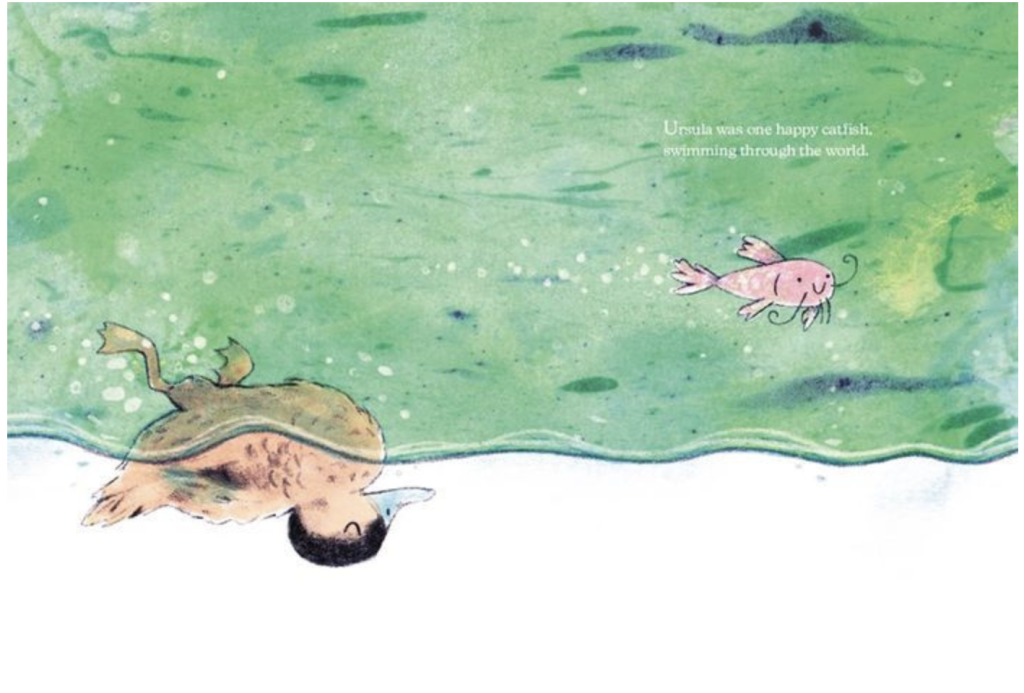
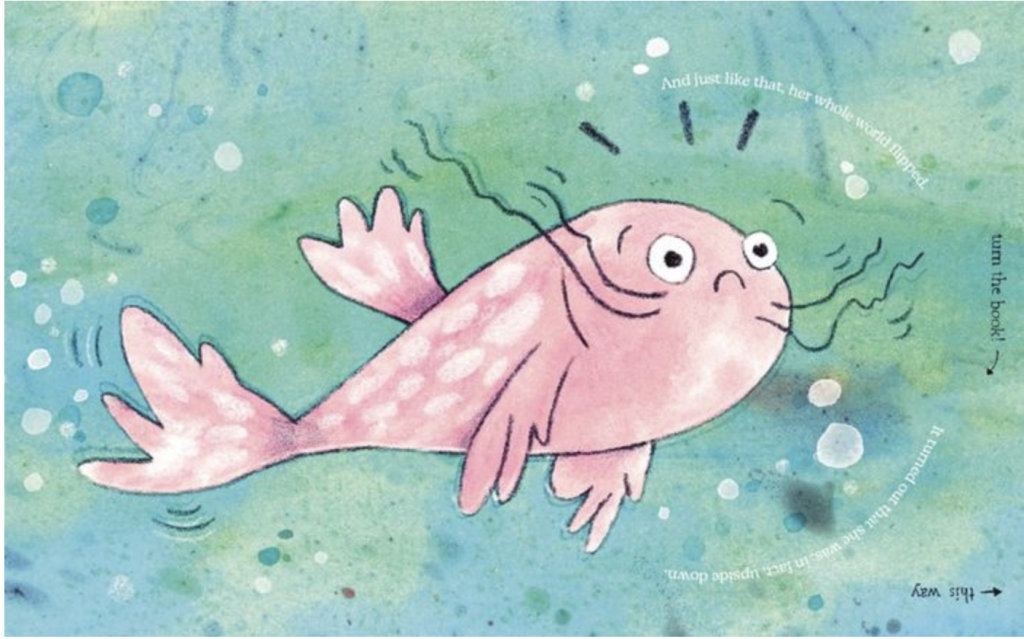
    Here’s Ursula on the first page. She’s bright pink, smiley, and plainly introduced as such: “Ursula was one happy catfish, swimming through the world.” In one sentence and picture, you already feel like you know her, and she’s a delight.

    S immediately took a liking to Ursula. Just like Milo in The Penguin Who Was Cold, the quick introduction to Ursula makes S like her and care about her problem. And just like Milo, Ursula’s problem is laid out quickly enough to hold a two year old’s attention.

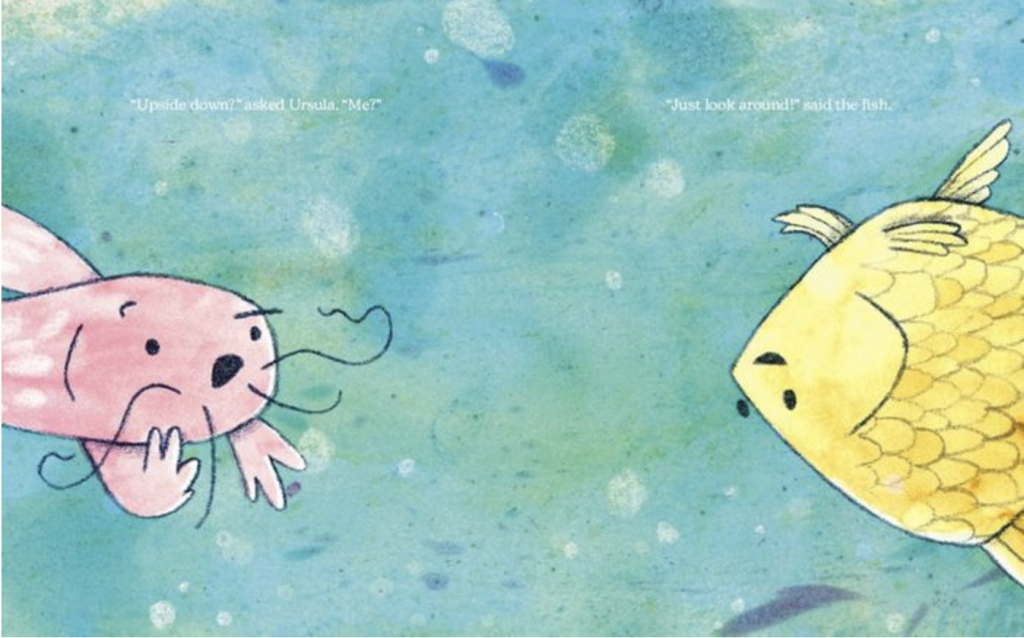
    Ursula is very clearly upside down – the duck’s positioning makes that obvious to even the most fidgety of readers. And within pages, we see Ursula’s world flip when she learns that others don’t see things the way she does. Since we already care about her, we now care about her being upset too.

    The book combines both obvious and unexpected toddler interests.

    The obvious: animals. Ursula is an adorable fish, surrounded by other fish, ducks, etc.

    The not-so-obvious: being upside down. S LOVES getting flipped upside down, and immediately identified with Ursula being upside down. This led to S continuously exclaiming “Ursula! Upside Down!” whenever S spotted or opened the book.

    The book is interactive, snappy, and colorful.

    Perhaps unsurprising given toddler attention spans, Ursula Upside Down gets high marks from S for its short, snappy sentences, bright pictures, and interactivity.

    The fact that Ursula is upside down from the start offers built-in interactivity throughout the story — S and I can flip the book to see various animals and scenery change perspectives. Starting on the first page, it’s fun to flip the book on its head to see what we associate as “normal” (a duck swimming on top of the water) turn right-side up.

    Corey R. Tabor brilliantly flips the whole book when Ursula starts to wonder if she’s been upside down the whole time. This also keeps S’s attention — it’s the only book we’ve read that uses the medium of the book like that, and it’s an interactive experience.

    As with Milo’s journey in The Penguin Who Was Cold, the end of the story here goes over S’s head. (Though as noted above, it’s amazing and you should definitely check it out.) But none of that matters to S. We read the book for our cheerful pink friend, and will continue to reach for the story because of all the excellent leg-work (fin-work?) that was put in up front.

    Ursula Upside Down By the Numbers:

    Pages: 31 pages of what I would consider the “main” book

    Word Count: 272 (282 if you add in speech bubbles in the illustrations that are hilarious but not necessary for the main story to work)

    Words Per Illustration: 14.3

    Words Per Sentence: 6.33

  • Toddler Teaches…Favorite Picture Books of 2025 (12 to 24 Months)

    Toddler Teaches…Favorite Picture Books of 2025 (12 to 24 Months)

    As we head into a new year, I thought I’d take a moment to highlight some of S’s favorite picture books of 2025 that did not get individual posts. Without further ado, the unsung picture book heroes of the 12-24 month age range:

    Favorite Picture Books of 2025: The Classics

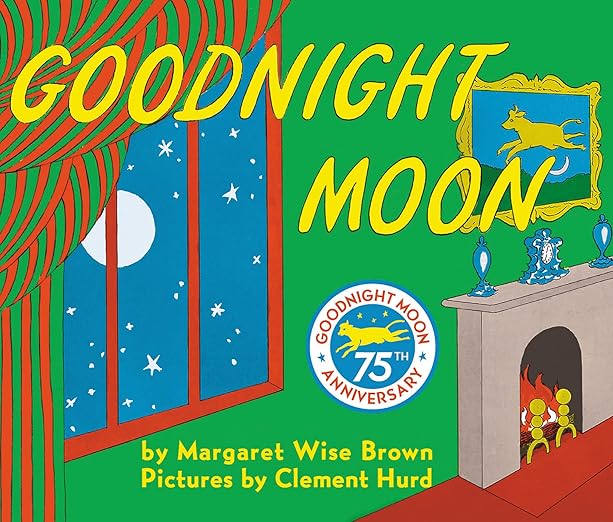
    Book cover for Goodnight Moon by Margaret Wise Brown and Clement Hurd, a favorite picture book of 2025

    Goodnight Moon (Margaret Wise Brown / Clement Hurd)

    The Runaway Bunny (Margaret Wise Brown / Clement Hurd)

    Chicka Chicka Boom Boom (Bill Martin Jr. and John Archambault / Lois Ehlert)

    Brown Bear, Brown Bear, What Do You See? (Bill Martin Jr. / Eric Carle)

    The Very Hungry Caterpillar (Eric Carle)

    Madeline (Ludwig Bemelmans)

    Where’s Spot? (Eric Hill)

    Favorite Picture Books of 2025: The Vehicles Set

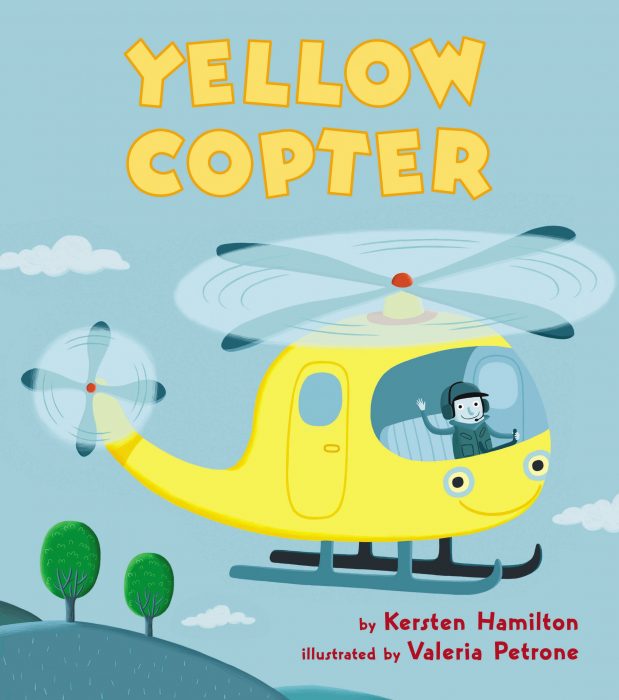
    Book Cover for Yellow Copter by Kersten Hamilton and Valeria Petrone, a favorite picture book of 2025

    Yellow Copter (Kersten Hamilton / Valeria Petrone)

    Little Excavator (Anna Dewdney)

    Goodnight, Goodnight, Construction Site (Sherry Duskey Rinker / Tom Lichtenheld)

    Favorite Picture Books of 2025: The Animals Set

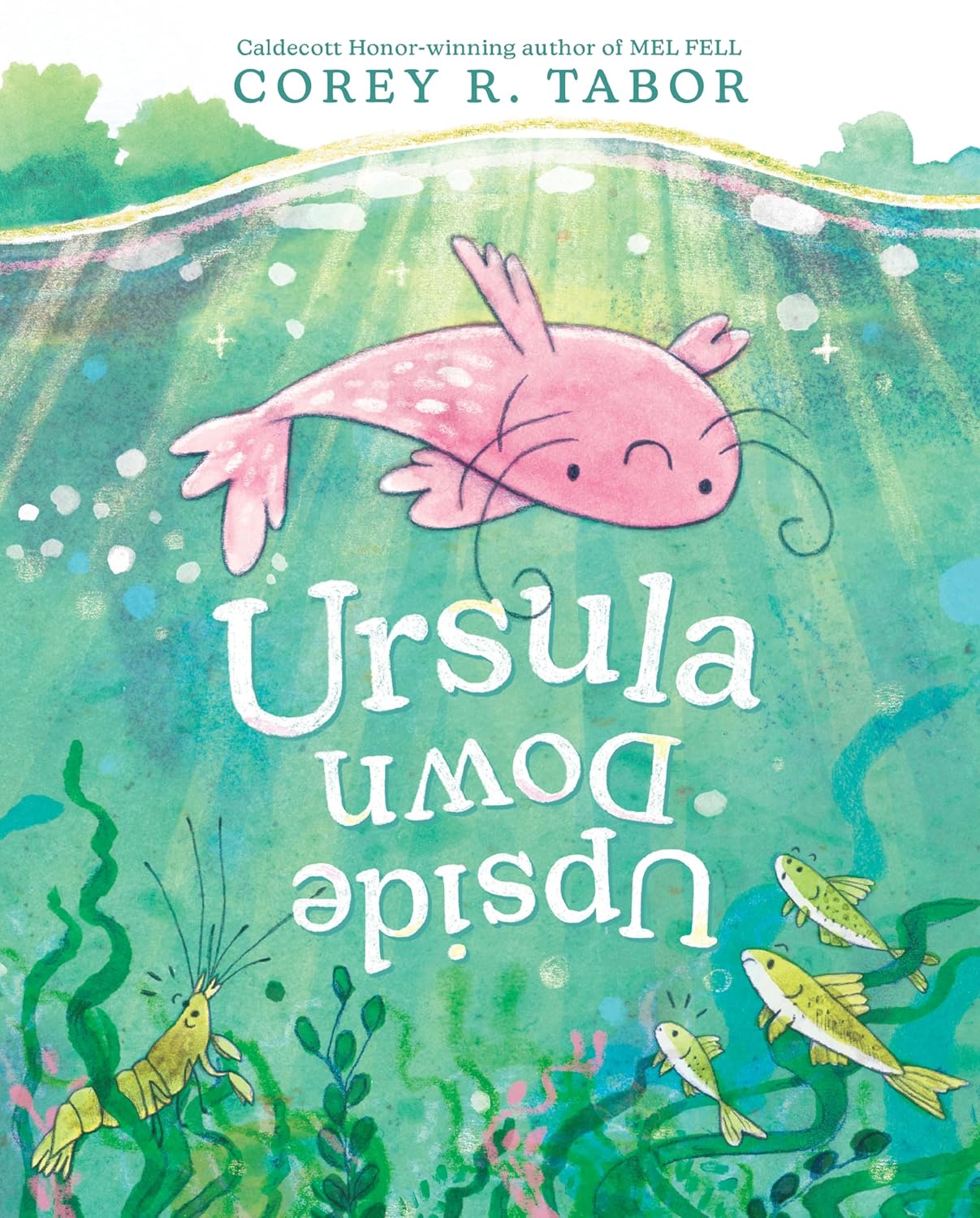
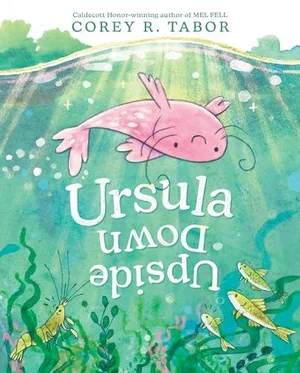
    Book cover for Ursula Upside Down by Corey R. Tabor, a favorite picture book of 2025

    Ursula Upside Down (Corey R. Tabor)

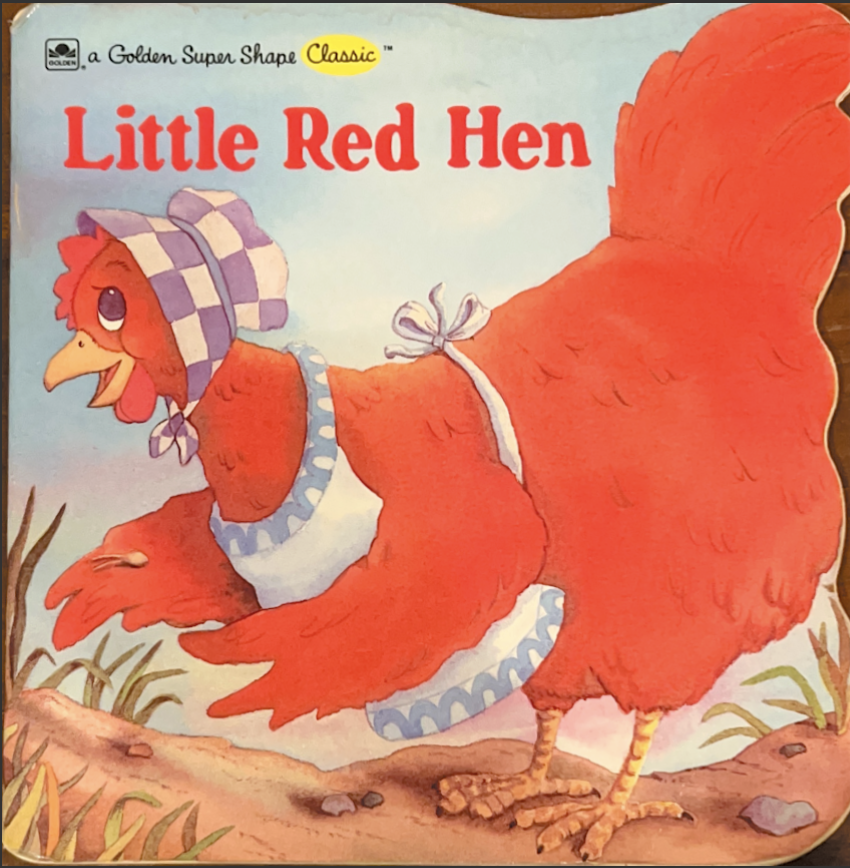
    Little Red Hen (Lyn Calder / Jeffrey Severn) (specifically this Golden Books edition from 1988)

    The Sky is Falling! (Mark Teague)

    Apples for Little Fox (Ekaterina Trukhan)

    Click, Clack, Moo: Cows That Type (Doreen Cronin / Betsy Lewin)

    Dear Zoo (Rod Campbell)

    Favorite Board Books of 2025

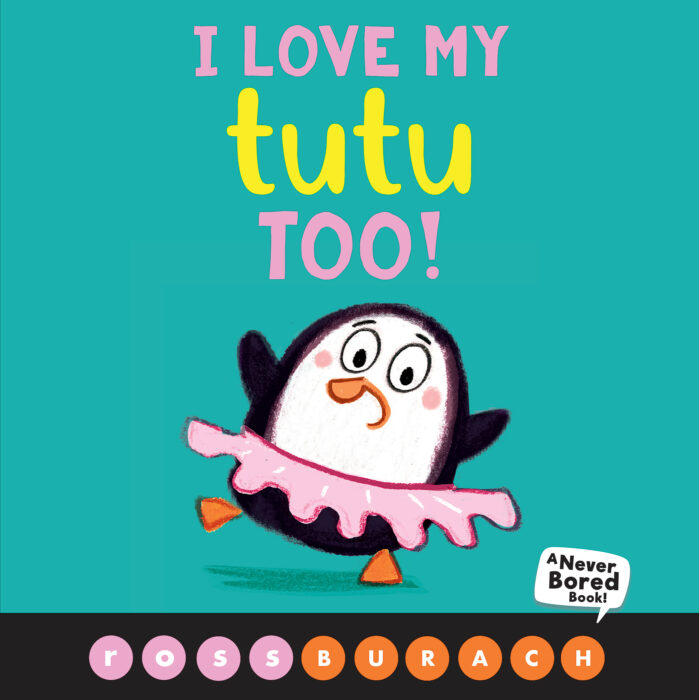
    I Love My Tutu Too! (Ross Burach) (Scholastic, Inc., 2020)

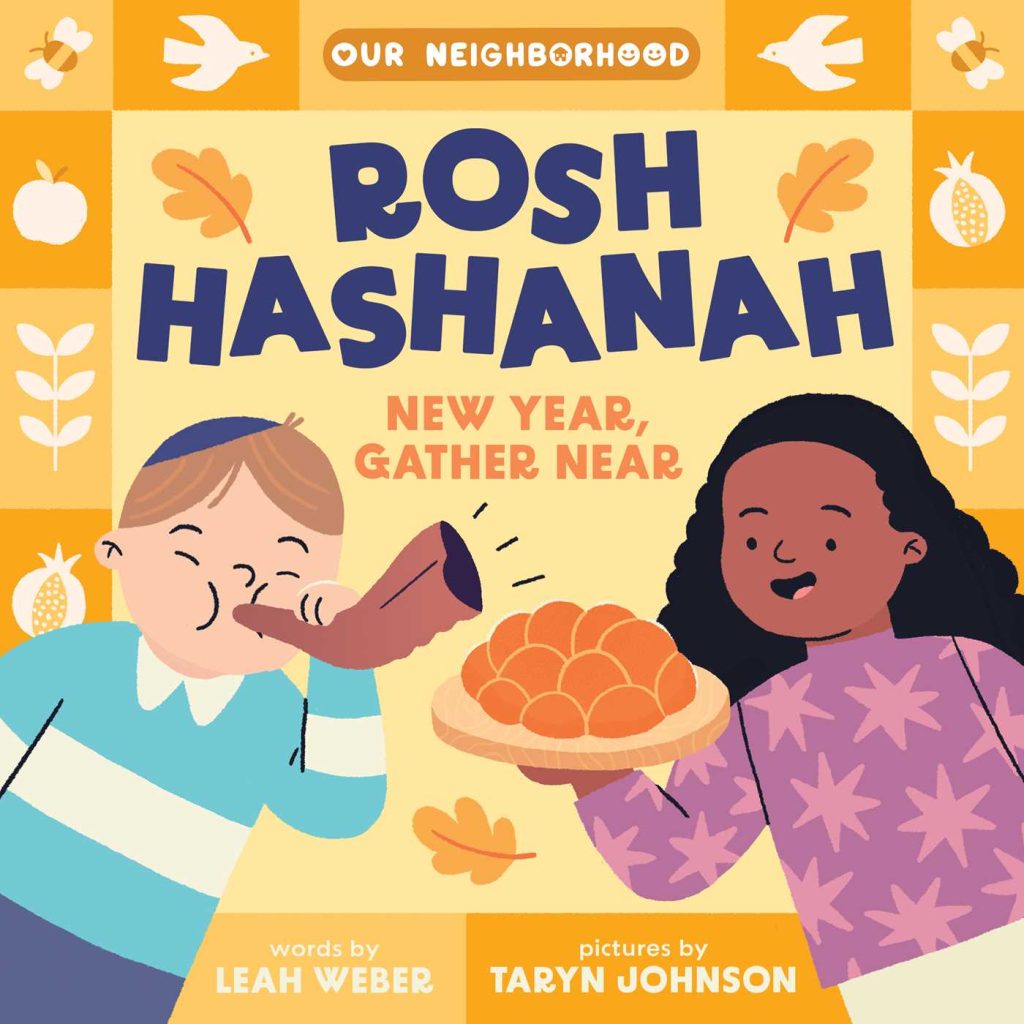
    Rosh Hashanah: New Year, Gather Near (Leah Weber / Taryn Johnson)

    Absolutely anything by Sandra Boynton, with a special shout-out to Silly Lullaby and Moo, Baa, La La La!

    P is for Pastrami (Alan Silberberg)

    Little Blue Truck Feeling Happy (Alice Schertle / Jill McElmurry)

    ***

    And a few closing thoughts on S’s preferences this year:

    • Short, punchy sentences are key. I can get away with reading significantly more text per page if each sentence is around 5-7 words. If a page has 30 words on it, breaking those 30 words into 5-6 sentences is far preferable to 2 sentences.
    • Refrains are toddler gold.
    • S was not nearly as into rhyme as I would have expected. Of all the books on this list, only 5 of them are rhyming, and the rhyme is not the reason S likes the book. Punchy, repetitive sentences that S can anticipate and participate in (a la “Click, clack, moo!”) are far more important for getting S engaged in the text than rhyming is.
    • Subject matter is key, but idiosyncratic. Even having the subject of interest in a background image will often suffice to have S ask to read the book. Combining multiple kid-friendly topics optimizes chances of hitting on a preferred topic at any given time.
    • Flaps, cutouts, and other forms of physical interactivity got high marks this year. This ran the gamut from the holes in The Very Hungry Caterpillar to textures in Little Blue Truck Feeling Happy (which quickly surpassed its namesake because it had feathers and wool and a shiny blue truck to touch).

    Hope you all have a great new year — see you in 2026!

  • Toddler Teaches…HOW TO DRAW A HAPPY CAT

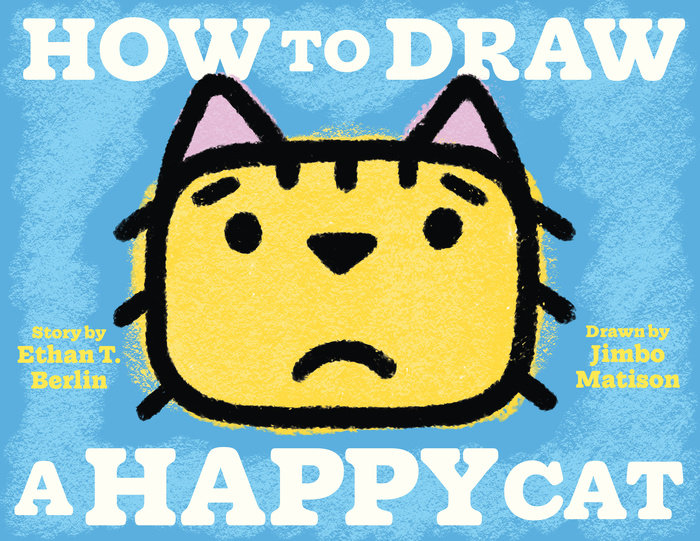
    Toddler Teaches…HOW TO DRAW A HAPPY CAT

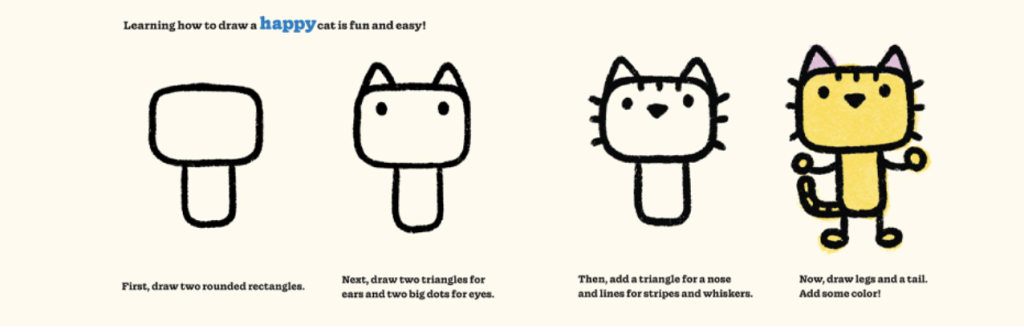
    I first came across How to Draw a Happy Cat when our local children’s librarian suggested it for my own writing research. (Side note: Librarians are awesome. Ideas to support your local library here.)

    As a more advanced picture book (SLJ suggests it for grades K-2), I did not expect it to immediately enter S’s favorite book rotation. I should have. Here’s why:

    1. It combines multiple kid-favorite topics.
    2. The language is declarative and snappy.
    3. The book invites the reader to participate in the action.
    4. The illustrations are active and colorful.

    As pretty much all my previous posts have established, S’s current favorite book subjects are animals and transportation. If your book has animals and/or transportation vehicles, S will probably at least give it a spin. If your book combines animals and transportation vehicles, you have dramatically upped your odds that S will want to read your book, and likely more than once. (Exhibit A: Animals Go Vroom!, an all-time S favorite.)

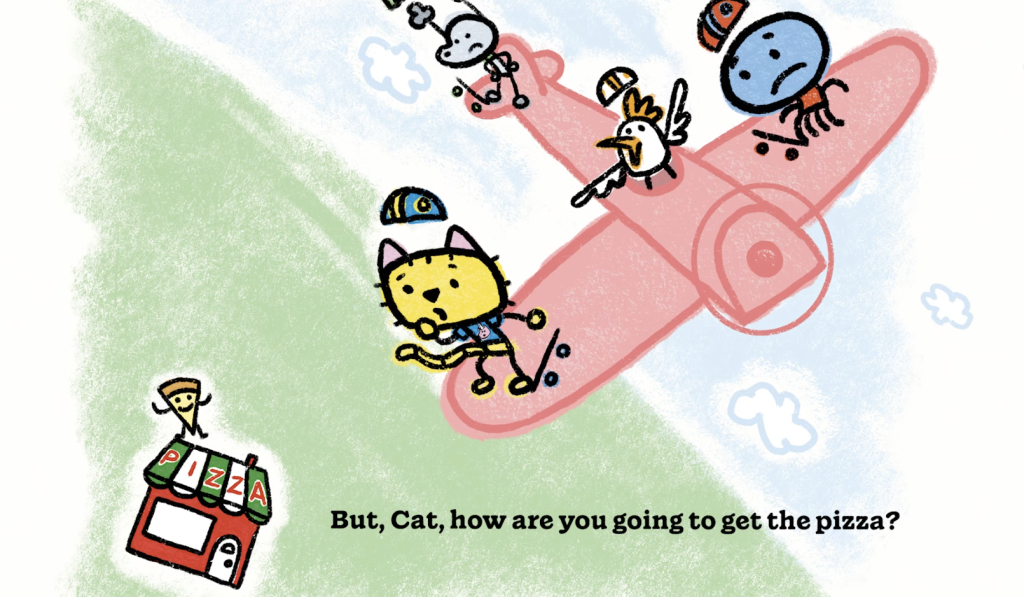
    How to Draw a Happy Cat does one better, and introduces not only animals and airplanes, but also one of S’s favorite foods: pizza.

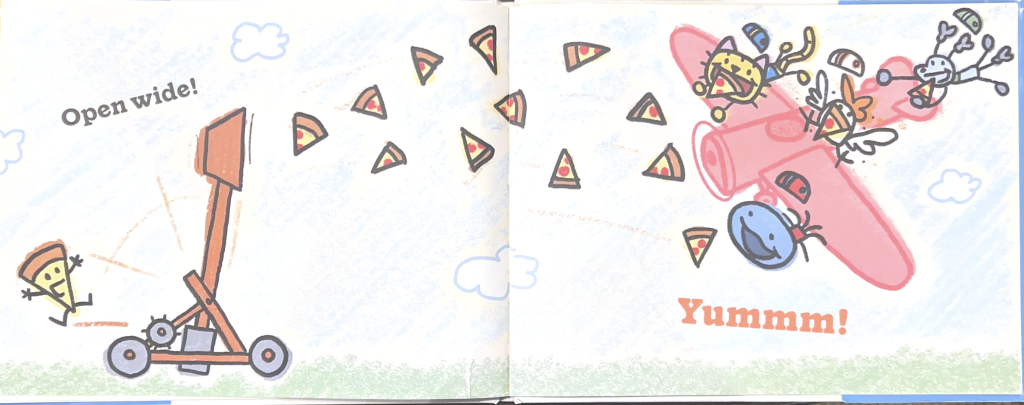
    This may be one of S’s favorite images in any picture book we’ve read. It’s got a cat eating pizza being flung from a catapult, all while hanging onto an airplane. Pretty much toddler heaven.

    It’s like Ethan Berlin was handed a list of S’s interests and told to craft a story around them. Even without a great story, S would be predisposed to flip through the story over and over again, just to look at pictures of cats, airplanes, pizza, and cats eating pizza on airplanes.

    But the story works. It’s a hysterical, modern, interactive version of If You Give a Mouse a Cookie. And while the story is complex, the way it’s written and illustrated extends the age range downward.

    The story starts by inviting the reader to participate in the action — drawing our main character.

    Learning how to draw a happy cat may be fun and easy, but no one said anything about keeping that cat happy…

    It goes on from there in the same vein – each time we think the cat is finally happy, something happens, and we have to draw/solve her next problem.

    The sentences are often short and limited to one or two per page, conveying complicated problems and emotions with clean, simple language that is easy for S to understand. (How is the cat going to get the pizza? We have to turn the page to find out!)

    The cadence is great for listening, and the interactive language choices also keep S engaged – S is getting all the credit for helping out our new friend Cat. (“Great! She’s so happy! Good job!”)

    The sentences are also frequently accompanied by an illustration per idea. This decision is genius from a craft perspective, because it gives the reader the impression that they are impacting the story by “drawing” new things as the narrator directs them to do so.

    It also has a possibly-unintended benefit from a toddler attention-span perspective. As with Itty-Bitty Kitty-Corn, the sentence-per-illustration model of picture book creation is crucial to keeping S’s attention in longer books because each sentence gives S a new thing to look at (and the new illustration reinforces S’s ability to understand what the text is saying).

    So while Ethan Berlin and Jimbo Matison probably almost certainly didn’t set out to create this book for an under two year old, a few simple choices turned this book into an unexpected repeat pick.

    How to Draw a Happy Cat By the Numbers:

    Pages: 40

    Word Count: 311

    Words Per Illustration: 7.78

    Words Per Sentence: 5.65

  • Toddler Teaches…HUG

    Toddler Teaches…HUG

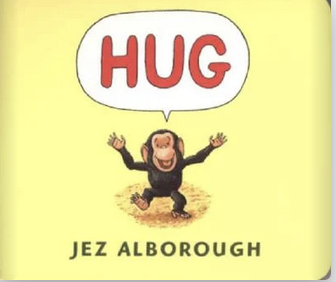
    Jez Alborough’s Hug is a delight. S asked for it daily at 19-20 months old, and still enjoys reading it several months later.

    Why Hug?

    As with many of S’s favorites, Hug has bright, active illustrations; lovable animal characters; and invites engagement with the text. It also starts quickly, introducing you to the main character and problem right away.

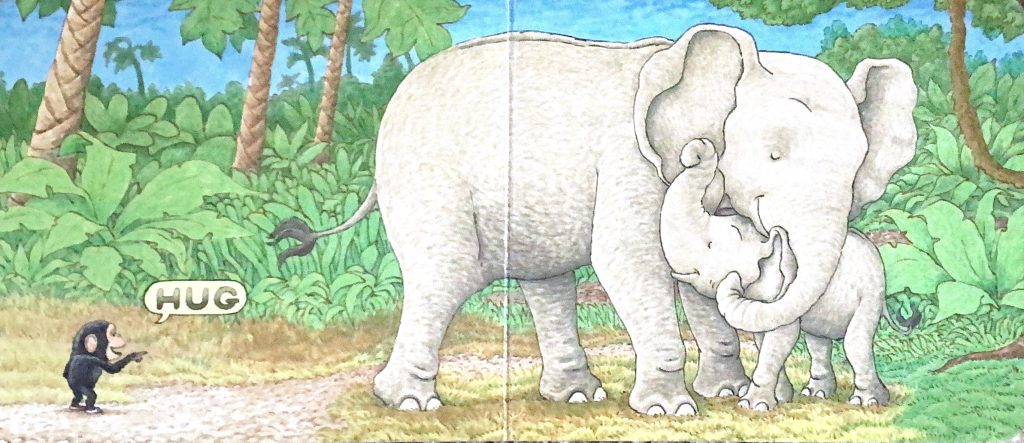
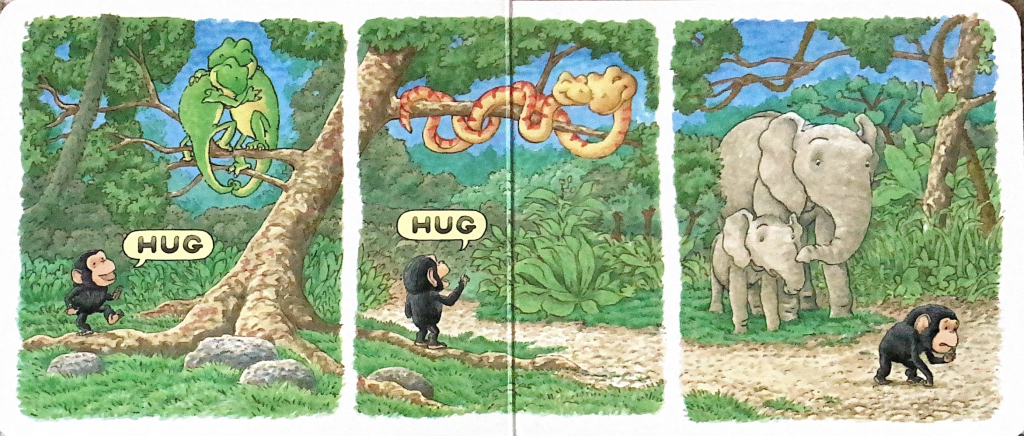
    The first spread immediately sets out the subject and tone of the book. Our monkey protagonist (who we later learn is named Bobo) notices two elephants hugging. Alborough does an incredible job conveying the warmth of the hug in the illustration. The page just FEELS cozy, which S picks up on.

    Having set up our world, the second page moves quickly to reinforce it and introduce our problem. Bobo happily spots other animals hugging until…hmmm? Where’s Bobo’s hug?

    S loves to look at all the different animals hugging, loves the warmth of their hugs, and loves saying “hug” along with Bobo. S is also interested in Bobo’s emotional journey, conveyed beautifully and simply through illustrations and the word “hug” — repeated 25 times in various intonations as Bobo gets increasingly distraught over his lack of hug.

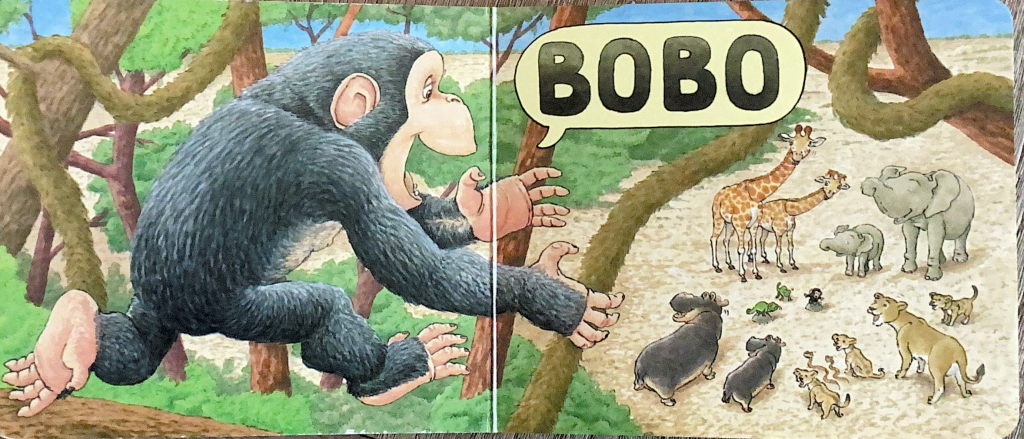
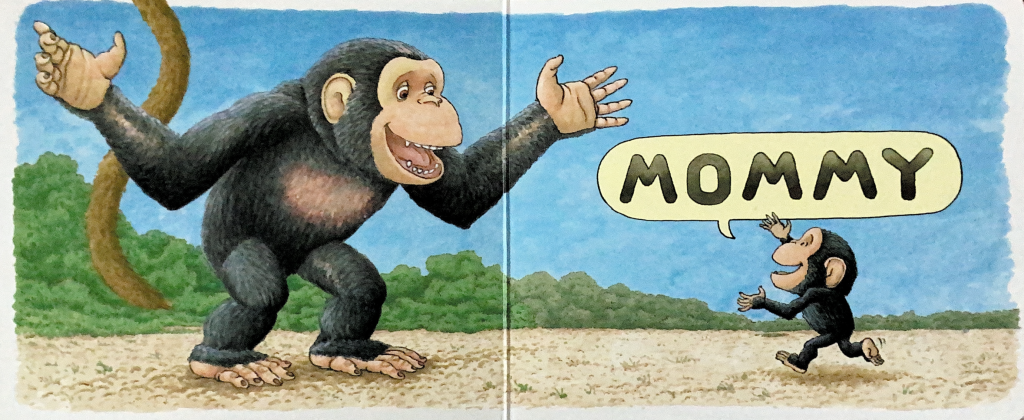
    Bobo’s distress culminates in S’s absolute favorite part of the story — Bobo is reunited with his mommy in a sweeping multi-page arc:

    Their excitement to see each other is palpable, the illustrations are active, and Bobo’s problem is resolved with (you guessed it) a hug.

    S loves to repeat the text on these pages: “Bobo!” “Mommy!”

    It is the only time in the entire story that a word appears that is not “hug.”

    S’s love of these two pages highlights the importance of naming picture book characters in ways I was not expecting. I distinctly recall having a conversation with the friend who got S the book about whether the book would be stronger if “hug” was the only word in the book. More artistic? Possibly. But after reading Hug to S over 50 times, I can confidently answer that question “no.”

    Why is it so important that Bobo have a name?

    First, having a name helps S identify with Bobo. He’s not just “the monkey.” He’s a monkey with a personality, a family, and problems.

    Second, Bobo having a name gives us a way to talk about Bobo throughout the book. He’s not just “Bobo” in the one scene where his mommy calls out to him; he’s Bobo in every scene in all subsequent re-reads.

    Third, the simplicity of Mommy and Bobo calling out each other’s names while running towards each other adds a joy to the book that S can understand and participate in. Their reunion would not be nearly as powerful if I narrated a wordless spread of them finding each other, running, and hugging.

    Fourth, Bobo is a perfectly chosen name. It’s fun, easy for S to say, and thus easy for S to remember.

    While S definitely has favorite books and characters without human names, I have found in reading Hug and other SEL books that S identifies better with the character when they are named. (See also: Milo the penguin — S identifying with “Milo” in particular as opposed to any old penguin goes a long way toward S’s caring about his dilemma).

    Some quick stats on Hug:

    Page count: 28 pages of what I would consider the “main” book

    Word count: 27 (25 of which are “Hug”)

    Average word count per illustration: 1.5

  • Toddler Teaches…THE PENGUIN WHO WAS COLD

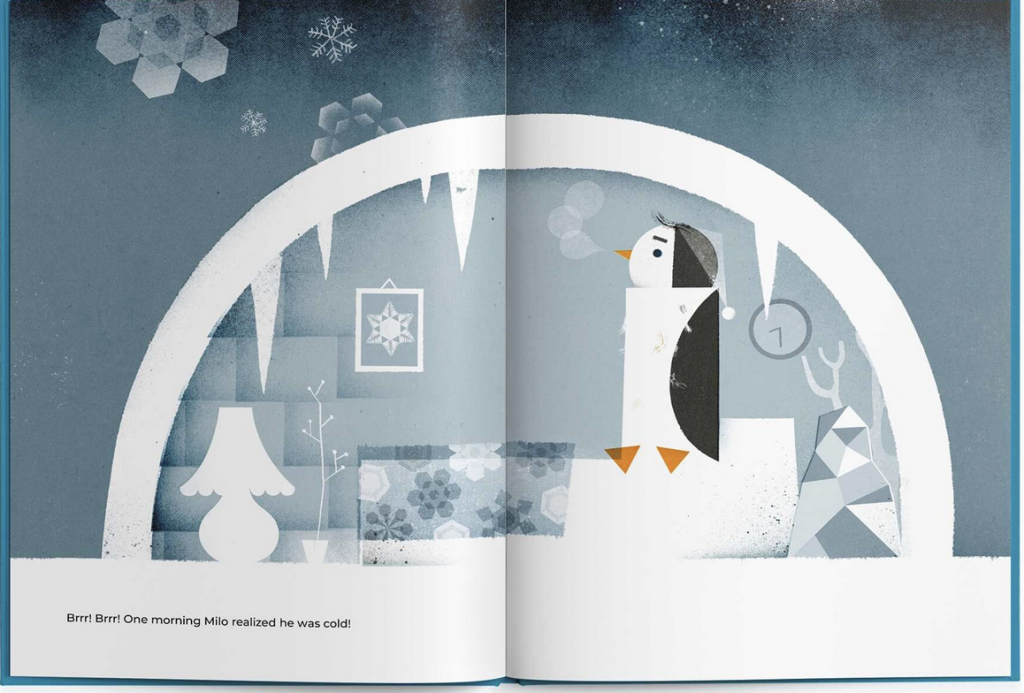
    Toddler Teaches…THE PENGUIN WHO WAS COLD

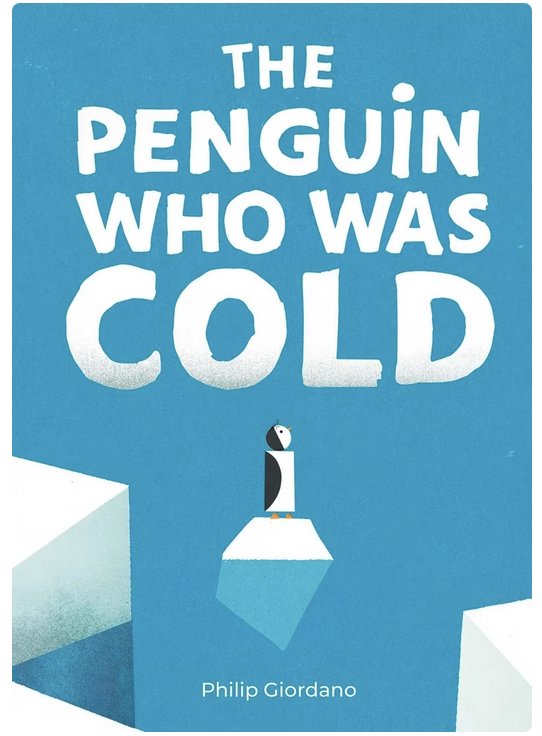
    If Itty-Bitty Kitty-Corn is the rare picture book that captures my under 2 year old’s attention cover-to-cover, Philip Giordano’s The Penguin Who Was Cold is rare in a different way — it’s a book geared toward older picture book readers that S largely flips through, yet excitedly requests again and again (and again).

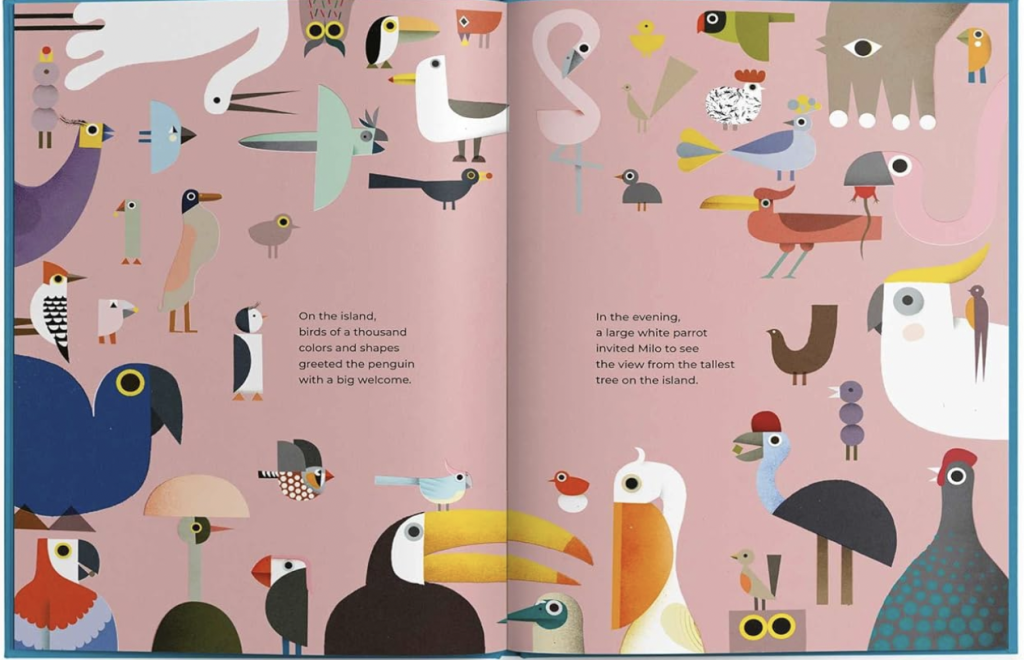
    A standard read of The Penguin Who Was Cold consists of enthusiastically saying the title (“The Penguin Who Was…” “COLD!”), reading the first 3 spreads aloud, then flipping through the next 20 or so pages to briefly look at whatever catches S’s eye. No matter what else happens, we always stop to look at this gorgeous, colorful spread in the middle of the book:

    At which point S promptly flips to the end pages and declares the book over (“The End!”).

    So how does a book that we barely make a dent in make the “best seller” list?

    First, and probably most important, the book hooks S immediately. The first page quickly introduces our adorable main character and an easy to understand problem: Milo is cold.

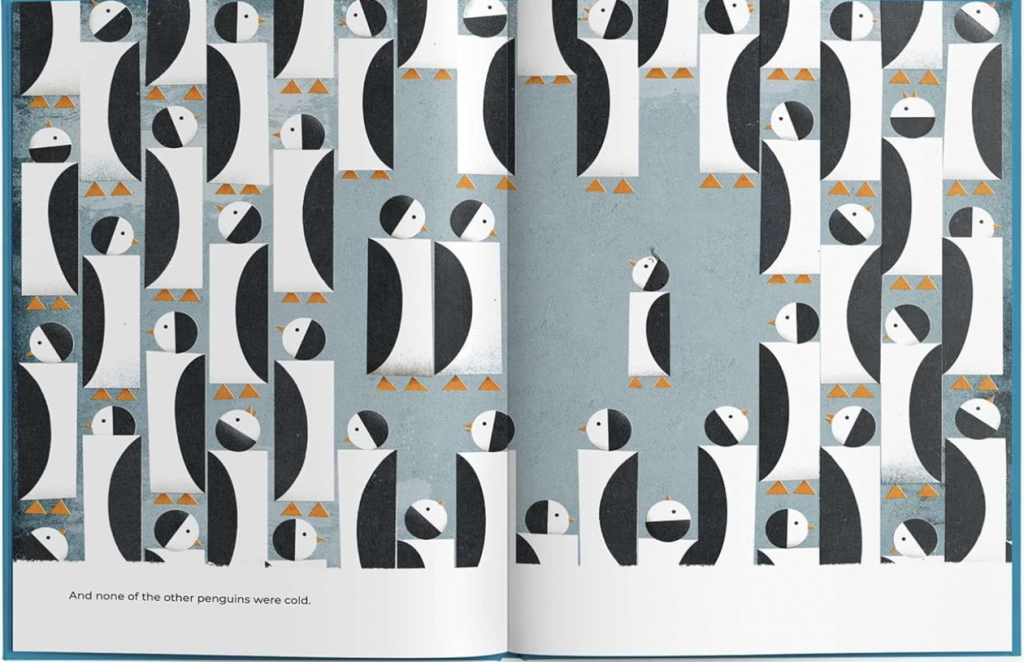
    The next couple of pages are equally clear and concise and move the story forward. (“But Mom and Dad weren’t cold.” “And none of the other penguins were cold.”).

    In just 8 words and a beautiful image, we can see just how much of a problem this is for Milo — alone in a sea of sameness.

    The book also makes highly effective use of onomatopoeia right at the outset. “Brrr! Brrr!” is a fun, evocative sound that S understands and repeats, getting involved in the story (and Milo’s problem) right away.

    By the time the book gets into more complicated language and concepts (and a significantly greater number of words per spread), S is already fully invested in Milo and wants to see him over and over.

    Second, the book’s characters are animals, which is a prime subject matter interest for S right now. That they are beautifully rendered certainly does not hurt.

    Third, the art is incredible — brightly colored and richly done. I thought I understood how important art was to a picture book before reading to S, but watching just how much S interacts with it has been eye opening.

    ***

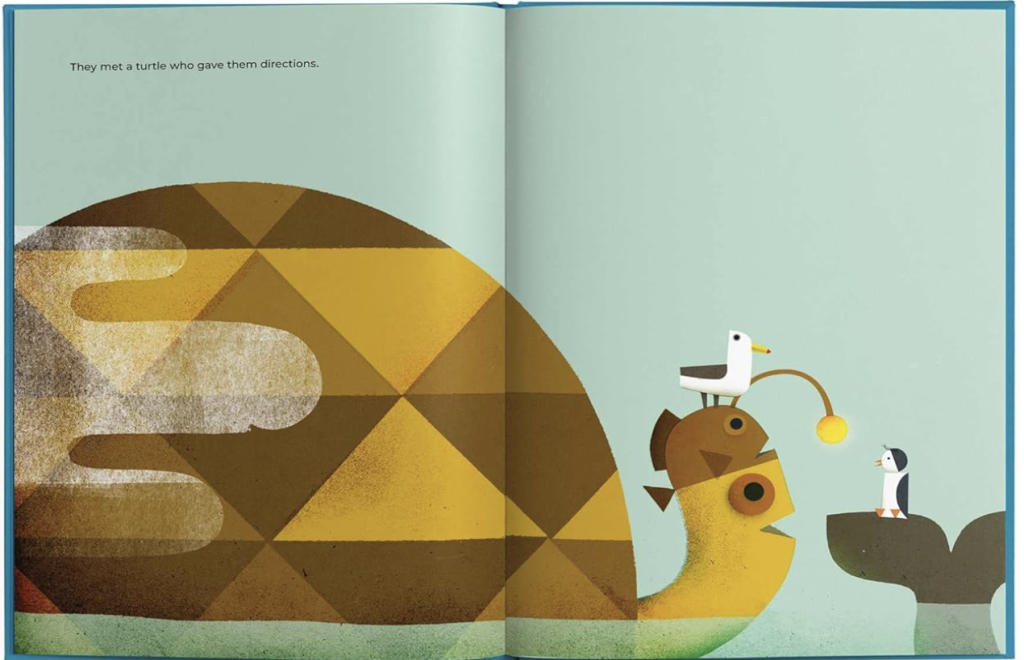
    Of potential interest for writers, once the book gets too complex for S, we stop reading text entirely, even in spreads that would otherwise have been S-appropriate in terms of sentence length and word choice. If we stop on those pages, it is just to look at the illustrations.

    We rarely read this page aloud, even though it is short and easy to understand. By the time we reach it, S is in “flipping-pages mode” and is no longer as invested in the story proper.

    The moral of the story seems to be that for any writers looking to hook a younger toddler (or at least my younger toddler) in a book that is primarily geared for the 3-7 range, putting your most straightforward, engaging material up front is a huge plus.

    Do you have any book suggestions that might seem too old at first glance, but which we should check out now? Drop them in the comments!

    The Penguin Who Was Cold By the Numbers

    Page count: 40 pages plus backmatter

    Word count: 532 (not including backmatter)

    Average word count per illustration on pages we read aloud: 7.67

    Average word count per illustration on pages we do not read aloud: 29.9