Jennifer Tarr

Writing picture books for kids and their grown ups.

Category: Interactive

  • Toddler Teaches…AFIKOMAN, WHERE’D YOU GO?

    Toddler Teaches…AFIKOMAN, WHERE’D YOU GO?

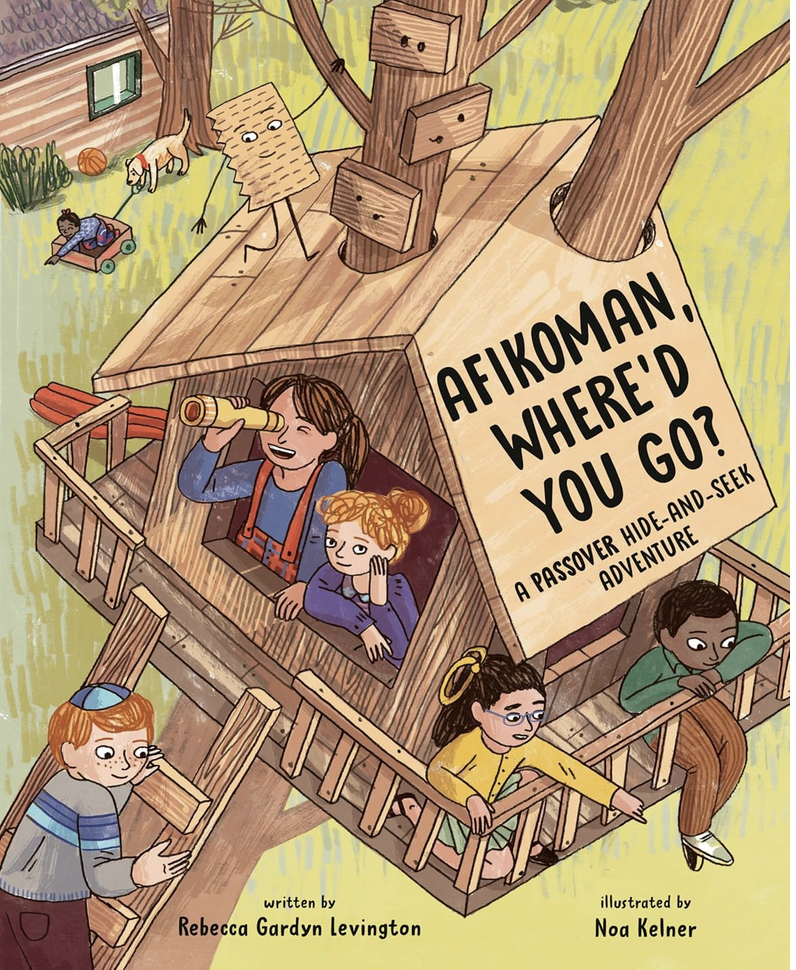
    I have been a huge fan of Rebecca Gardyn Levington and Noa Kelner‘s Afikoman, Where’d You Go? ever since it first released two years ago. It’s bouncy, fun, imaginative, and right up my alley (an anthropomorphic afikoman version of Where’s Waldo? = truly incredible stuff). This year, S was finally old enough to understand a bit about Passover, so I was really excited to be able to share the book as part of our celebration.

    It was an immediate success. S got it as a prize for finding the afikoman on the first night of Passover (thanks, mom and dad!) and has wanted to read it multiple times a day since. As with Challah Day!, Afikoman, Where’d You Go? is representation at the level that means the most to kids. Finding the afikoman is (in my opinion) the most kid-friendly part of the seder, and the one that intuitively makes the most sense to a toddler (hide and seek! with a snack at the end!). So to be able to relive the fun over and over is exciting.

    But it takes a lot more than a great premise to make a great book. So let’s take a deeper dive into some of the things that the book does so well:

    Interactivity and Agency

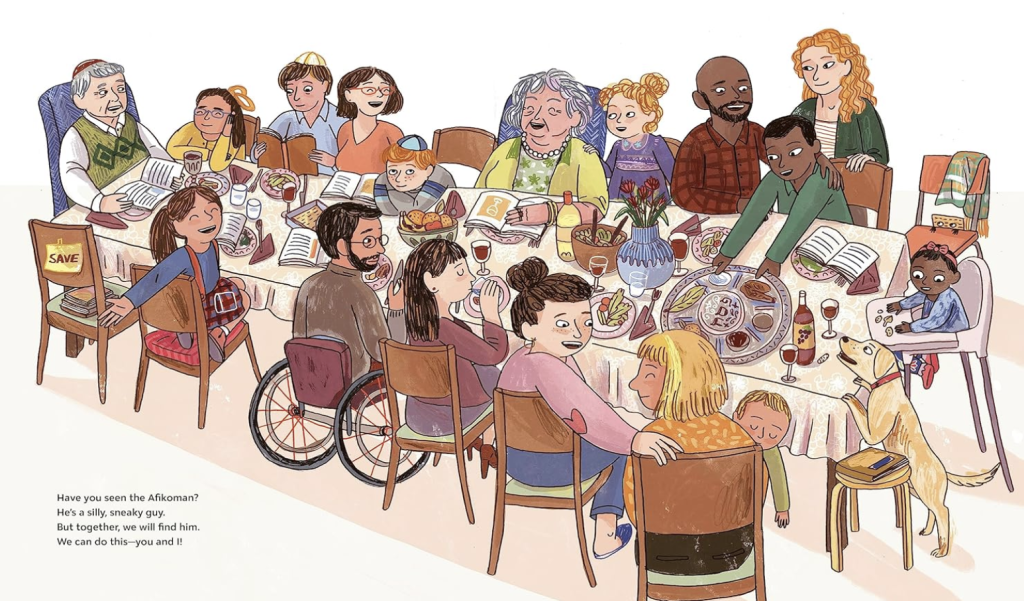
    First page of Afikoman, Where'd You Go?
    Thanks to Rebecca Gardyn Levington and Noa Kelner for their kind permission to use some of their art in this post!

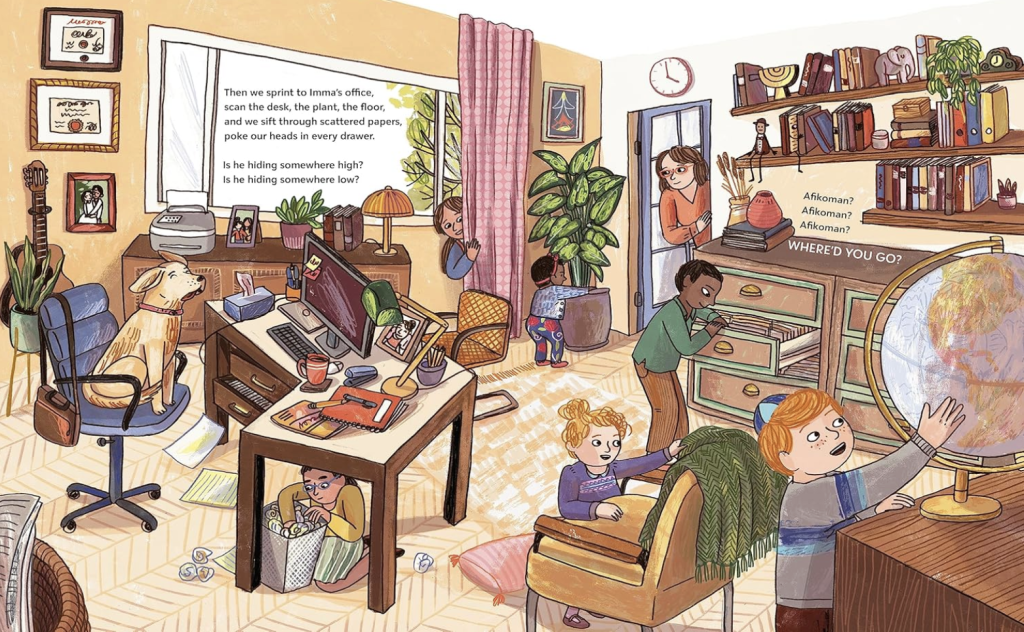
    The story brings the reader into the action immediately, opening with a question: “Have you seen the Afikoman?” We are not going to be passive participants in this story — we are going to be finding the afikoman too. The rest of the stanza further sets this up: “But together we will find him. We can do this — you and I!”

    S is immediately hooked and ready to find the afikoman, pointing him out on the first page and every subsequent page. (“He’s over there!” “Right there!” [spoiler alert] “In the doggy’s bed!”)

    The first page also immediately sets up Afikoman as a lovable trickster. He’s “silly” and “sneaky” — two words that immediately signal to S that this is going to be fun. S loves when things are “silly,” and now Afikoman has a personality matched by the delightful illustrations.

    Extremely active illustrations

    I have often written about how important active illustrations are to keeping S engaged with a story. Afikoman, Where’d You Go? has this going on in spades. Each illustration has tons going on, and the ability to point out so many different interesting things (Afikoman! the dog! bunnies! a basketball!) keeps S’s attention on every page.

    A fun refrain that reinforces the interactivity

    Every few failed attempts to find the afikoman there is a catchy refrain — “Is he hiding somewhere high? Is he hiding somewhere low? Afikoman? Afikoman? Afikoman? WHERE’D YOU GO?”

    The refrain is incredibly effective. For starters, toddlers adore repetition. And this refrain reinforces the interactivity of the story, reminding us to check for Afikoman on every page. It also pushes the adult reader (*cough*, me) to ask the child where the afikoman is on other pages too, if they haven’t done so.

    Plus, the refrain sets up two hysterical back to back payoffs at the end. I won’t spoil the first one, which is amazing, but the fact that the structure is parallel to the earlier refrain highlights the change for S.

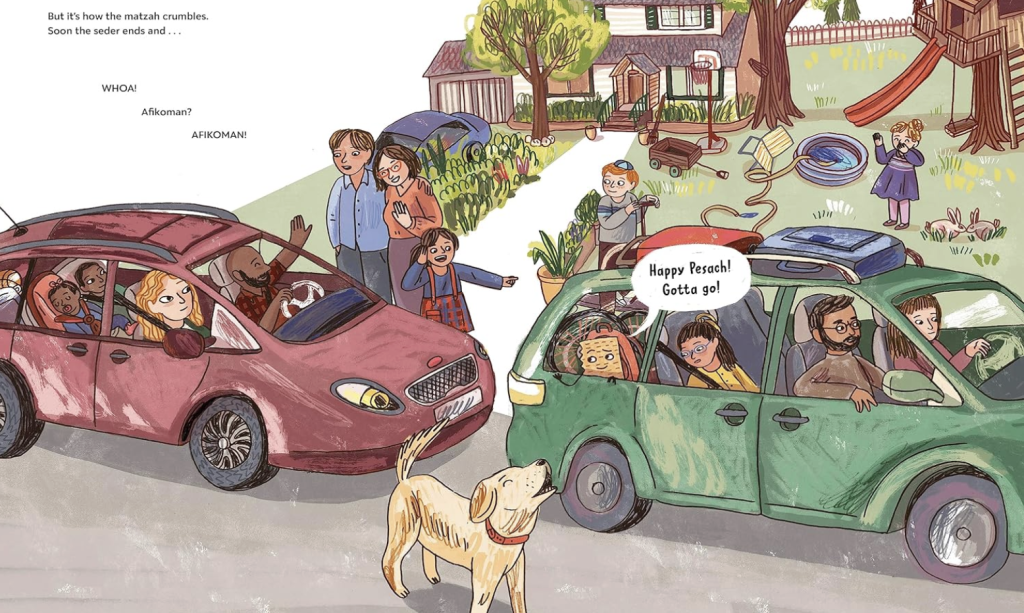
    And then S loves the last page, where Afikoman escapes in a car. (We’re still very into vehicles, so pointing out the car gets us a lot of mileage…bad pun only sort of intended.)

    Afikoman makes a great escape!

    All in all, this book is a blast, and I’m glad I get to read it a lot.

    Some random musings

    Non-English Words

    I have occasionally seen questions in writer’s spaces about the use of non-English or culturally meaningful words in picture books (and concerns about the book not being universal if they’re included). The narrator in Afikoman, Where’d You Go? uses Hebrew words for her family members — Imma (mom), Abba (dad), Savta (grandma), Saba (grandpa). This is a complete non-issue for S. S had never heard those words before, wasn’t bothered by it in the least, and figured out what was going on from the illustrations without my needing to explain anything. (Plus there’s a glossary, for anyone who needs it.) And now they’re familiar words for S, given that we’ve read the book about a gazillion times. So from my perspective, if you are considering using words that have meaning to you in your picture book, go for it!

    Book Signings

    My parents were able to get the book personalized for S at an event. I thought this was really cool, because I love Rebecca’s work. What surprised me was how much S loves it too. Every time we open the book, the first thing S does is point out the inscription and say, “That’s for me!” Obviously the personalization does not impact sales since we were already buying the book regardless, but I found it interesting. It certainly makes it feel even more special when we sit down to read it.

    Afikoman, Where’d You Go? By the Numbers

    Pages: 30 pages of what I would consider the “main” book

    Word Count: 378

    Words Per Illustration: 22.24

    Words Per Sentence: 4.15*

    *Since the book rhymes, it creates natural pauses that make it easier for S to pay attention to longer sentences. I therefore counted clauses as full sentences where they conveyed a full idea that S could understand (i.e., where they would likely have ended with a period rather than a comma if the book were written in prose). That occurred in about half of the book’s sentences (with the other half naturally being 6 words or less).

  • Toddler Teaches…URSULA UPSIDE DOWN

    Toddler Teaches…URSULA UPSIDE DOWN

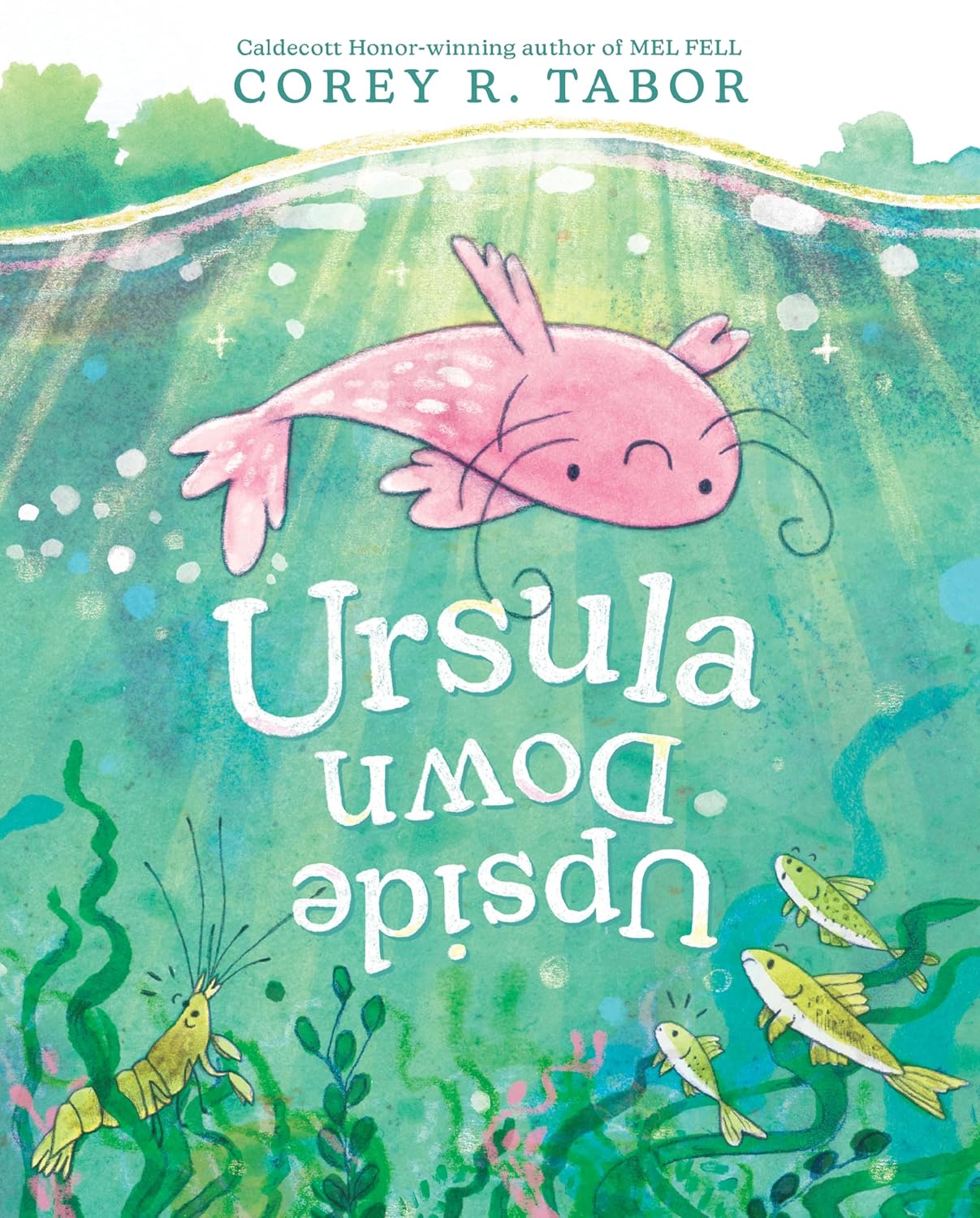
    I adore Ursula Upside Down. It’s one of my favorite books of the last several years. It’s sweet, funny, gorgeously illustrated, based on a true natural phenomenon, and has a surprise ending that is so obvious and perfect that you wonder why you didn’t figure it out before it happened. In what is becoming a theme, I took it out of the library for my own research and S decided to adopt it. Let’s take a look at why.

    The book introduces and humanizes its main character early.

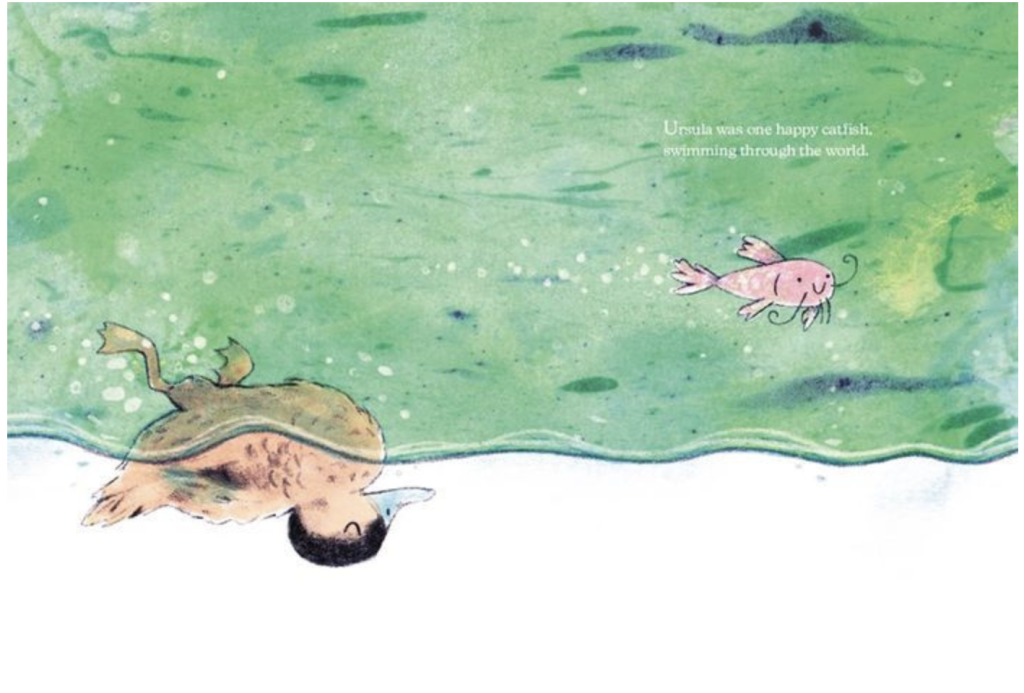
    Here’s Ursula on the first page. She’s bright pink, smiley, and plainly introduced as such: “Ursula was one happy catfish, swimming through the world.” In one sentence and picture, you already feel like you know her, and she’s a delight.

    S immediately took a liking to Ursula. Just like Milo in The Penguin Who Was Cold, the quick introduction to Ursula makes S like her and care about her problem. And just like Milo, Ursula’s problem is laid out quickly enough to hold a two year old’s attention.

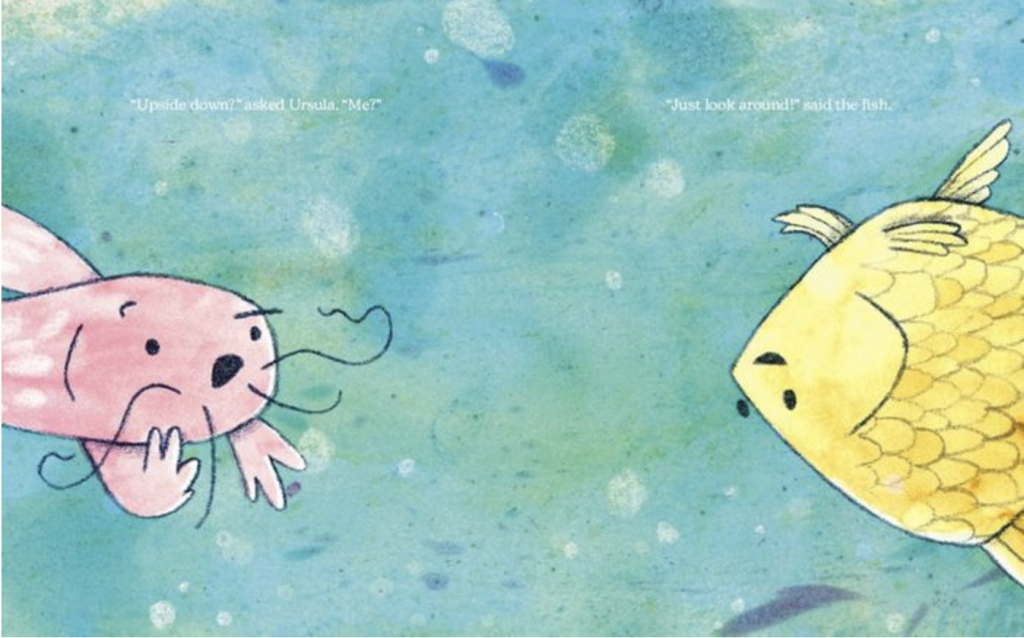
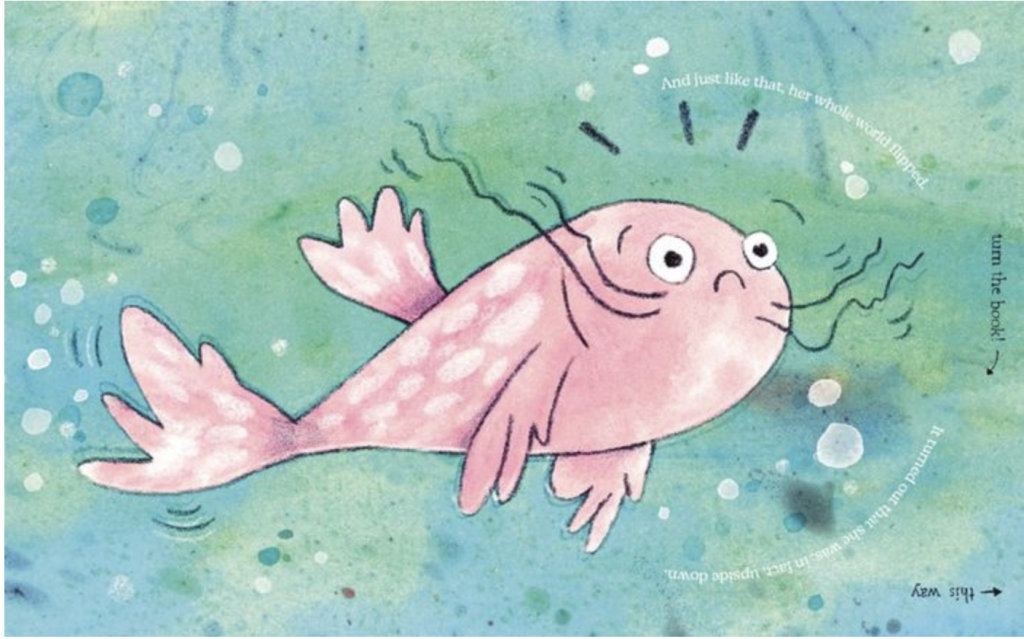
    Ursula is very clearly upside down – the duck’s positioning makes that obvious to even the most fidgety of readers. And within pages, we see Ursula’s world flip when she learns that others don’t see things the way she does. Since we already care about her, we now care about her being upset too.

    The book combines both obvious and unexpected toddler interests.

    The obvious: animals. Ursula is an adorable fish, surrounded by other fish, ducks, etc.

    The not-so-obvious: being upside down. S LOVES getting flipped upside down, and immediately identified with Ursula being upside down. This led to S continuously exclaiming “Ursula! Upside Down!” whenever S spotted or opened the book.

    The book is interactive, snappy, and colorful.

    Perhaps unsurprising given toddler attention spans, Ursula Upside Down gets high marks from S for its short, snappy sentences, bright pictures, and interactivity.

    The fact that Ursula is upside down from the start offers built-in interactivity throughout the story — S and I can flip the book to see various animals and scenery change perspectives. Starting on the first page, it’s fun to flip the book on its head to see what we associate as “normal” (a duck swimming on top of the water) turn right-side up.

    Corey R. Tabor brilliantly flips the whole book when Ursula starts to wonder if she’s been upside down the whole time. This also keeps S’s attention — it’s the only book we’ve read that uses the medium of the book like that, and it’s an interactive experience.

    As with Milo’s journey in The Penguin Who Was Cold, the end of the story here goes over S’s head. (Though as noted above, it’s amazing and you should definitely check it out.) But none of that matters to S. We read the book for our cheerful pink friend, and will continue to reach for the story because of all the excellent leg-work (fin-work?) that was put in up front.

    Ursula Upside Down By the Numbers:

    Pages: 31 pages of what I would consider the “main” book

    Word Count: 272 (282 if you add in speech bubbles in the illustrations that are hilarious but not necessary for the main story to work)

    Words Per Illustration: 14.3

    Words Per Sentence: 6.33