Jennifer Tarr

Writing picture books for kids and their grown ups.

Category: Cozy

  • Toddler Teaches…MAMA’S HOME (AND BABY TOO!)

    Toddler Teaches…MAMA’S HOME (AND BABY TOO!)

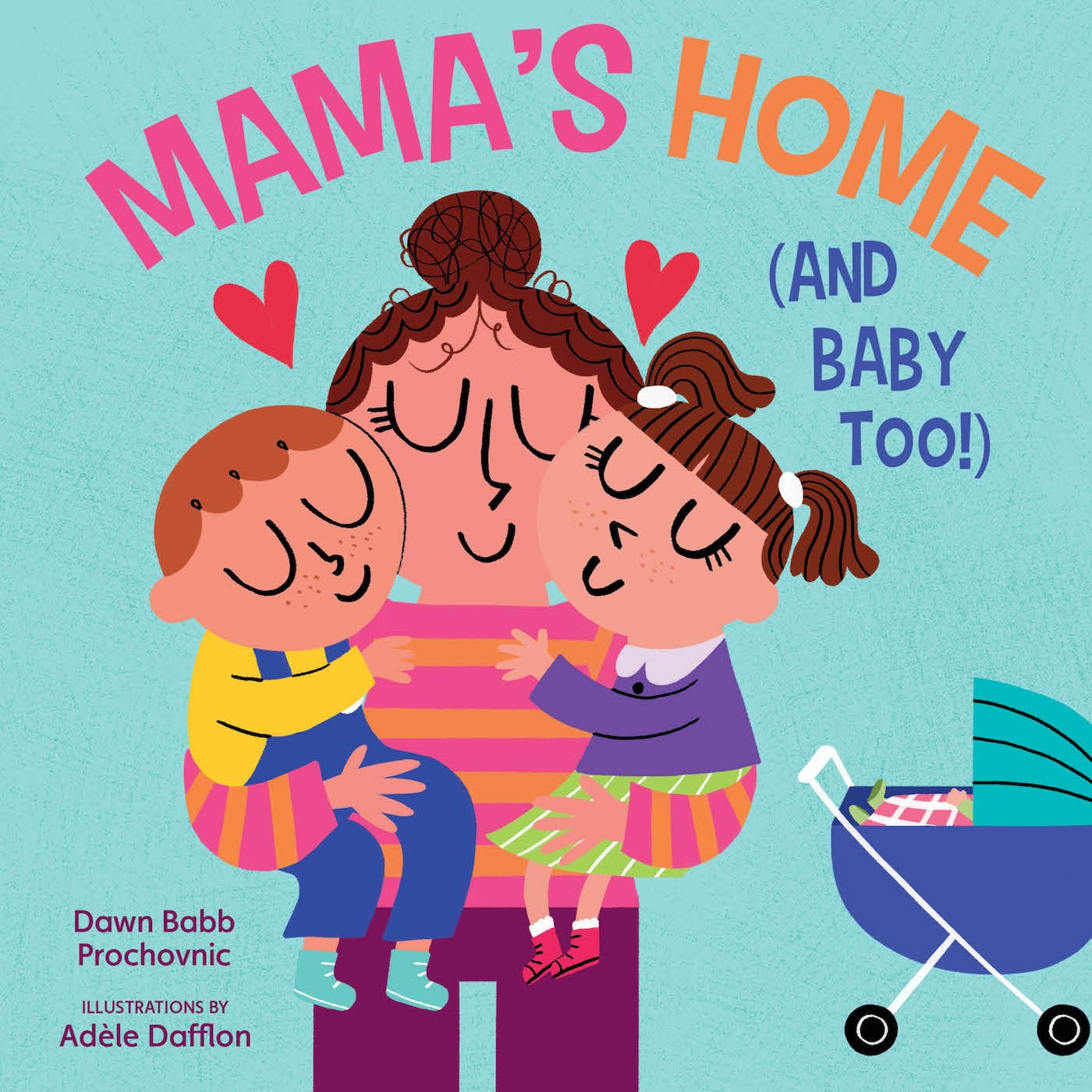
    As a general matter, I tend to blog about S’s reaction to picture books rather than board books, because I find a toddler’s reaction to books aimed at an older audience fascinating. I’m making an exception for Dawn Babb Prochovnic and Adele Dafflon‘s adorable board book Mama’s Home (And Baby Too!), because we’ve been reading a lot of new sibling books recently and this one is pitch perfect.

    Let’s start with what’s unique about this book, which S picked up on immediately: the book doesn’t focus on the new baby, or on visiting mom in the hospital. It focuses on what the older siblings are doing and how they are feeling while mama is away. The hospital is never overtly mentioned, and the baby doesn’t show up until midway through the book, after mama comes home.
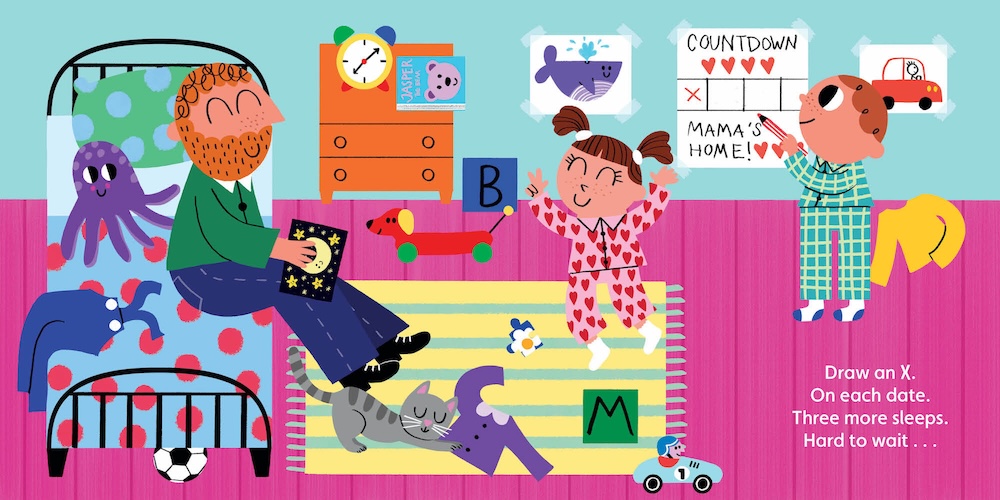
    Counting down until Mama's home
    The first page sets up the story — the siblings are counting down the days until “Mama’s Home!”

    By placing the focus squarely on the older siblings, the book opens up the ability to have lots of important conversations with an older-sibling-to-be — centering them and their feelings rather than centering the baby. The older kids miss mama but are not at the hospital — they are playing, grocery shopping, making welcome home crafts… In other words, the book models what it might be like for older sibling(s) while they are waiting at home for mom to return with baby. It also made it easy to have a more specific conversation about what it might be like for S.

    By the midway point in the story, S is very interested in seeing mama — when is she coming back?

    And as if by magic, as soon as S gets insistent about seeing the mommy, mama enters the scene:
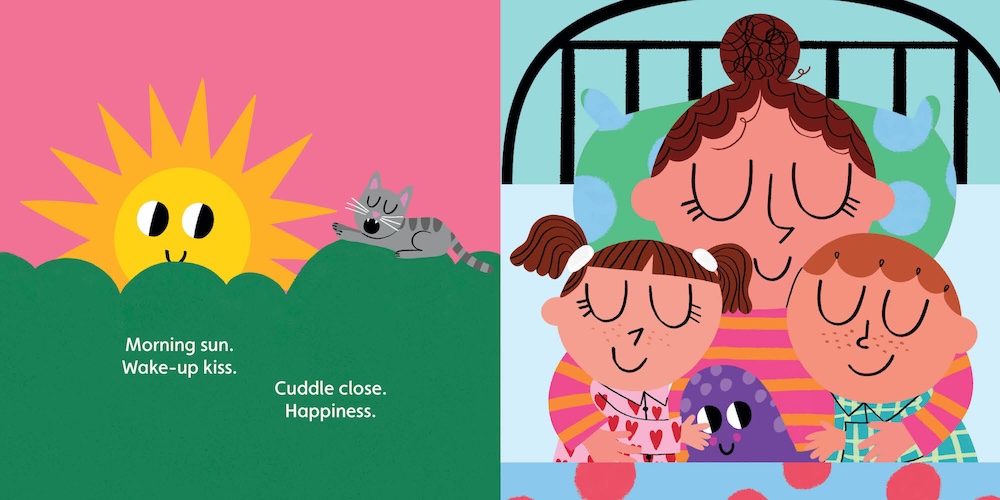
    Mama's back from the hospital and ready for lots of older sibling hugs

    I think it is a great choice that the first time mama appears on the page, she’s wholly focused on the older kids, because she missed them too (and because the existence of a new baby does not negate this in any way). That offers another avenue into helpful conversations to have with the older sibling(s).

    And with the mystery of mama solved, S wants see the baby. Which Prochovnic and Dafflon oblige on the very next page:
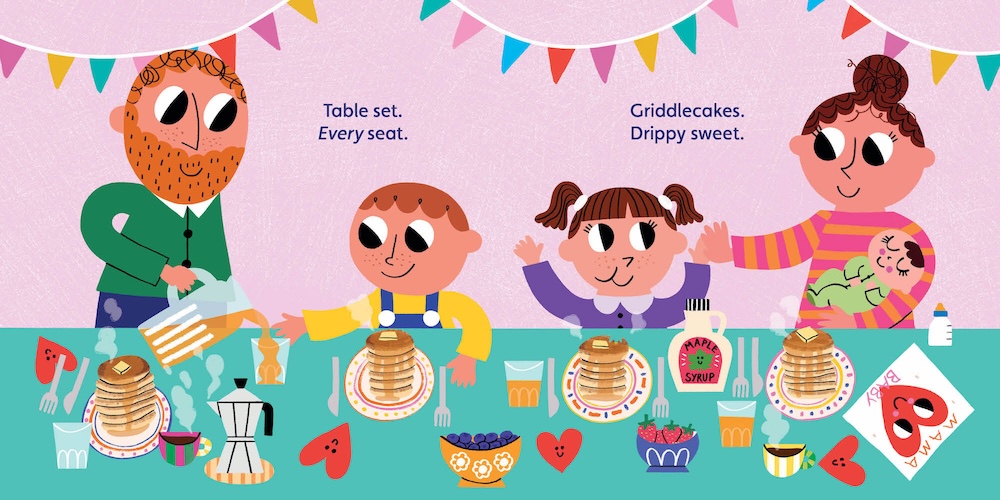
    Eating pancakes as a family, with mom and new baby

    I love the way that the illustrations depict the newly grown family. Baby is just a member of the family — deserving of (and receiving) attention, but not taking anywhere close to all of it. Mama may be holding baby, but the whole family is together eating breakfast. (And the older siblings are getting to eat extremely delicious-looking pancakes and berries, while the baby is stuck with milk. This was important to S. The big kids are still special.)

    That’s equally true when the family goes on other fun family outings in the rest of the book. Both parents are there, and they are playing with the older kids; there just also happens to be a stroller around too.

    I am not expecting this book to be a miracle worker for jealousy down the road, but I think it (and all the conversations it has enabled) will remain a touch point as we navigate S’s new sibling journey. Which, on top of the book being super cute and gorgeously illustrated, makes me very grateful to have a copy.

    Mama’s Home (And Baby Too!) By the Numbers

    Pages: 20 pages

    Word Count: 94

    Words Per Illustration: 5.875

    Words Per Sentence: 2.13 (though this is largely a function of the great, spare rhyme — each word carries a lot of weight, and the rhyme breaks concepts into individual sentences)
  • Toddler Teaches…PUMPKIN DAY FOR BOO AND BELLE

    Toddler Teaches…PUMPKIN DAY FOR BOO AND BELLE

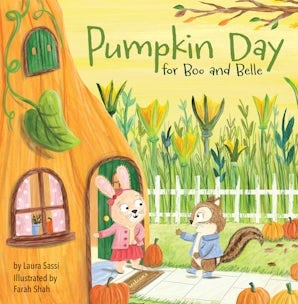
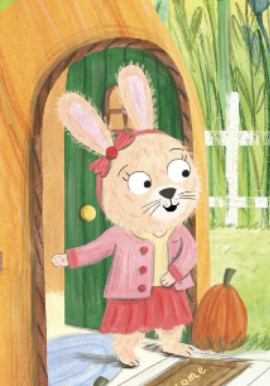
    In mid-to-late January, S started to get particularly into bunny rabbits. At the same time, S began to gravitate towards Laura Sassi and Farah Shah’s Pumpkin Day for Boo and Belle. This isn’t surprising — the book is adorable and prominently features a bunny as the main character.

    Said bunny.

    What surprised me a bit was the depth of S’s interest in the book. It’s not just any book; it’s “my” book. As in, the book gets thrust toward me with the instruction to “read MY book.”

    The book is very long for S’s normal attention span (561 words), but we can often get through the full text because the sentences are short and bouncy and there’s lots going on on each page.

    For the most part, though, S actually “reads” the book without me by picking it up and flipping through the pages. This is a testament both to Shah’s colorful, inviting illustrations (and the volume of fun things to spot in them), and to Sassi’s writing creating the opportunity for new and exciting illustrations on each page.

    Since the illustrations seem to drive S’s interest in the book, I thought it would be interesting to highlight a few images and point out what captures S’s attention in them.

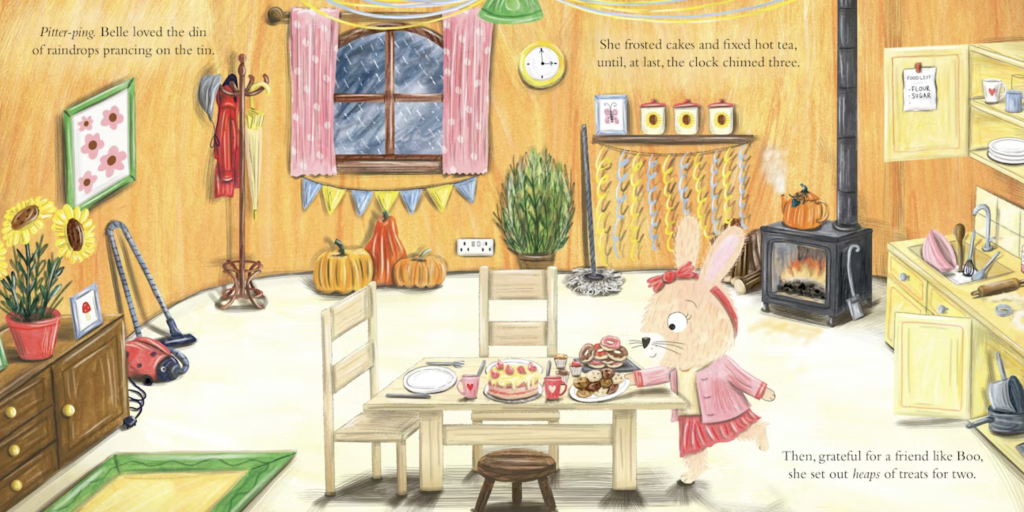
    This is probably one of S’s favorite images in the book. We’ve got (1) a bunny (2) wearing a bow (3) setting out cakes. And in the background, there are pumpkins, flowers, a ladybug vacuum that S loves to point out (“ladybug!”), and a clock on the wall that S also loves (“clock!”).

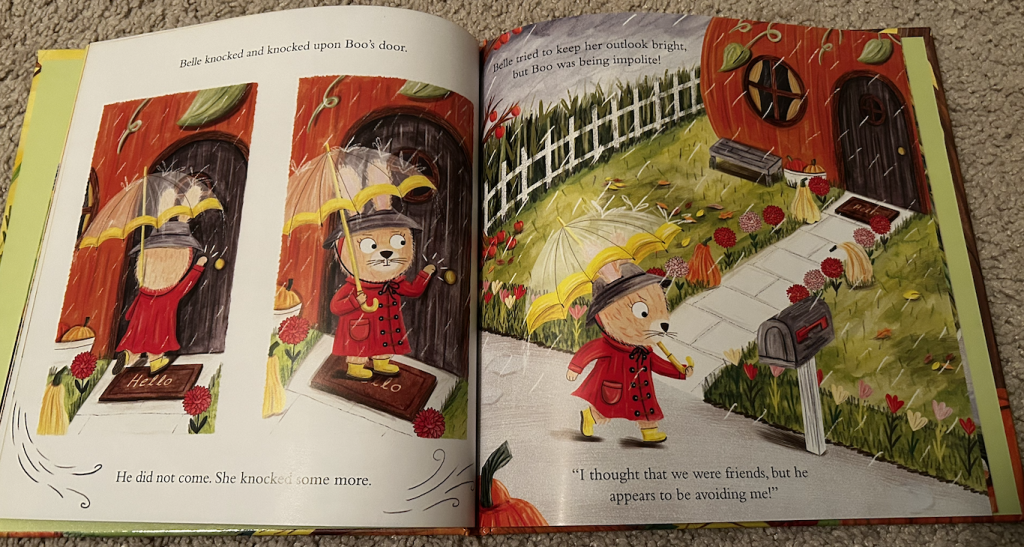
    Here, S is interested in umbrellas and raincoats. (And probably also the bunny.) The movement in the illustrations across multiple images also doesn’t hurt.

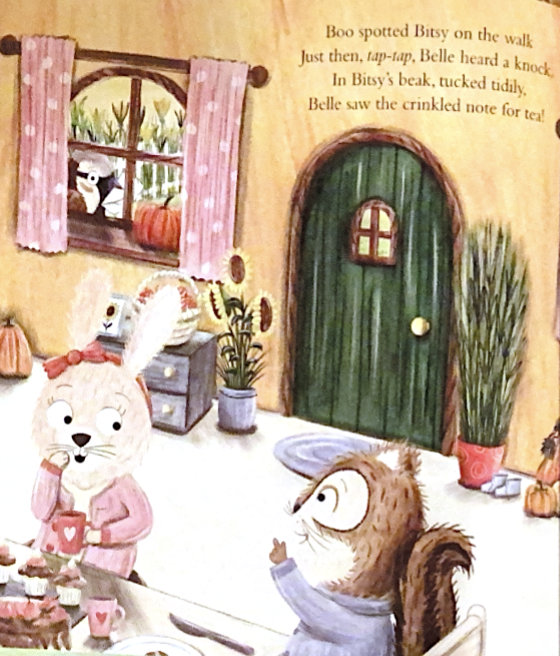
    And here, the big winner is the bird essentially playing hide and seek in the window. (And probably also the bunny.)

    TL;DR: Having lots of things to point out in the background adds to the number of possible toddler hooks and helps build vocabulary. It turns an already-fun book into an outright winner. Also, one can never go wrong with bunnies.

    Pumpkin Day for Boo and Belle By the Numbers

    Pages: 30 pages of what I would consider the “main” book

    Word Count: 561

    Words Per Illustration: 18.1

    Words Per Sentence: 5.39*

    *Since the book rhymes, it creates natural pauses that make it easier for S to pay attention to longer sentences. I therefore counted clauses as full sentences where they conveyed a full idea that S could understand (i.e., where they would likely have ended with a period rather than a comma if the book were written in prose). That occurred in about half of the rhyming sentences.

  • Toddler Teaches…CHALLAH DAY!

    Toddler Teaches…CHALLAH DAY!

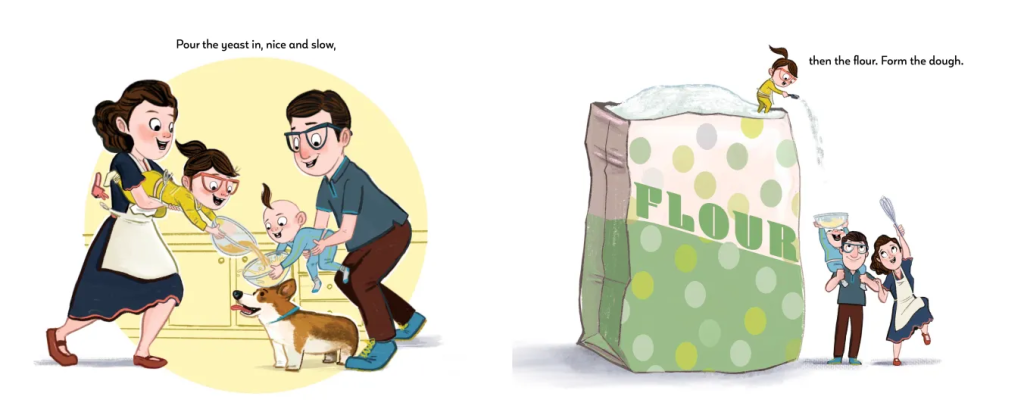
    Last fall, S and I began baking challah together on Friday afternoons. S loves it, and has been asking for books about challah every time we go to the library for months. S was agnostic about whether these books were actually about challah or just had a picture of challah in them — as mentioned in earlier posts, including images of favorite topics in the background of a story is often enough to capture S’s interest. (Interestingly, however, S was very particular about what the illustrations should look like. Some books were rejected at the outset for having insufficiently “challah-y” challah.)

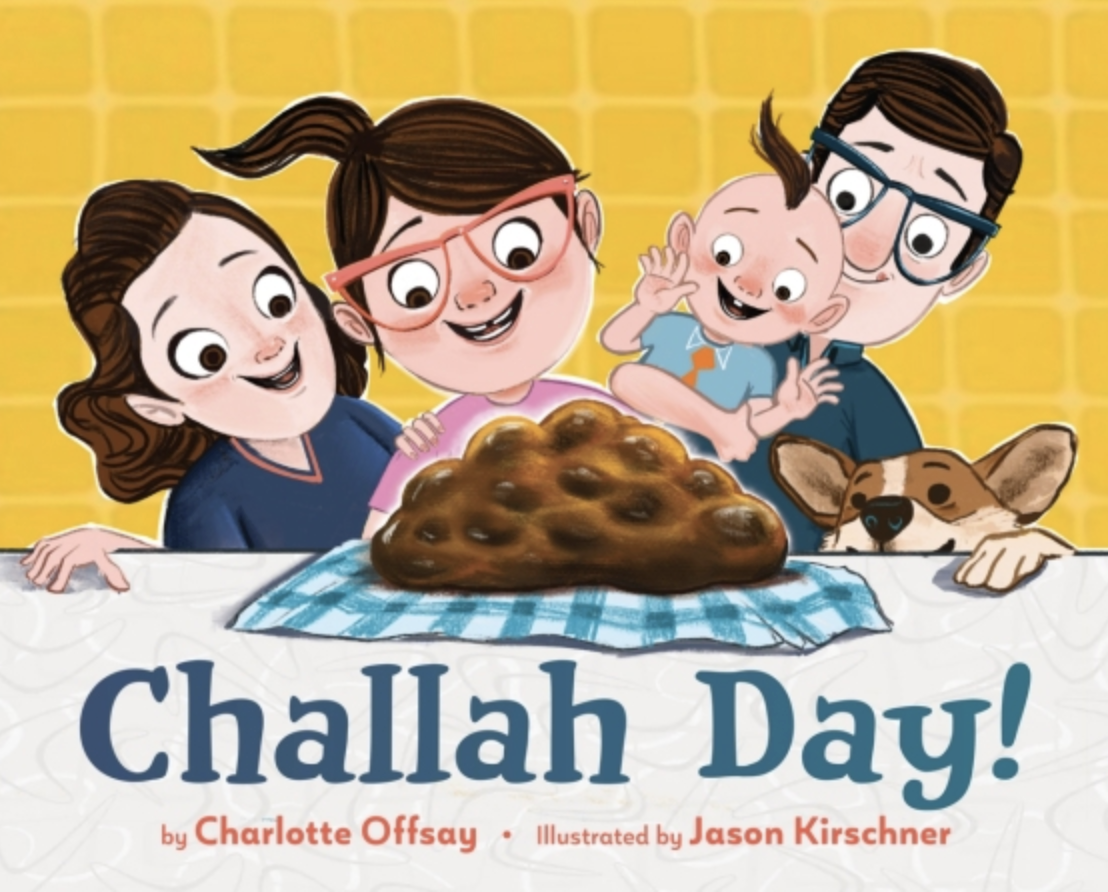
    We recently took out Charlotte Offsay and Jason Kirschner‘s adorable Challah Day! from the library because it is not just a book with pictures of very challah-y challah, but a book about making challah as a family.

    S LOVED it. We read it 9 times on the day we took it home. That love has not abated. On an average day, S requests it between 1 and 5 times, often back-to-back-to-back. (“Read it again!”) It’s the kind of book that is such a runaway hit (and so well-written/illustrated) that we will wind up buying it as soon as we have to return our library copy.

    Let’s look at what makes Challah Day! an early contender for favorite book of the year:

    1. Challah Day! celebrates Shabbat from a toddler POV

    Challah Day! shows the importance of not just representation generally, but of representing the cultural traditions that mean the most to kids. The book is a simple, joyful ode to a specific Shabbat tradition — making challah together as a family.

    The whole family is working together to make the dough, with a special focus on the little girl and her baby brother, who have starring roles in the bread-making production.

    While the story references other Shabbat traditions obliquely, they are not the focus of the story. They are also the exact other traditions that would be meaningful to a young child — lighting candles, drinking grape juice, and spending time with grandparents.

    The book is cozy and warm and absolutely spot on for the way S experiences Shabbat — it is the day we make and eat challah (and light candles, drink grape juice, and spend time with grandparents).

    I believe that this sort of representation — meeting young kids where they are — is exactly why the book has resonated so much with S.

    2. It has short, punchy sentences and colorful, active illustrations

    Challah Day! is a joy to read out loud. The sentences are short; the rhyme is bouncy and joyful; and the way the rhyme, punctuation, and page layout breaks things up leads to natural pauses that make it easy for S to focus on what is going on.

    At an average of 4.78 words per sentence, it fits squarely into the sweet spot sentence length for S’s attention span.

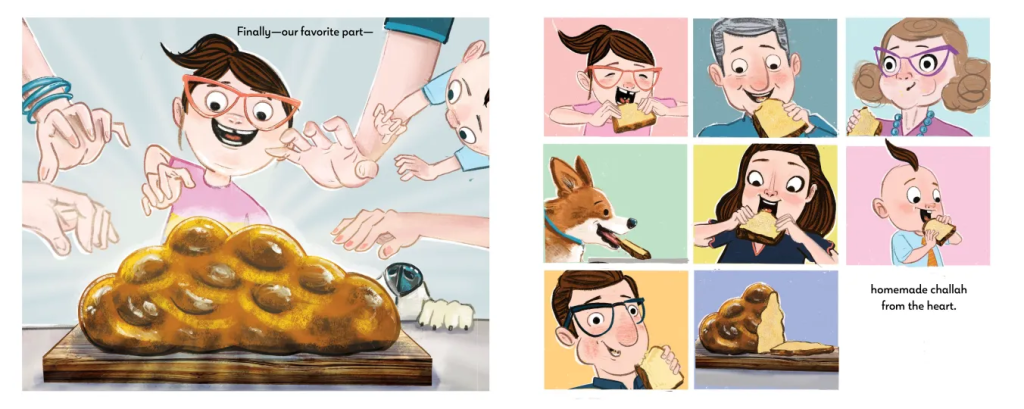
    Charlotte Offsay’s text is complemented perfectly by Jason Kirschner’s illustrations, which have just enough going on to hold S’s interest at all times. This spread is a particular favorite, with the whole family actively eating challah (including the dog!) and bright background colors that S loves to point out.

    3. It has multiple toddler hooks

    Combining S’s interests is a surefire way to make a book a repeat player. In addition to the carbohydrates discussed at length above, we have at least five more toddler hooks:

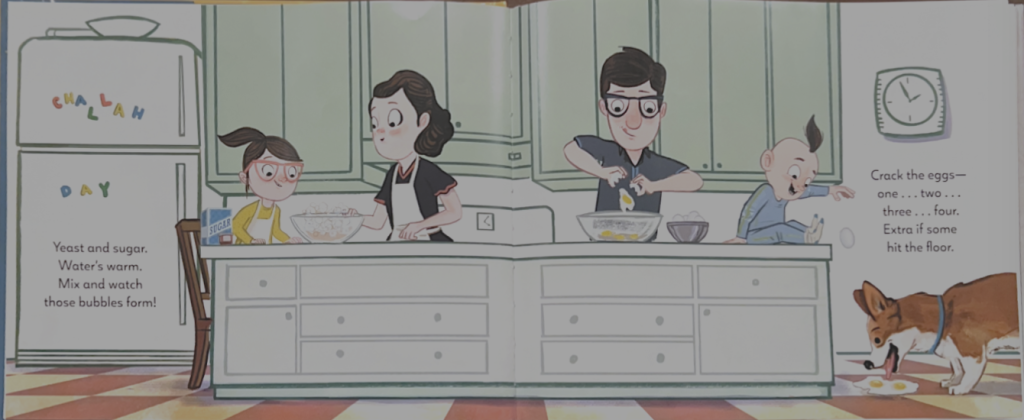
    Family baking together, with dad cracking eggs, baby dropping them on the floor, and mom and sister working on the starter.
    1. A baby — S loves pointing out the baby on every page
    2. A dog — any addition of animals to a story is a plus, particularly when they are actively involved (here, helping braid challah, etc.)
    3. Simple counting — S likes to count along and point out each of the eggs when I get to “Crack the eggs – one, two, three, four”
    4. Bubbles — always a favorite; doesn’t matter that these are yeast bubbles and not soap bubbles
    5. Family time / a “knock” at the door bringing grandparents over — the knock is a fun change of pace, and the grandparents are additional people for S to point out

    I hope you love Challah Day! as much as we do — I have a feeling we will be reading it for a long time!

    Challah Day! By the Numbers

    Pages: 28 pages plus back matter

    Word Count: 244

    Words Per Illustration: 6.26

    Words Per Sentence: 4.78

  • Toddler Teaches…HUG

    Toddler Teaches…HUG

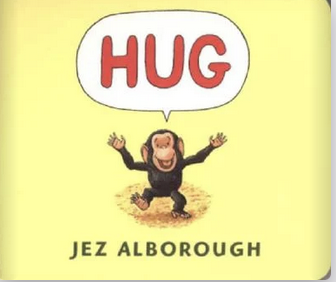
    Jez Alborough’s Hug is a delight. S asked for it daily at 19-20 months old, and still enjoys reading it several months later.

    Why Hug?

    As with many of S’s favorites, Hug has bright, active illustrations; lovable animal characters; and invites engagement with the text. It also starts quickly, introducing you to the main character and problem right away.

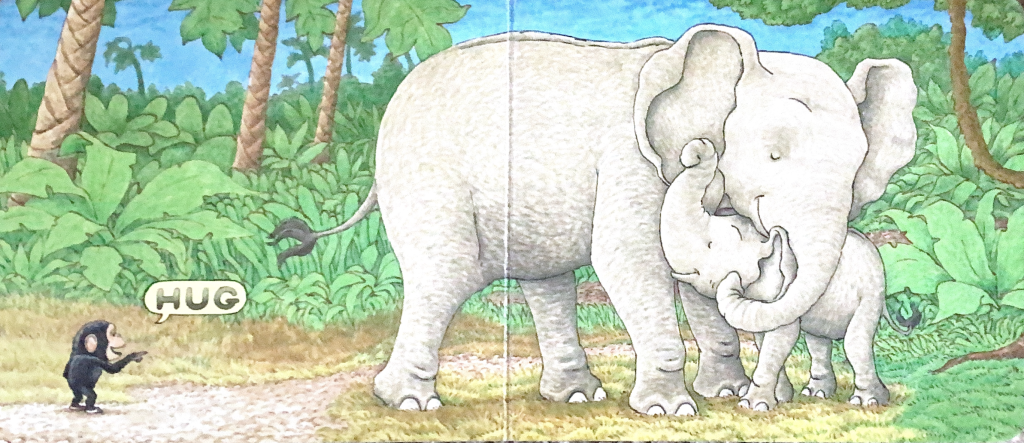
    The first spread immediately sets out the subject and tone of the book. Our monkey protagonist (who we later learn is named Bobo) notices two elephants hugging. Alborough does an incredible job conveying the warmth of the hug in the illustration. The page just FEELS cozy, which S picks up on.

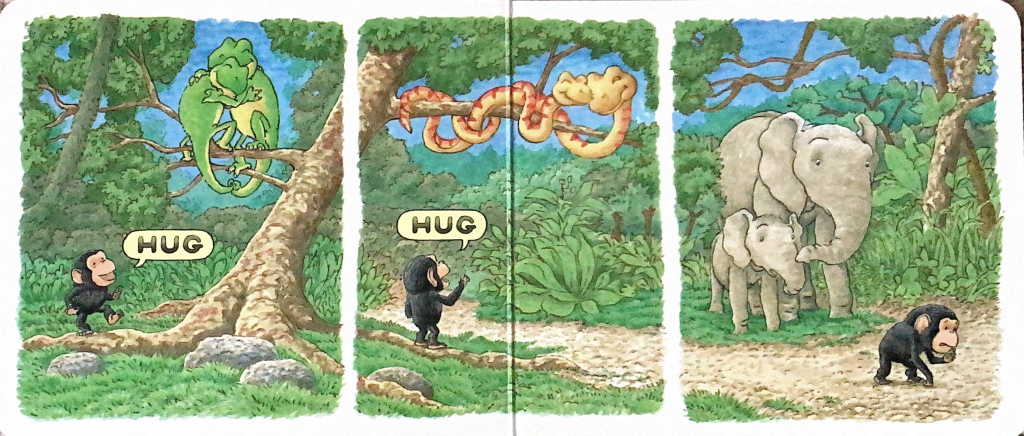
    Having set up our world, the second page moves quickly to reinforce it and introduce our problem. Bobo happily spots other animals hugging until…hmmm? Where’s Bobo’s hug?

    S loves to look at all the different animals hugging, loves the warmth of their hugs, and loves saying “hug” along with Bobo. S is also interested in Bobo’s emotional journey, conveyed beautifully and simply through illustrations and the word “hug” — repeated 25 times in various intonations as Bobo gets increasingly distraught over his lack of hug.

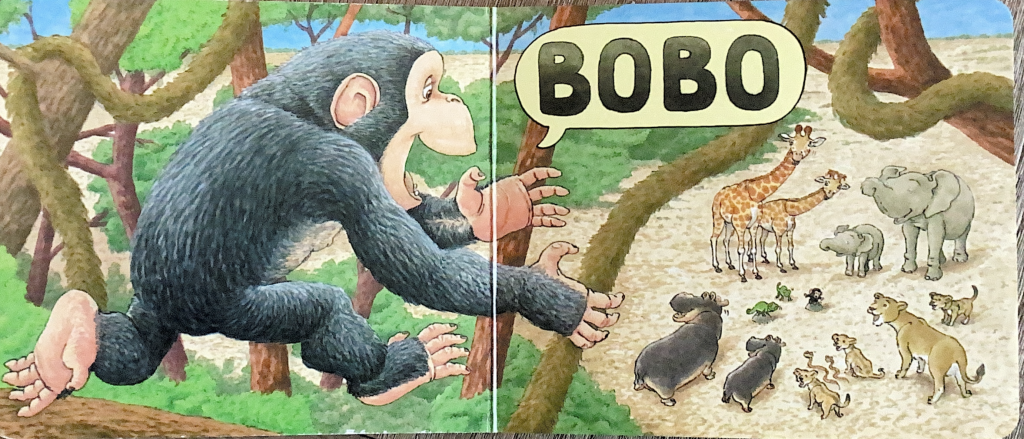
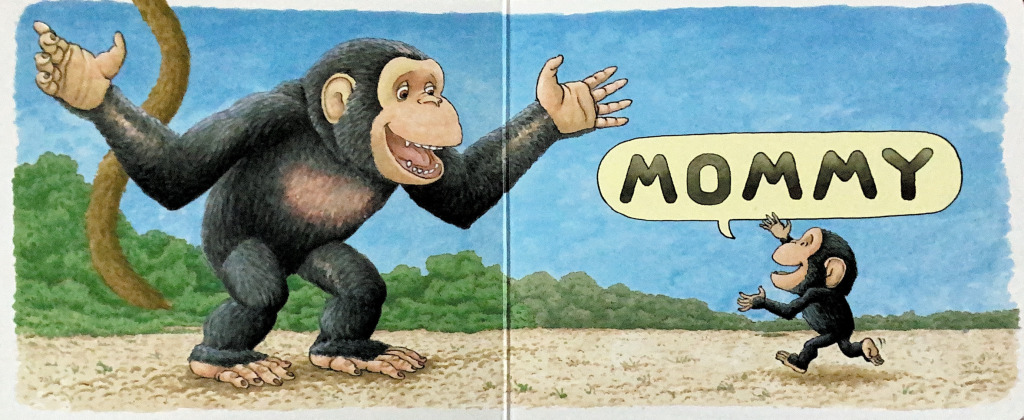
    Bobo’s distress culminates in S’s absolute favorite part of the story — Bobo is reunited with his mommy in a sweeping multi-page arc:

    Their excitement to see each other is palpable, the illustrations are active, and Bobo’s problem is resolved with (you guessed it) a hug.

    S loves to repeat the text on these pages: “Bobo!” “Mommy!”

    It is the only time in the entire story that a word appears that is not “hug.”

    S’s love of these two pages highlights the importance of naming picture book characters in ways I was not expecting. I distinctly recall having a conversation with the friend who got S the book about whether the book would be stronger if “hug” was the only word in the book. More artistic? Possibly. But after reading Hug to S over 50 times, I can confidently answer that question “no.”

    Why is it so important that Bobo have a name?

    First, having a name helps S identify with Bobo. He’s not just “the monkey.” He’s a monkey with a personality, a family, and problems.

    Second, Bobo having a name gives us a way to talk about Bobo throughout the book. He’s not just “Bobo” in the one scene where his mommy calls out to him; he’s Bobo in every scene in all subsequent re-reads.

    Third, the simplicity of Mommy and Bobo calling out each other’s names while running towards each other adds a joy to the book that S can understand and participate in. Their reunion would not be nearly as powerful if I narrated a wordless spread of them finding each other, running, and hugging.

    Fourth, Bobo is a perfectly chosen name. It’s fun, easy for S to say, and thus easy for S to remember.

    While S definitely has favorite books and characters without human names, I have found in reading Hug and other SEL books that S identifies better with the character when they are named. (See also: Milo the penguin — S identifying with “Milo” in particular as opposed to any old penguin goes a long way toward S’s caring about his dilemma).

    Some quick stats on Hug:

    Page count: 28 pages of what I would consider the “main” book

    Word count: 27 (25 of which are “Hug”)

    Average word count per illustration: 1.5