Jennifer Tarr

Writing picture books for kids and their grown ups.

Category: Construction

  • Toddler Teaches…NOT-A-BOX CITY

    Toddler Teaches…NOT-A-BOX CITY

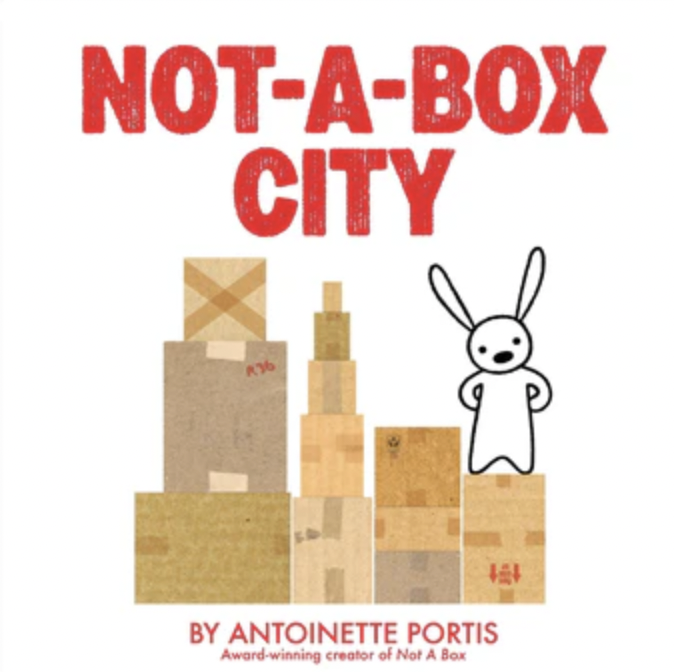
    Antoinette Portis’s Not-A-Box City has been a huge hit for months. It’s easy to see why — it’s got short, snappy sentences that are easy for a 2-year old to follow; animals; construction; and lots of fun things going on in the illustrations.

    Let’s start with the animals. We’ve got a bunny main character, and some unique animal friends — a giraffe, ants, and an iguana/chameleon/lizard (you can tell me which in the comments).

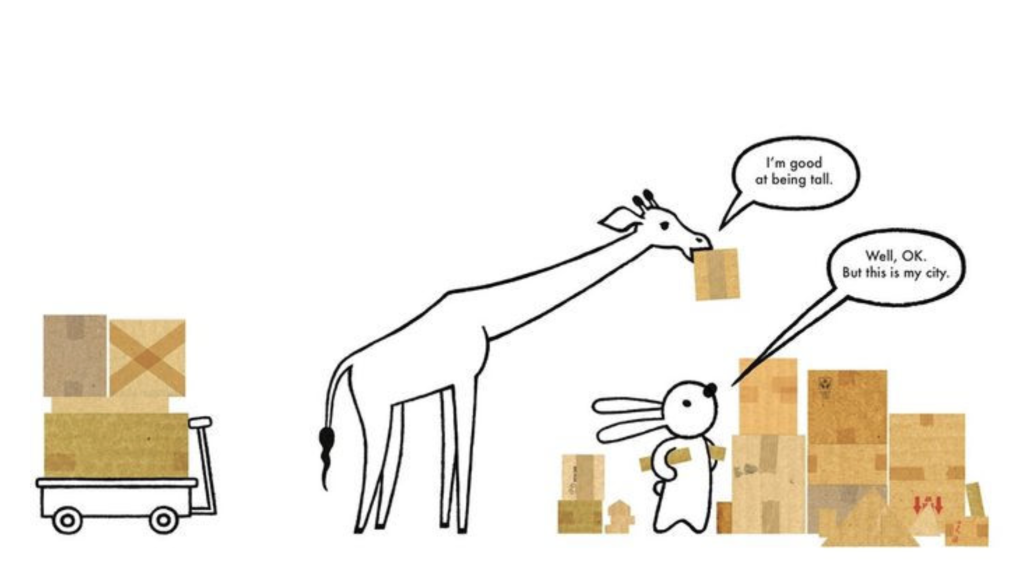
    Bunny and giraffe building a box city
    Bunny agrees to let Giraffe help build his city, but with conditions.

    Animals are always a big draw for S, but bunnies have become especially so. At this point, they can almost carry a book on their own. (Side note: If you want to occupy a toddler for however long you can tolerate listening to the same thing on loop, play this interactive bunny song. You’ll thank or curse me later).

    Then we’ve got the main plot. Bunny is building a city out of cardboard boxes. This itself is a major hook — S loves building things, and the steps necessary to make the city (cutting, stacking, painting, etc.) are all activities that feature prominently in preschool.

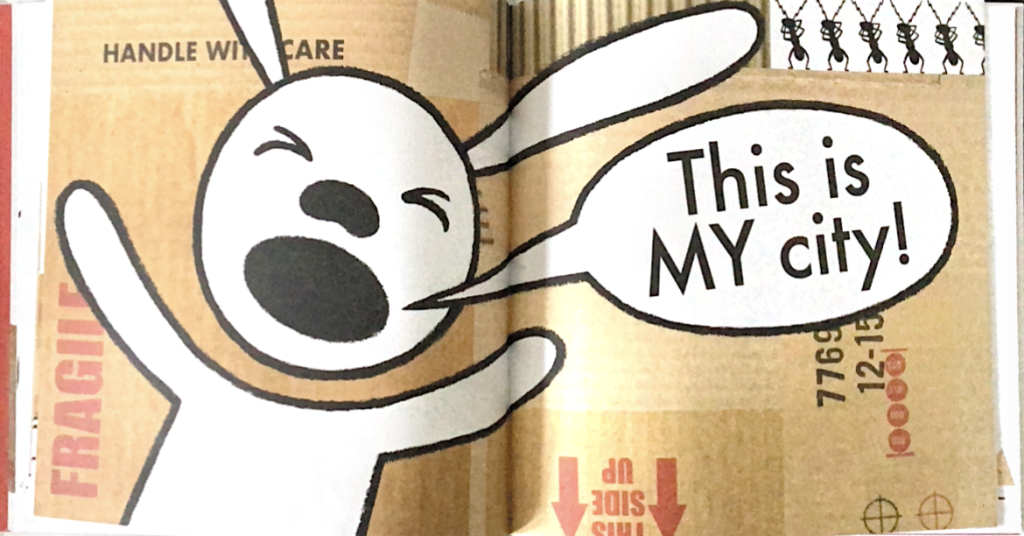
    The story also deals with huge emotions, which is another prime preschool topic. Bunny initially wants to do it all by himself, before agreeing to let Giraffe and some ants help. But when Iguana/Chameleon/Lizard starts painting without permission, Bunny loses it.

    This is one of S’s favorite spreads. Like Perry and Augie’s fight over the ball in Two Dogs, S seems to really identify with Bunny getting upset and territorial after the other animals start taking over the project. S loves to shout “This is MY city!” along with Bunny. I thought it was a bit of an anomaly when we read Two Dogs, but something about characters shouting “this is mine!” seems to be very appealing to toddlers.

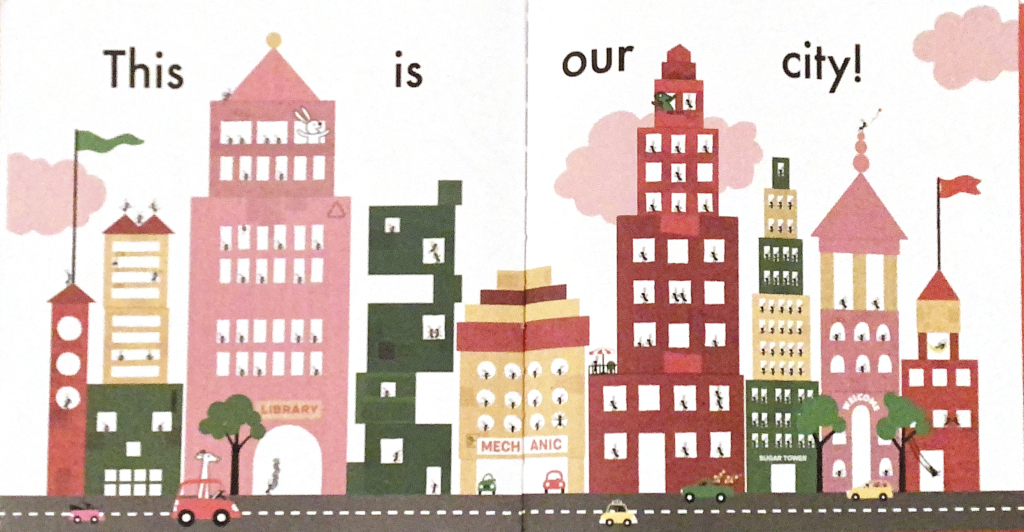
    Of course Bunny realizes he’d prefer having his friends around, and the story ends with the animals working together and cheering “This is our city!”

    The illustrations complete the package. Especially toward the end of the story, they are bright, with lots of engaging colors to point out. In the multiple spreads where the animals are painting the city, S likes to talk about the colors each animal is painting with, which reinforces key toddler vocabulary.

    The illustrations in the final spread keep S returning over and over. On the last spread, the animals’ city is complete, cheerful, and filled with action. The cars at the bottom add in a transportation hook, but perhaps most importantly from S’s perspective, the final spread features Bunny triumphantly sitting at the top of the Box City Library. S loves to point out Bunny’s location — the library is one of S’s favorite places, and its appearance in the city is yet another small detail that gets a lot of mileage with us.

    Neither here nor there from S’s perspective, but just a note for those who are writing stories with speech bubbles — being preliterate and stuck with a parent reader who can’t do voices to save her life, S can’t figure out who is saying what in the spreads unless I tack on something like “said Bunny” or “said Giraffe” as I read each speech bubble. I don’t think it changes much if anything about the way a speech bubble based story would be written, but noting it here in case it affects the way anyone thinks about them.

    Not-A-Box City By the Numbers

    Pages: 36 pages of what I would consider the “main” book

    Word Count: 96

    Words Per Illustration: 5.33

    Words Per Sentence: 3.56

  • Toddler Teaches…Toddler-Approved Book Subjects

    Toddler Teaches…Toddler-Approved Book Subjects

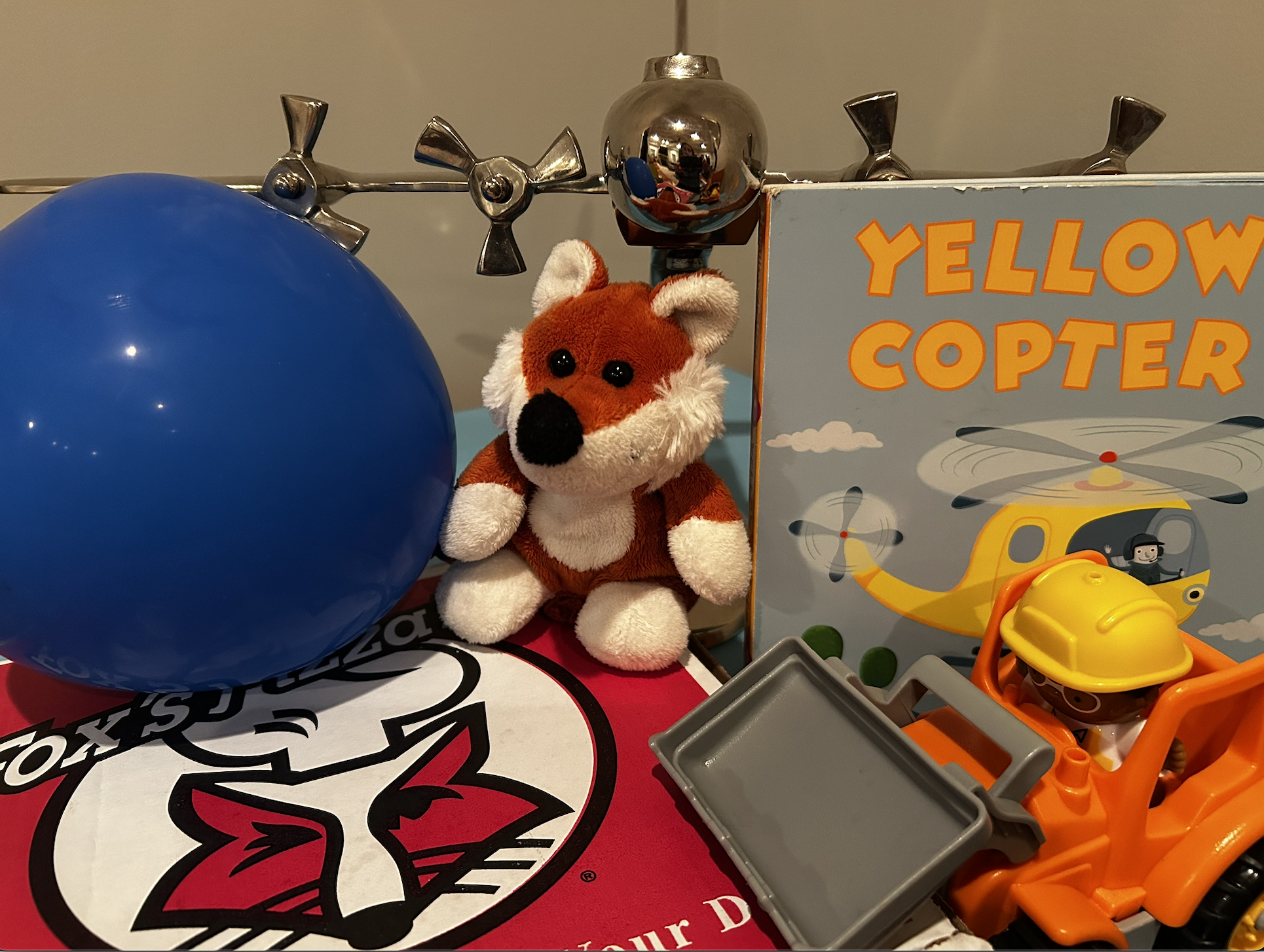
    I’ve written a bunch about the ways that subject matter influences S’s willingness to read books over and over again, and about the fact that even having a favorite subject in the background of an illustration can be enough to get a repeat reading request. To that end, I thought it might be interesting to create a list of the (sometimes idiosyncratic) subjects that seem to be toddler gold:

    • Animals – bonus points for foxes, penguins, dogs, bunnies, and cats
    • Transportation – bonus points for airplanes, helicopters, and buses
    • Construction vehicles – bonus points for excavators and bulldozers
    • Birthdays – parties, candles, balloons, cake, characters saying “Happy Birthday!”
    • The moon
    • Letters of the alphabet
    • Counting
    • Babies
    • Challah bread
    • Pizza
    • Characters wearing bows (bowties, hairbows — you name it)
    • Being upside down
    • Camping – bonus points for marshmallows and campfires
    • Bubbles
    • Popsicles
    • Legos
    • Hanukkah
    • Playgrounds
    • Clocks – S loves to point out wall clocks in the background of things

    If you really want an A+ on S’s picture book report card, combine one or more toddler-approved book subjects into your story. This can be in the main plot or in the illustrations.

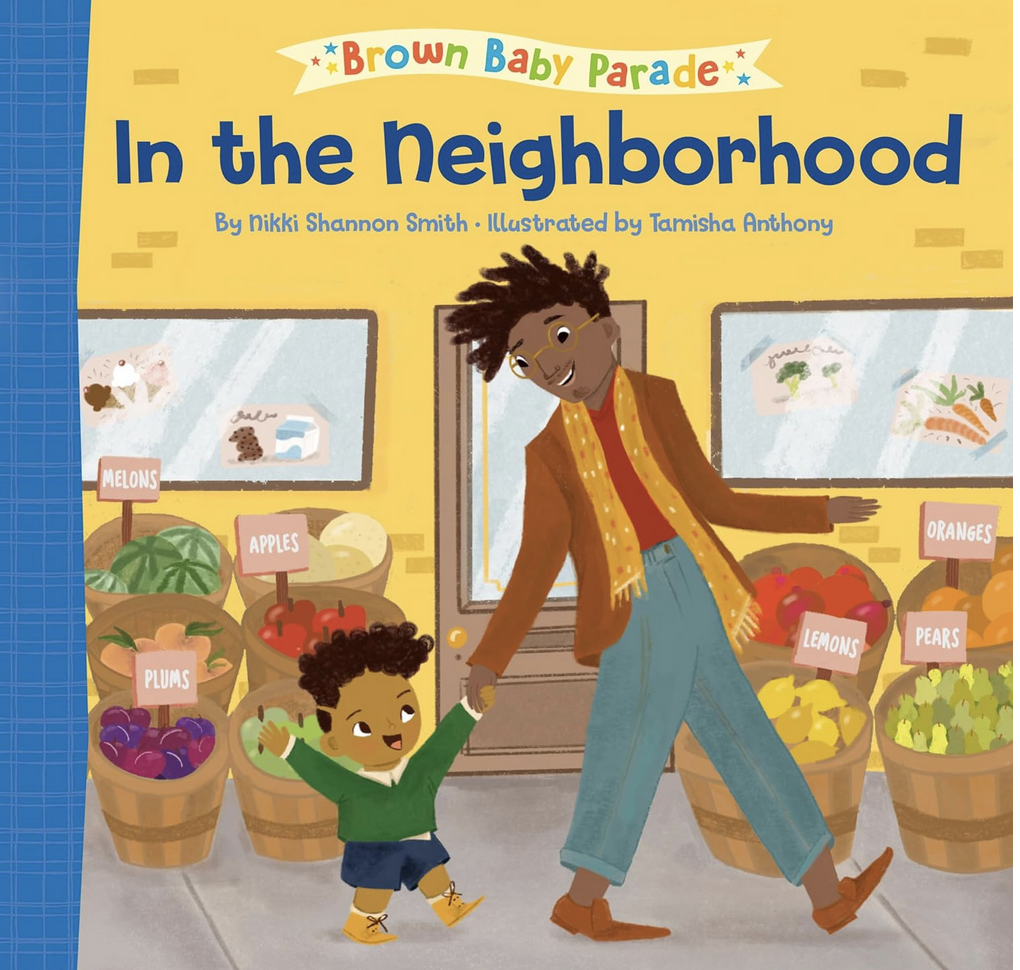
    Nikki Shannon Smith and Tamisha Anthony‘s In the Neighborhood was an immediate favorite in the board book category because of its sweet refrain and because it seems to deliberately (and brilliantly) hit on just about every topic a toddler might like. Baby goes on a walk (with “laces in a bow”), blows bubbles, gets flowers, meets a horse and a puppy, gets berries, sees cars, gets car stickers, watches friends learning how to throw a ball, sees a friend reading, and has a picnic.

    As noted above, even putting toddler-approved book subjects into the background of illustrations is often enough to get a re-read request. We’ve been getting a ton of mileage recently from books like Goodnight Bubbala where a favorite object (there, a toy schoolbus) can be spotted in the background in different places on different pages.

    I you happen to know of (or write) a book that fits these categories, let me know in a comment. We’ll be first in line to grab it!