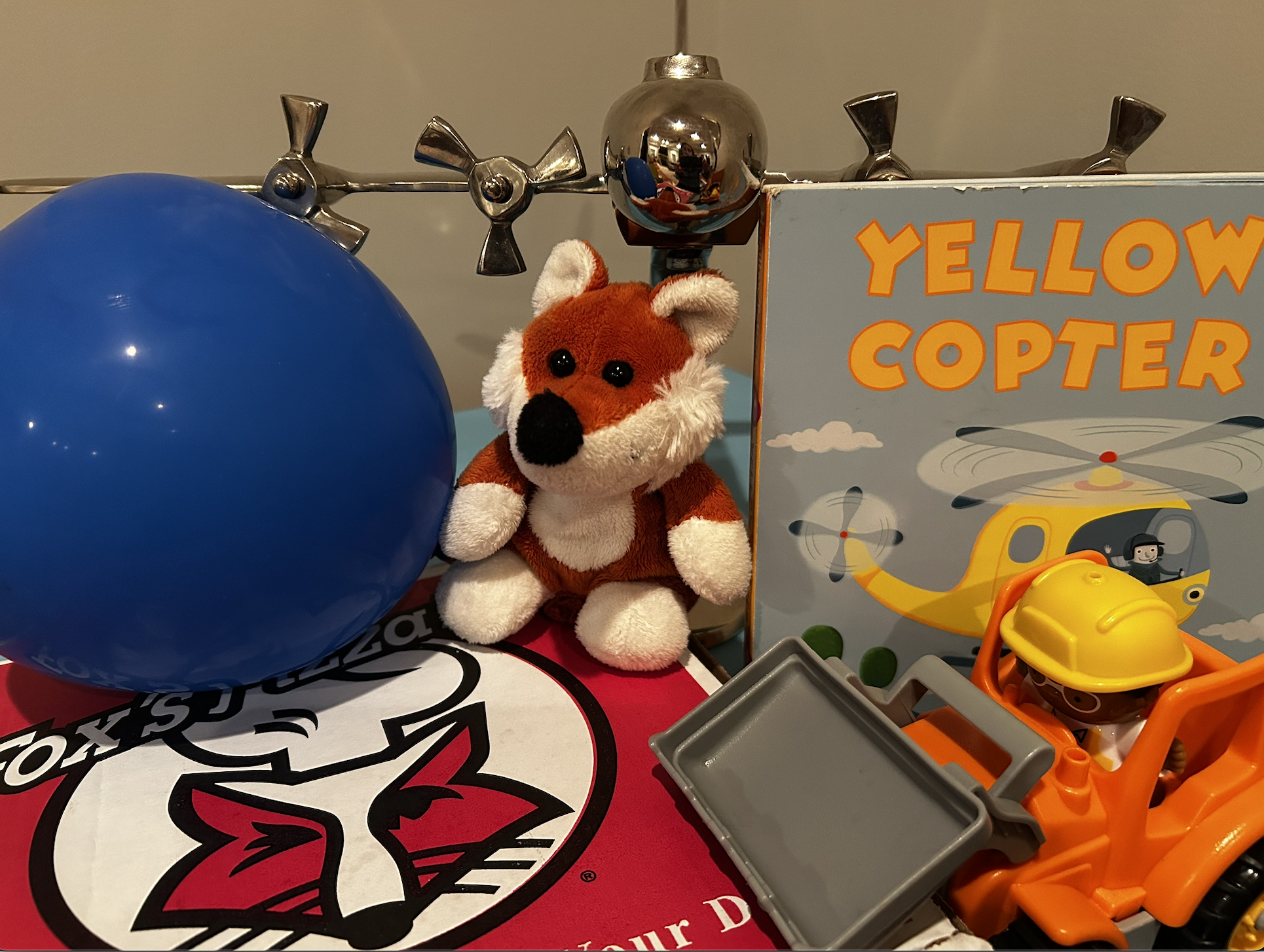
I’ve written a bunch about the ways that subject matter influences S’s willingness to read books over and over again, and about the fact that even having a favorite subject in the background of an illustration can be enough to get a repeat reading request. To that end, I thought it might be interesting to create a list of the (sometimes idiosyncratic) subjects that seem to be toddler gold:
Animals – bonus points for foxes, penguins, dogs, bunnies, and cats
Transportation – bonus points for airplanes, helicopters, and buses
Construction vehicles – bonus points for excavators and bulldozers
Clocks – S loves to point out wall clocks in the background of things
If you really want an A+ on S’s picture book report card, combine one or more toddler-approved book subjects into your story. This can be in the main plot or in the illustrations.
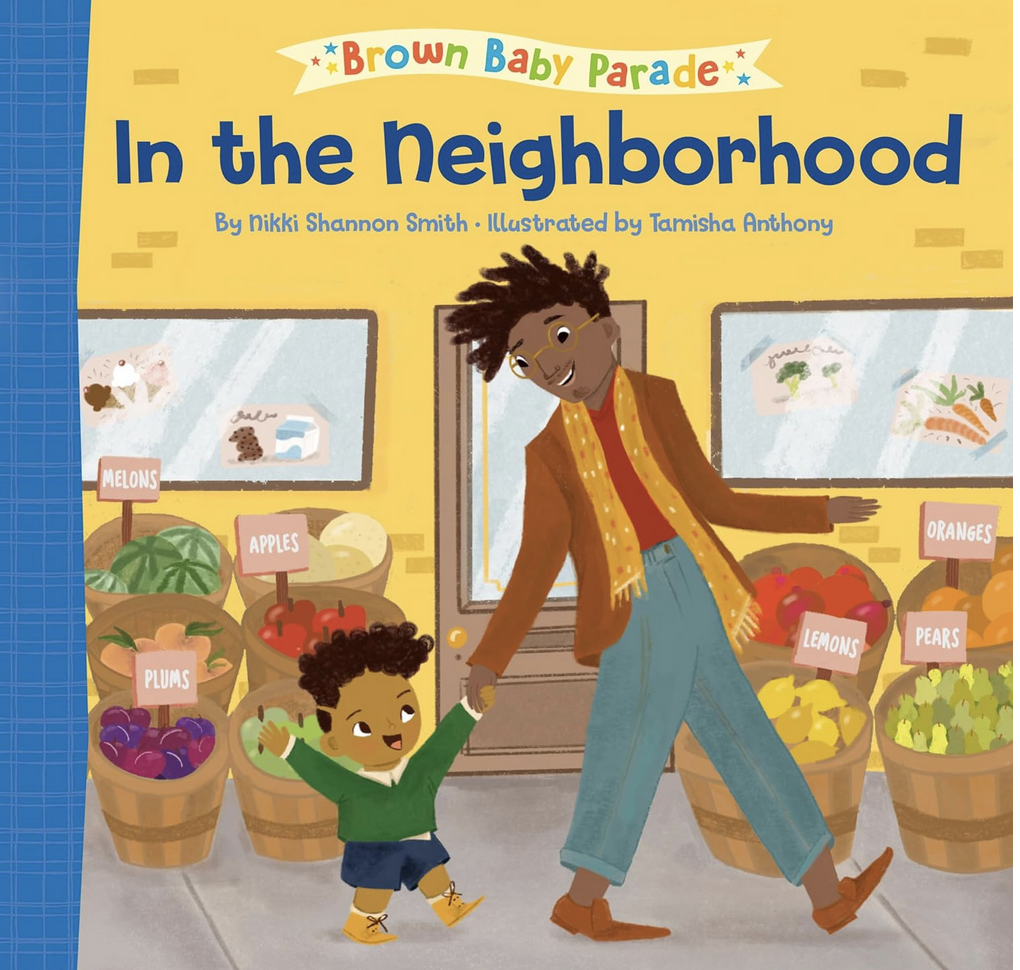
Nikki Shannon Smith and Tamisha Anthony‘s In the Neighborhood was an immediate favorite in the board book category because of its sweet refrain and because it seems to deliberately (and brilliantly) hit on just about every topic a toddler might like. Baby goes on a walk (with “laces in a bow”), blows bubbles, gets flowers, meets a horse and a puppy, gets berries, sees cars, gets car stickers, watches friends learning how to throw a ball, sees a friend reading, and has a picnic.
As noted above, even putting toddler-approved book subjects into the background of illustrations is often enough to get a re-read request. We’ve been getting a ton of mileage recently from books like Goodnight Bubbala where a favorite object (there, a toy schoolbus) can be spotted in the background in different places on different pages.
I you happen to know of (or write) a book that fits these categories, let me know in a comment. We’ll be first in line to grab it!
Last fall, S and I began baking challah together on Friday afternoons. S loves it, and has been asking for books about challah every time we go to the library for months. S was agnostic about whether these books were actually about challah or just had a picture of challah in them — as mentioned in earlierposts, including images of favorite topics in the background of a story is often enough to capture S’s interest. (Interestingly, however, S was very particular about what the illustrations should look like. Some books were rejected at the outset for having insufficiently “challah-y” challah.)
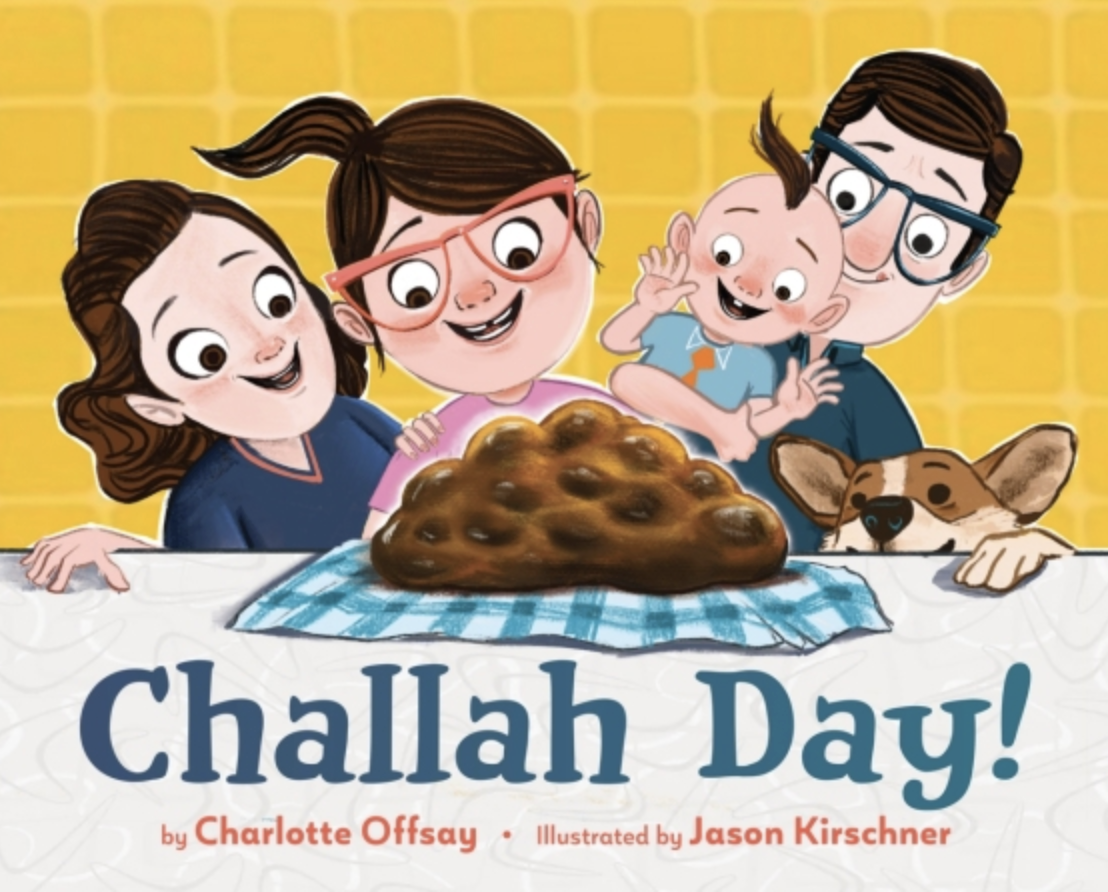
We recently took out Charlotte Offsay and Jason Kirschner‘s adorable Challah Day! from the library because it is not just a book with pictures of very challah-y challah, but a book about making challah as a family.
S LOVED it. We read it 9 times on the day we took it home. That love has not abated. On an average day, S requests it between 1 and 5 times, often back-to-back-to-back. (“Read it again!”) It’s the kind of book that is such a runaway hit (and so well-written/illustrated) that we will wind up buying it as soon as we have to return our library copy.
Let’s look at what makes Challah Day! an early contender for favorite book of the year:
1. Challah Day! celebrates Shabbat from a toddler POV
Challah Day! shows the importance of not just representation generally, but of representing the cultural traditions that mean the most to kids. The book is a simple, joyful ode to a specific Shabbat tradition — making challah together as a family.
The whole family is working together to make the dough, with a special focus on the little girl and her baby brother, who have starring roles in the bread-making production.
While the story references other Shabbat traditions obliquely, they are not the focus of the story. They are also the exact other traditions that would be meaningful to a young child — lighting candles, drinking grape juice, and spending time with grandparents.
The book is cozy and warm and absolutely spot on for the way S experiences Shabbat — it is the day we make and eat challah (and light candles, drink grape juice, and spend time with grandparents).
I believe that this sort of representation — meeting young kids where they are — is exactly why the book has resonated so much with S.
2. It has short, punchy sentences and colorful, active illustrations
Challah Day! is a joy to read out loud. The sentences are short; the rhyme is bouncy and joyful; and the way the rhyme, punctuation, and page layout breaks things up leads to natural pauses that make it easy for S to focus on what is going on.
At an average of 4.78 words per sentence, it fits squarely into the sweet spot sentence length for S’s attention span.
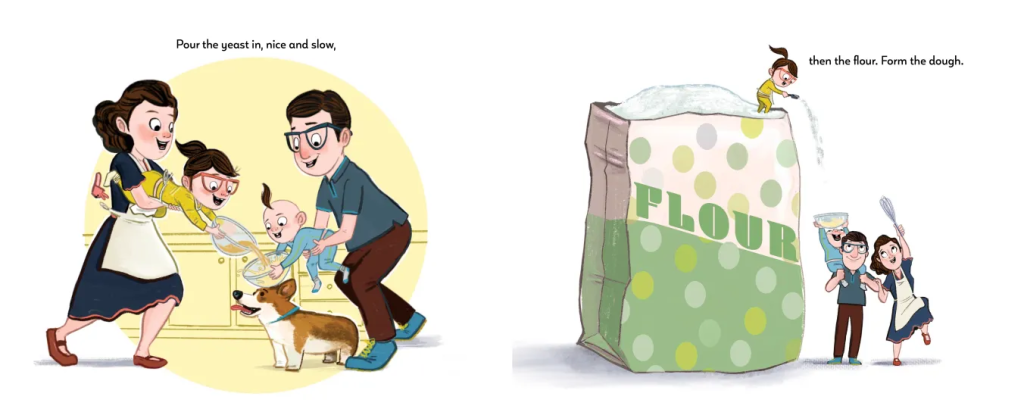
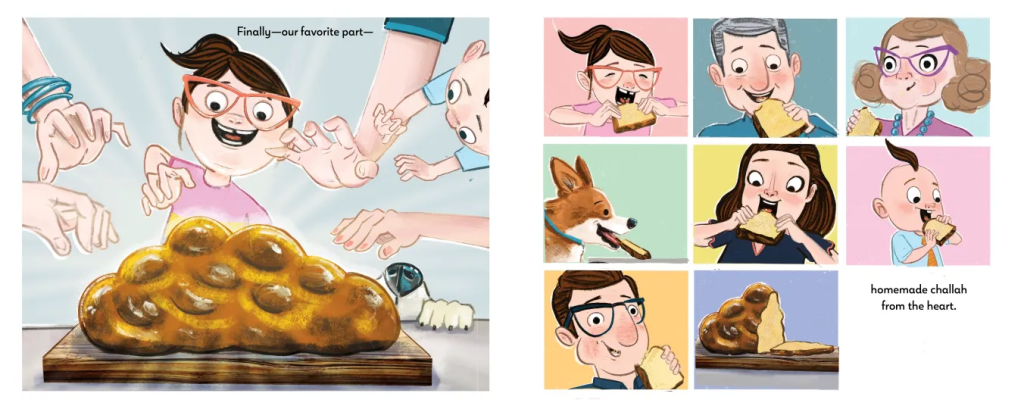
Charlotte Offsay’s text is complemented perfectly by Jason Kirschner’s illustrations, which have just enough going on to hold S’s interest at all times. This spread is a particular favorite, with the whole family actively eating challah (including the dog!) and bright background colors that S loves to point out.
3. It has multiple toddler hooks
Combining S’s interests is a surefire way to make a book a repeat player. In addition to the carbohydrates discussed at length above, we have at least five more toddler hooks:
A baby — S loves pointing out the baby on every page
A dog — any addition of animals to a story is a plus, particularly when they are actively involved (here, helping braid challah, etc.)
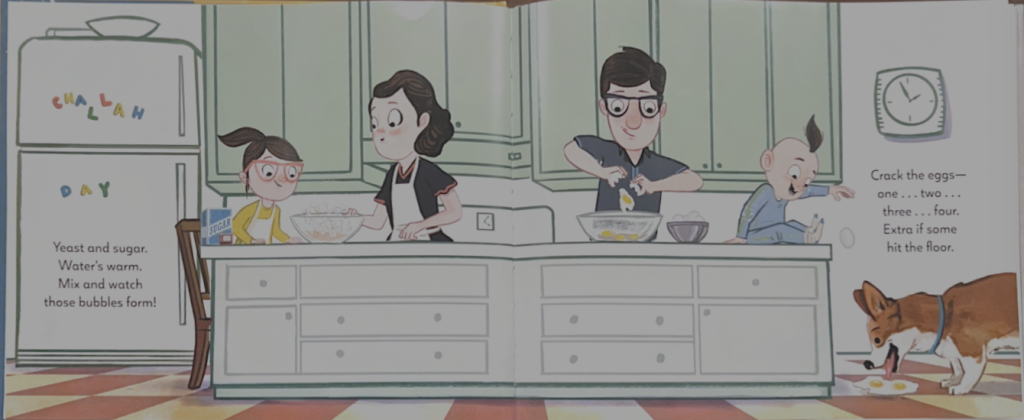
Simple counting — S likes to count along and point out each of the eggs when I get to “Crack the eggs – one, two, three, four”
Bubbles — always a favorite; doesn’t matter that these are yeast bubbles and not soap bubbles
Family time / a “knock” at the door bringing grandparents over — the knock is a fun change of pace, and the grandparents are additional people for S to point out
I hope you love Challah Day! as much as we do — I have a feeling we will be reading it for a long time!
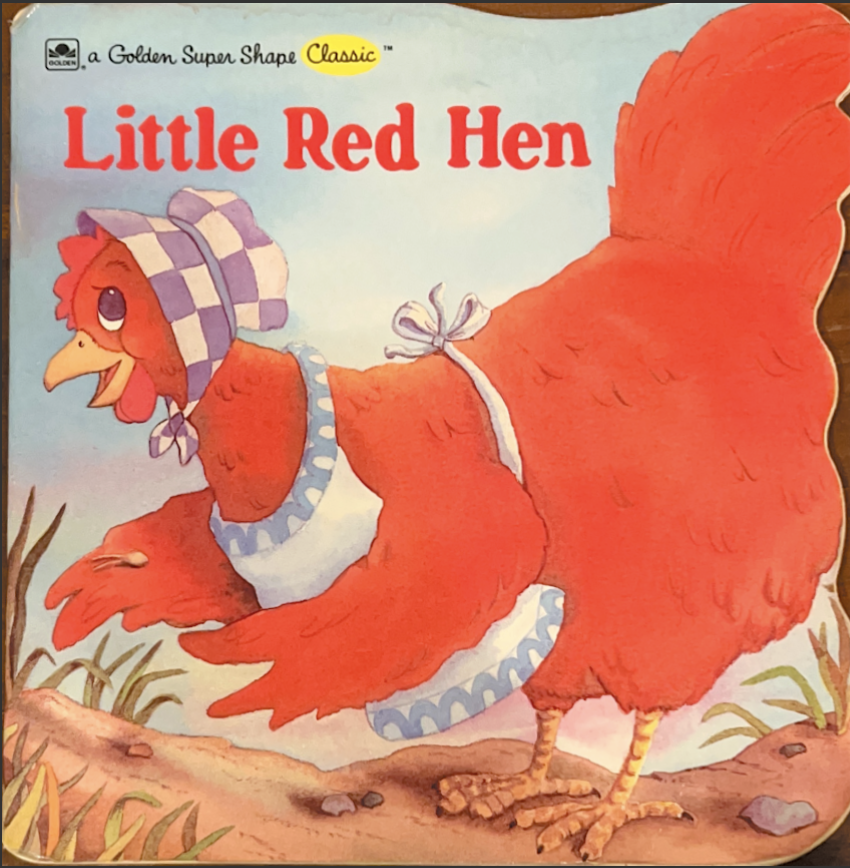
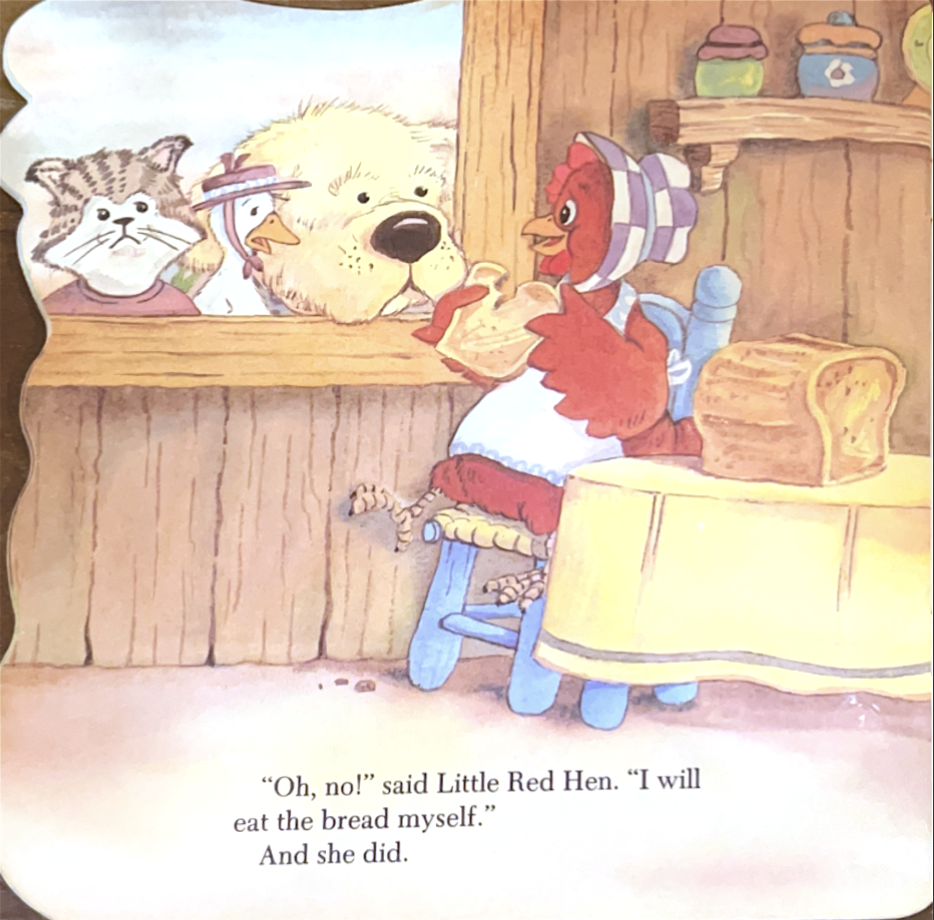
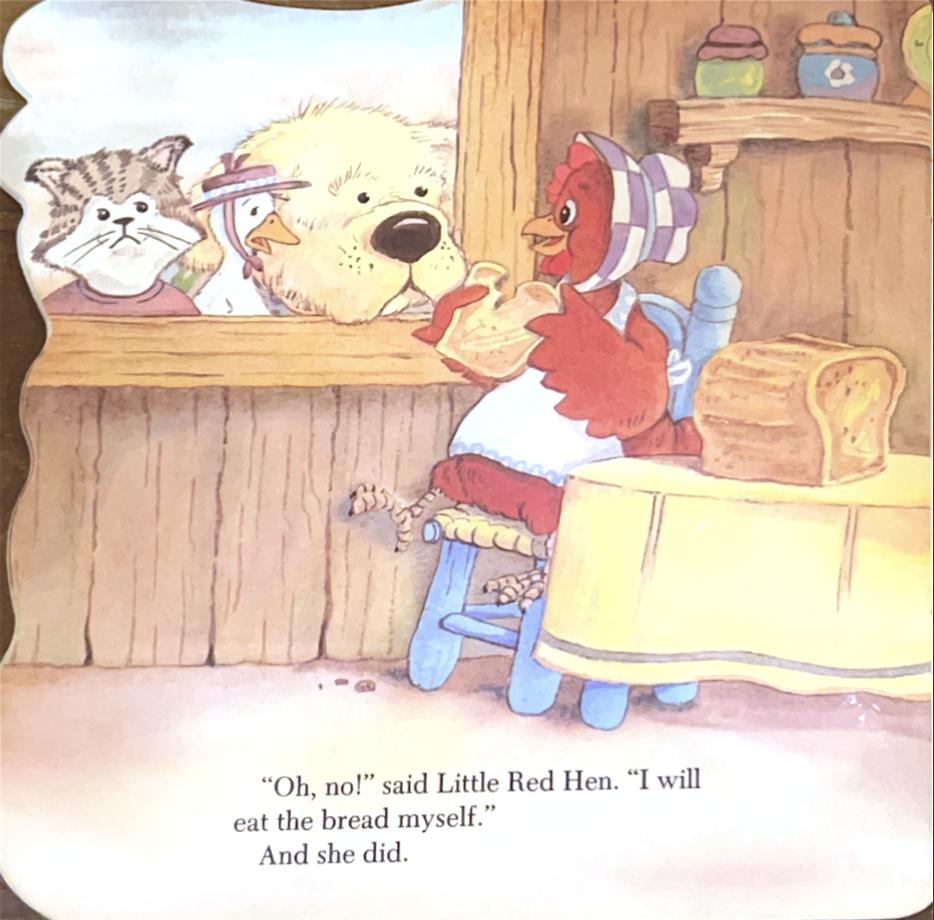
Because they are awesome, my parents held onto my favorite childhood books. Lyn Calder and Jeffrey Severn’s Little Red Hen was high on that list. I loved the Hen’s absolutely giant loaf of bread, as well as her (suddenly smaller) slice of toast.
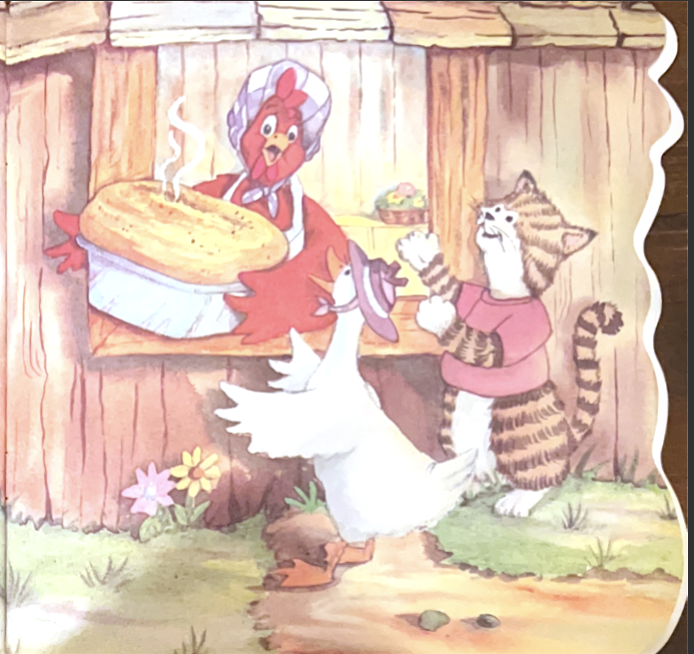
Seriously, how much bread did the Little Red Hen eat between the prior page and this one? And why is it no longer the size of her torso?
Over the summer, my parents pulled out a number of my childhood favorites to read to S. Little Red Hen was an immediate winner. It’s got all the elements needed for toddler success: animals; bright, colorful illustrations; and short, punchy refrains. Not to mention carbohydrates.
Breaking Down Little Red Hen
Little Red Hen follows a predictable pattern, which got S actively interacting with the story as early as 19-20 months:
First, the Hen asks “Who will help me [do whatever thing she needs help with to keep making the bread]?”
Each time, the other animals respond in the same Rule of 3 refrain: “‘Not I,’ said Duck. ‘Not I,’ said Cat. ‘Not I,’ said Dog.”
Hen responds in a predictable pattern that mirrors her initial ask, reinforcing the language that was already used: “Then I will [do whatever Hen’s initial request was] myself.”
The sequence for each of Hen’s requests concludes with: “And she did.”
S loved the repetitions, and loved chiming in “did” at the conclusion of each section.
The refrains and parallel language are predictable, vocabulary building, and fun. They also use simple, declarative sentences that make it easier for young readers to understand what is happening and participate in the action.
The last few pages invert the animals’ refusals to help, continuing in a Rule of 3 pattern that ties the ending of the book to everything that came before in a satisfying “of course!” conclusion.
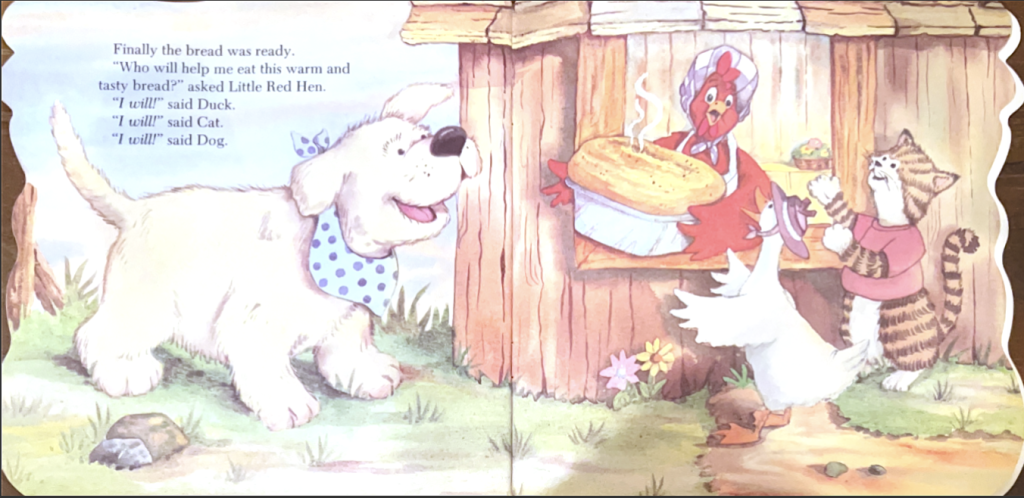
Who will help Hen eat the (absolutely ginormous) bread? “I will!” said Duck, Cat, and Dog. But in a continuation of the previously established pattern, Hen responds that she will eat the bread herself. And in a continuation of the refrain S loves so much, the story ends with a simple, “And she did.”
Analyzing the construction of the book, I can see why I loved Little Red Hen as a kid and why S loves it now. (Though if we’re being honest, I still really like the bread pictures, so maybe it’s more about the carbs than the exceptional construction of the story…)
Trying a Reimagining of the Story
Given S’s love of Little Red Hen, I thought it would be interesting to see S’s reaction to a version of the story geared for slightly older readers.
Thanks to Jasmine Sears for the eARC!
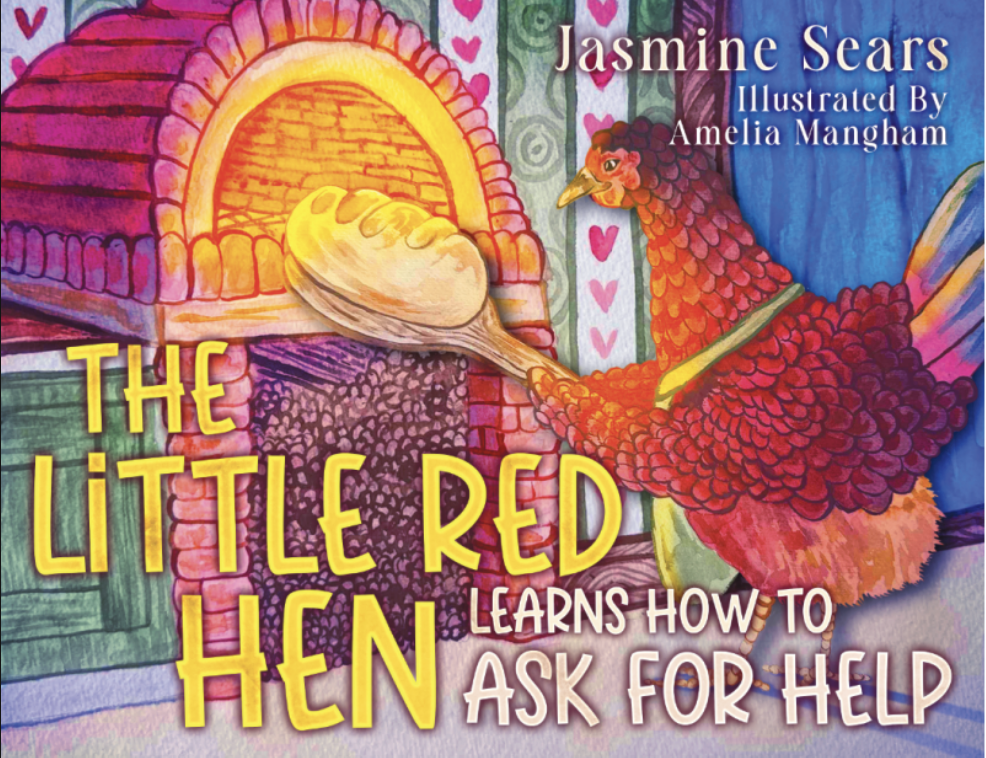
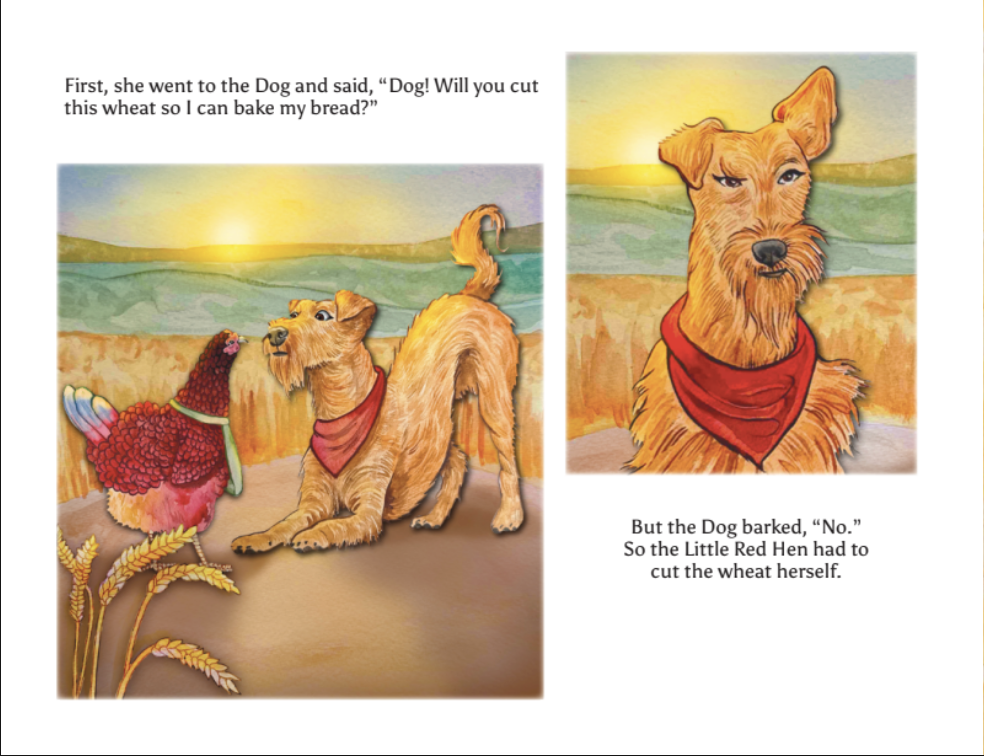
Jasmine Sears‘s and Amelia Mangham‘s upcoming picture book The Little Red Hen Learns How to Ask for Help cleverly reimagines the story in a light more favorable to the Hen’s unhelpful friends. In their retelling, Hen has asked — nay, demanded — each of her friends help her with a task they are unsuited to do. Dog is told to cut the wheat, Cat is told to fetch the water, and so on. It is only after Hen realizes she should be asking nicely and asking her friends for help with things they know how to do (and are not afraid of doing) that they all pitch in and bake the bread together.
S was absolutely transfixed by the illustrations in this version — they’re beautiful, bright, and almost glow from within. We made it to the end of the first half of the story (where Hen eats all the bread herself), which is the part S already knew. That was 367 words, which is on the long side for S’s attention span but doable with this many illustrations (particularly when they are brightly colored and of animals) and predictable, parallel language. The fact that S already knew the basics of the story to that point probably also helped.
S’s interest in the retelling highlights the value of reimagining stories that are familiar to young readers — the more familiar the story, the easier it is for a young reader to understand parts of the retelling, even if generally aimed at an older age group. It’s also another mark in the plus column for animals, parallel language, and brightly colored illustrations (a.k.a. toddler gold).
Little Red Hen By the Numbers:
Pages: 23
Word Count: 297
Words Per Illustration: 24.75
Words Per Sentence: 7.24
TheLittle Red Hen Learns to Ask for Help By the Numbers:
Pages: 36 pages of what I would consider the “main” book.