Jennifer Tarr

Writing picture books for kids and their grown ups.

Category: Transportation

  • Toddler Teaches…Favorite Picture Books of 2025 (12 to 24 Months)

    Toddler Teaches…Favorite Picture Books of 2025 (12 to 24 Months)

    As we head into a new year, I thought I’d take a moment to highlight some of S’s favorite picture books of 2025 that did not get individual posts. Without further ado, the unsung picture book heroes of the 12-24 month age range:

    Favorite Picture Books of 2025: The Classics

    Book cover for Goodnight Moon by Margaret Wise Brown and Clement Hurd, a favorite picture book of 2025

    Goodnight Moon (Margaret Wise Brown / Clement Hurd)

    The Runaway Bunny (Margaret Wise Brown / Clement Hurd)

    Chicka Chicka Boom Boom (Bill Martin Jr. and John Archambault / Lois Ehlert)

    Brown Bear, Brown Bear, What Do You See? (Bill Martin Jr. / Eric Carle)

    The Very Hungry Caterpillar (Eric Carle)

    Madeline (Ludwig Bemelmans)

    Where’s Spot? (Eric Hill)

    Favorite Picture Books of 2025: The Vehicles Set

    Book Cover for Yellow Copter by Kersten Hamilton and Valeria Petrone, a favorite picture book of 2025

    Yellow Copter (Kersten Hamilton / Valeria Petrone)

    Little Excavator (Anna Dewdney)

    Goodnight, Goodnight, Construction Site (Sherry Duskey Rinker / Tom Lichtenheld)

    Favorite Picture Books of 2025: The Animals Set

    Book cover for Ursula Upside Down by Corey R. Tabor, a favorite picture book of 2025

    Ursula Upside Down (Corey R. Tabor)

    Little Red Hen (Lyn Calder) (specifically this Golden Books edition from 1990)

    The Sky is Falling! (Mark Teague)

    Apples for Little Fox (Ekaterina Trukhan)

    Click, Clack, Moo: Cows That Type (Doreen Cronin / Betsy Lewin)

    Dear Zoo (Rod Campbell)

    Favorite Board Books of 2025

    I Love My Tutu Too! (Ross Burach) (Scholastic, Inc., 2020)

    Rosh Hashanah: New Year, Gather Near (Leah Weber / Taryn Johnson)

    Absolutely anything by Sandra Boynton, with a special shout-out to Silly Lullaby and Moo, Baa, La La La!

    P is for Pastrami (Alan Silberberg)

    Little Blue Truck Feeling Happy (Alice Schertle / Jill McElmurry)

    ***

    And a few closing thoughts on S’s preferences this year:

    • Short, punchy sentences are key. I can get away with reading significantly more text per page if each sentence is around 5-7 words. If a page has 30 words on it, breaking those 30 words into 5-6 sentences is far preferable to 2 sentences.
    • Refrains are toddler gold.
    • S was not nearly as into rhyme as I would have expected. Of all the books on this list, only 5 of them are rhyming, and the rhyme is not the reason S likes the book. Punchy, repetitive sentences that S can anticipate and participate in (a la “Click, clack, moo!”) are far more important for getting S engaged in the text than rhyming is.
    • Subject matter is key, but idiosyncratic. Even having the subject of interest in a background image will often suffice to have S ask to read the book. Combining multiple kid-friendly topics optimizes chances of hitting on a preferred topic at any given time.
    • Flaps, cutouts, and other forms of physical interactivity got high marks this year. This ran the gamut from the holes in The Very Hungry Caterpillar to textures in Little Blue Truck Feeling Happy (which quickly surpassed its namesake because it had feathers and wool and a shiny blue truck to touch).

    Hope you all have a great new year — see you in 2026!
  • Toddler Teaches…HOW TO DRAW A HAPPY CAT

    Toddler Teaches…HOW TO DRAW A HAPPY CAT

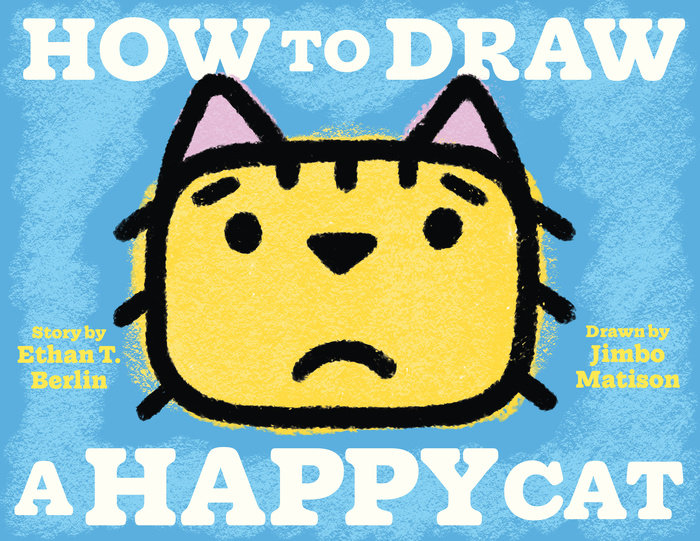
    I first came across How to Draw a Happy Cat when our local children’s librarian suggested it for my own writing research. (Side note: Librarians are awesome. Ideas to support your local library here.)

    As a more advanced picture book (SLJ suggests it for grades K-2), I did not expect it to immediately enter S’s favorite book rotation. I should have. Here’s why:

    1. It combines multiple kid-favorite topics.
    2. The language is declarative and snappy.
    3. The book invites the reader to participate in the action.
    4. The illustrations are active and colorful.

    As pretty much all my previous posts have established, S’s current favorite book subjects are animals and transportation. If your book has animals and/or transportation vehicles, S will probably at least give it a spin. If your book combines animals and transportation vehicles, you have dramatically upped your odds that S will want to read your book, and likely more than once. (Exhibit A: Animals Go Vroom!, an all-time S favorite.)

    How to Draw a Happy Cat does one better, and introduces not only animals and airplanes, but also one of S’s favorite foods: pizza.

    This may be one of S’s favorite images in any picture book we’ve read. It’s got a cat eating pizza being flung from a catapult, all while hanging onto an airplane. Pretty much toddler heaven.

    It’s like Ethan Berlin was handed a list of S’s interests and told to craft a story around them. Even without a great story, S would be predisposed to flip through the story over and over again, just to look at pictures of cats, airplanes, pizza, and cats eating pizza on airplanes.

    But the story works. It’s a hysterical, modern, interactive version of If You Give a Mouse a Cookie. And while the story is complex, the way it’s written and illustrated extends the age range downward.

    The story starts by inviting the reader to participate in the action — drawing our main character.

    Learning how to draw a happy cat may be fun and easy, but no one said anything about keeping that cat happy…

    It goes on from there in the same vein – each time we think the cat is finally happy, something happens, and we have to draw/solve her next problem.

    The sentences are often short and limited to one or two per page, conveying complicated problems and emotions with clean, simple language that is easy for S to understand. (How is the cat going to get the pizza? We have to turn the page to find out!)

    The cadence is great for listening, and the interactive language choices also keep S engaged – S is getting all the credit for helping out our new friend Cat. (“Great! She’s so happy! Good job!”)

    The sentences are also frequently accompanied by an illustration per idea. This decision is genius from a craft perspective, because it gives the reader the impression that they are impacting the story by “drawing” new things as the narrator directs them to do so.

    It also has a possibly-unintended benefit from a toddler attention-span perspective. As with Itty-Bitty Kitty-Corn, the sentence-per-illustration model of picture book creation is crucial to keeping S’s attention in longer books because each sentence gives S a new thing to look at (and the new illustration reinforces S’s ability to understand what the text is saying).

    So while Ethan Berlin and Jimbo Matison probably almost certainly didn’t set out to create this book for an under two year old, a few simple choices turned this book into an unexpected repeat pick.

    How to Draw a Happy Cat By the Numbers:

    Pages: 40

    Word Count: 311

    Words Per Illustration: 7.78

    Words Per Sentence: 5.65

  • Toddler Teaches…ANIMALS GO VROOM!

    Toddler Teaches…ANIMALS GO VROOM!

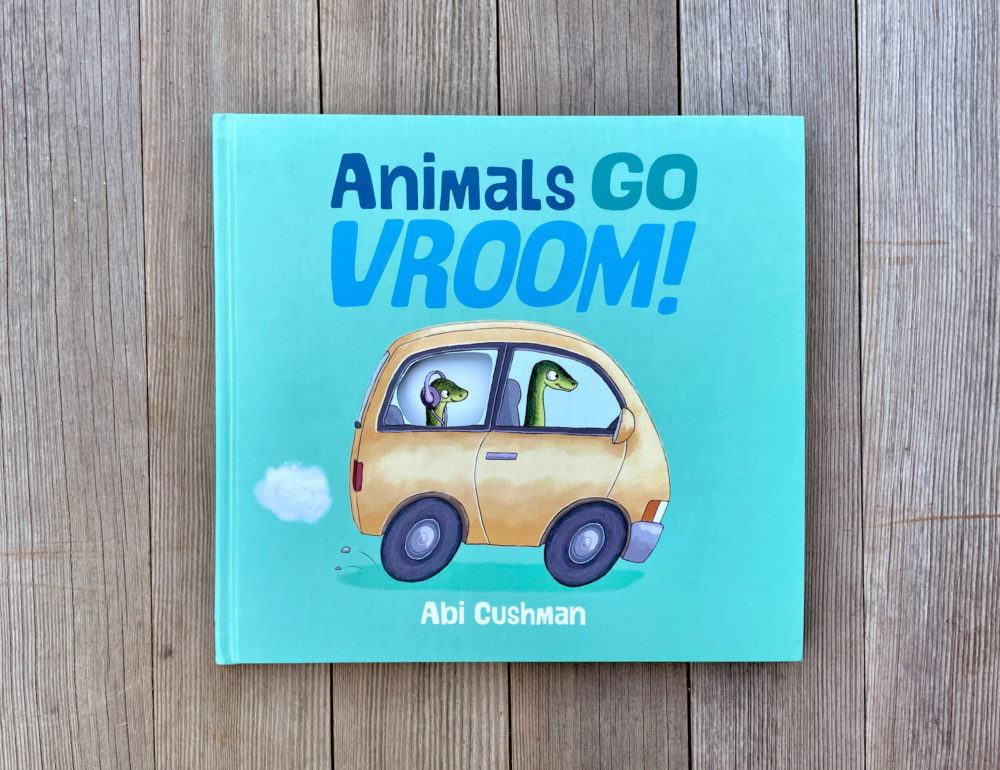
    It is only fitting that the first deep dive into my toddler’s favorite books is the brilliant Animals Go Vroom! by Abi Cushman. Animals Go Vroom! has been in a two-way tie for S’s favorite book for months, right from the moment S pulled it off a library shelf and was so transfixed we had to make it S’s first library book. Here’s why:

    1. Surprising, Interactive Page Turns that Follow a Pattern
    2. Active, Interactive Illustrations
    3. Combining Two Favorite Subjects (Animals and Transportation)
    4. Fun Animal and Transportation Sounds
    5. Evocative Word Choices in Short Sentences

    Each spread in the book follows the same interactive pattern. The left side of the book contains an animal sound seemingly related to an animal visible through a cut out on the right side of the book. The text invites the reader to guess what is making the sound, and to turn the page to finish the sentence.

    A huge thank you to Abi Cushman for providing the high quality book images for use in this blog!

    And when you turn the page …

    You see that the animal sound wasn’t an animal sound at all, but a transportation sound!

    S LOVES this. S loves saying “roar” and all the other fun sounds in the book (“hiss” and “awoooooooooo” are particular favorites). S loves the surprise page turns, and the fact that they follow a predictable pattern, which heightens the suspense and excitement of each page turn. S also loves turning the pages by jamming one hand into the cutouts (a fun textural element!) while I hold my breath and silently thank the publisher for using sturdy paper.

    Animals Go Vroom! is also a favorite because it does a lot to keep S’s attention.

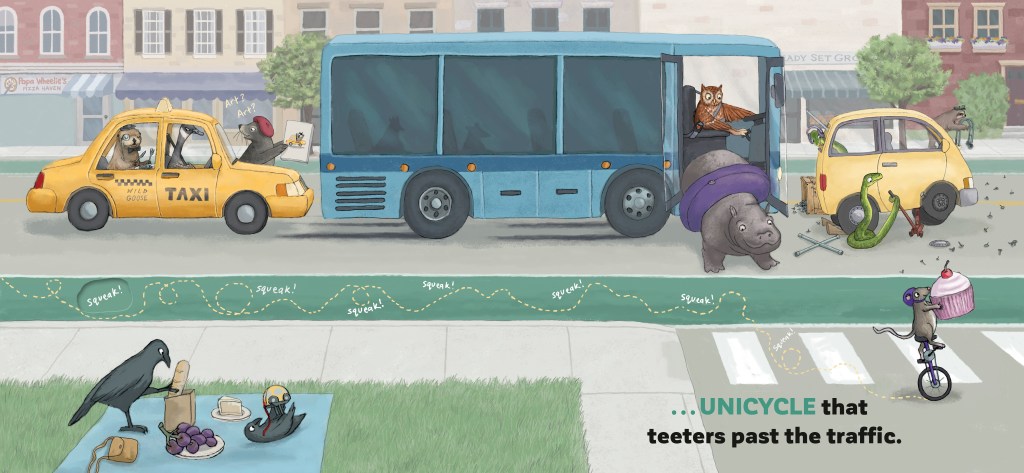
    Sentences are short, punchy, and active, with juicy word choices and alliteration. The truck doesn’t drive up the road – it rumbles. The unicycle doesn’t roll past the traffic – it teeters. The words aren’t just fun to say – they also sound like their meanings, which combined with the illustrations have added to S’s vocabulary.

    Complementing the text, the illustrations are active, bright, and colorful. They also include a lot of background details for us to sink our teeth into and engage with as we read.

    S loves to point out the hat on the tiger in both the “hidden” and fully revealed spreads above. In the spread below, S likes to point out the hippo (a favorite animal) and the picnic, bread, and cheese.

    The images in the story also build off each other, with whole stories happening in the illustrations. It’s both world building and word building. On each page, S and I can discuss everything that is going on beyond the text on the page. The detail in the illustrations also offers a lot of new, easy, and exciting words to learn and/or practice. In the unicycle spread alone, we have a mouse in a helmet riding with a cupcake; the baby crow has a toy; the mommy crow has bread, grapes, cheese, and a bag; there are hippos and snakes and owls; the painter is in a hat….

    These details not only make the story more interactive, but S’s interest in pointing them out builds vocabulary that S enjoys utilizing the next time we read the book.

    Put simply, there’s a reason why S requests this book multiple times a week. Check it out – I hope you love it as much as we do!

    Some quick stats on Animals Go Vroom!:

    Page count: 30 pages of what I would consider the “main” book

    Word count: 70

    Average word count per illustration: 4.67 (I have a hunch that word count per illustration is going to be lowest in the books we read the most, so I’ll be tracking that over time. Check back to see how that hypothesis holds up….)

en_USEnglish
Powered by TranslatePress